Study Finds That the Phytochemicals Carvacrol and Thymol Show Neuroprotective Promise in Alzheimer’s Disease
Nikhil Prasad Fact checked by:Thailand Medical News Team Sep 08, 2026 1 month, 2 weeks, 1 day, 2 hours, 55 minutes ago
Two natural compounds found in aromatic plants including oregano and thyme are attracting scientific attention for their potential to protect the brain against several processes involved in Alzheimer’s disease.
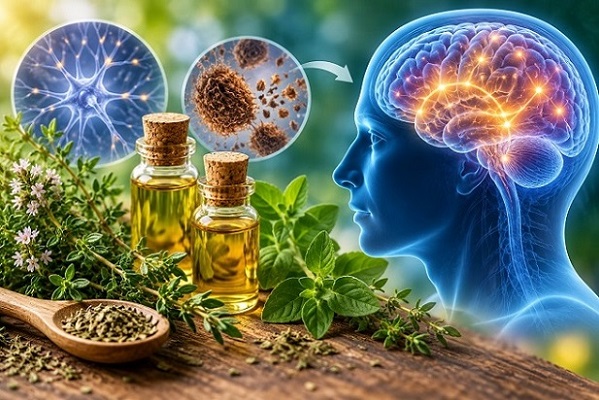 Carvacrol and thymol showed promising multi-target neuroprotective effects across preclinical models of
Alzheimer’s disease and cognitive impairment
A new scoping review found that carvacrol and thymol demonstrated antioxidant, anti-inflammatory, anti-apoptotic, and cholinesterase-inhibiting effects across numerous preclinical experiments. However, researchers emphasize that these findings have not yet been confirmed in people.
Researchers Examine 30 Studies
The review was conducted by Shabbir Adnan Shakir, Juen Kiem Tan, and Kok-Yong Chin from the Department of Pharmacology, Faculty of Medicine, Universiti Kebangsaan Malaysia, Cheras, Malaysia, and the Department of Medicine, Faculty of Medicine, Universiti Kebangsaan Malaysia, Cheras, Malaysia.
For this
Thailand Medical News report, researchers searched PubMed, Scopus, and Web of Science in February 2026 for studies investigating carvacrol or thymol in Alzheimer’s disease and cognitive impairment. Of 87 unique records screened, 30 primary studies met the inclusion criteria. Nineteen included an in vivo component, 13 involved in vitro research, and nine incorporated in silico experiments. No human clinical trials were identified.
Memory and Learning Improvements Stand Out
One of the clearest findings involved cognition. Across different experimental models, animals receiving carvacrol or thymol generally performed better in the Morris water maze, a widely used test of spatial learning and memory.
Treated animals showed shorter escape times and traveled shorter distances while learning where a hidden platform was located. During subsequent memory tests, they spent more time in the target quadrant and crossed the former platform location more frequently, suggesting improved learning and memory retention.
The compounds appeared to work through several pathways rather than targeting a single Alzheimer’s mechanism. Studies reported reductions in inflammatory mediators including TNF-alpha, IL-1 beta, IL-6, NF-kappa B, and COX-2. They also reduced markers of oxidative damage while restoring antioxidant defenses.
Carvacrol and thymol additionally influenced cholinergic signaling, brain-derived neurotrophic factor, apoptosis, and pathways involved in neuronal survival.
Carvacrol and Thymol May Work Differently
Despite their chemical similarity, the compounds did not behave identically. Carvacrol showed particularly strong acetylcholinesterase-inhibiting activity, while thymol displayed important effects involving amyloid aggregation, metabolic signaling, neurogenesis, and synaptic function.
Researchers also found that modifying the compounds could dramatically strengthen some effects. Synthetic
derivatives produced substantially greater cholinesterase inhibition, while liposomes and nanoemulsions improved stability and potentially increased brain exposure.
This could be important because both natural compounds undergo extensive metabolism and have limited availability as free parent compounds following oral administration.
Human Trials Are Now Crucial
The findings remain firmly preclinical. The studies differed considerably in models, doses, treatment periods, formulations, and outcome measurements, preventing statistical pooling. The review also did not formally assess study quality or risk of bias.
Conclusions
Carvacrol and thymol offer intriguing multi-target approaches to Alzheimer’s-related brain damage, potentially influencing inflammation, oxidative stress, cholinergic signaling, amyloid pathology, and neuronal survival simultaneously. However, rigorous pharmacokinetic, toxicological, and human clinical studies are essential before either compound can be considered an Alzheimer’s treatment.
The study findings were published in the peer reviewed journal: Pharmaceuticals.
https://www.mdpi.com/1424-8247/19/9/1407
Read Also:
https://www.thailandmedical.news/articles/alzheimer,-dementia-
https://www.thailandmedical.news/articles/herbs-and-phytochemicals




 Share
Share
 Tweet
Tweet
 Share
Share