Nikhil Prasad Fact checked by:Thailand Medical News Team Aug 31, 2026 1 month, 2 weeks, 1 day, 14 hours, 9 minutes ago
Thai researchers have discovered that chitosan oligosaccharides (COS) produced from discarded mud crab shells can significantly alter inflammatory activity in immune cells, potentially opening new avenues for developing marine-derived compounds targeting inflammation-related diseases.
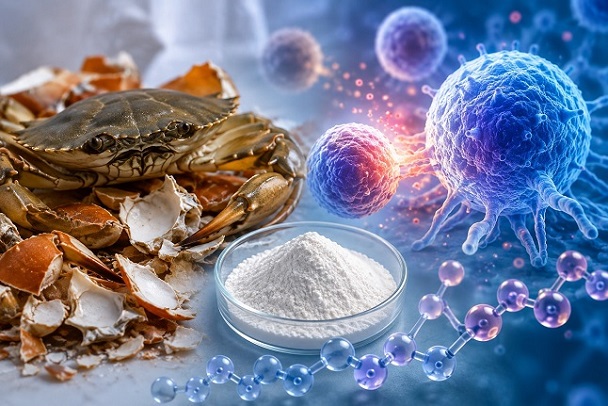 Thai researchers found that chitosan oligosaccharides derived from mud crab shell waste strongly altered key
inflammatory signals in laboratory-grown macrophages.
The research focused on low-molecular-weight COS obtained from Scylla olivacea shell waste. Unlike many earlier studies using less precisely characterized chitosan mixtures, the researchers structurally defined their preparation before examining its antioxidant and anti-inflammatory properties.
Thai Institutions Behind the Research
Researchers Yujun Sung, Siriporn Namwongsa, Sineenart Songkoomkrong, Supawadee Duangprom, and Napamanee Kornthong were affiliated with the Research Unit in Innovative Marine Biotechnology and Natural Bio-Resources for Sustainable Health and Wellness, Thammasat University, Pathum Thani; Department of Biochemistry and Genetic Engineering, Faculty of Medicine, Kasetsart University, Bangkok; and Chulabhorn International College of Medicine, Thammasat University, Rangsit Campus.
Strong Changes in Inflammatory Activity
In laboratory experiments using LPS-stimulated RAW 264.7 macrophages, COS showed no cytotoxicity and significantly reduced nitric oxide production at concentrations of 80 and 160 µg/mL. This Medical News report highlights that nitric oxide produced during macrophage activation is an important marker of inflammatory activity.
Transcriptomic analysis revealed particularly striking molecular changes. Nos2, the gene encoding inducible nitric oxide synthase (iNOS), fell by a log2 fold change of −7.92. Ptgs2, which encodes COX-2, decreased approximately 44%. Other inflammatory genes were also suppressed, including Il1b, Il18, Il6, Ccl5, Mapk14, and Mapk3.
Researchers also identified changes across TNF, NF-κB, MAPK, Toll-like receptor, NOD-like receptor, HIF-1, and lipid-and-atherosclerosis signaling networks, indicating that COS produced broad rather than single-pathway effects.
Computer Modeling Identifies Two Major Targets
Molecular docking strengthened the findings. COS produced its strongest predicted interaction with COX-2 at −7.7 kcal/mol, followed by iNOS at −7.1 kcal/mol. Importantly, these computational predictions converged with the gene-expression results: both Ptgs2 and Nos2 were downregulated.
However, the
Thailand Medical Study does not establish COS as an atherosclerosis treatment. The experiments involved cultured macrophages, and docking predicts possible molecular interactions rather than proving direct binding inside living organisms.
Conclusions
The findings provide compelling early evidence that carefully characterized crab-shell-derived COS can selectively reshape macrophage inflammatory responses, particular
ly through the iNOS and COX-2 axes. Animal studies and direct protein-level experiments are now needed before its therapeutic potential can be established.
The study findings were published in the peer reviewed International Journal of Molecular Sciences.
https://www.mdpi.com/1422-0067/27/17/7775
Read Also:
https://www.thailandmedical.news/articles/thailand-medical 



 Share
Share
 Tweet
Tweet
 Share
Share