Nikhil Prasad Fact checked by:Thailand Medical News Team Aug 29, 2026 1 month, 2 weeks, 1 day, 5 hours, 50 minutes ago
Natural Compound Targets a Key Heart Failure Process
A phytochemical compound derived from Astragalus membranaceus may help counter pathological cardiac remodeling, a damaging process that can progressively weaken the heart and contribute to heart failure.
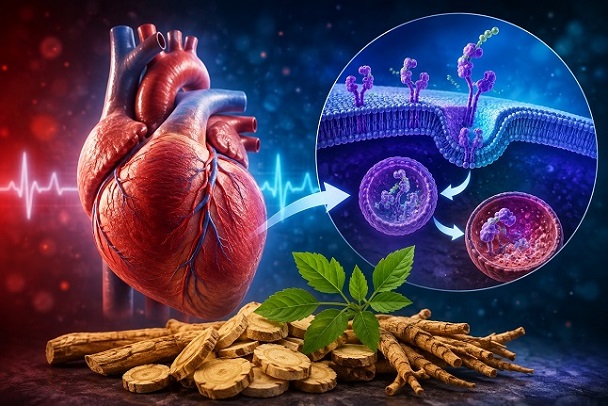 Cycloastragenol reduced cardiac damage and fibrosis while promoting EGFR lysosomal turnover in experimental
models of heart remodeling
Scientists from the School of Life Sciences, Beijing University of Chinese Medicine, Beijing, China, and the Key Laboratory of Ministry of Education for TCM Viscera-State Theory and Applications, Liaoning University of Traditional Chinese Medicine, Shenyang, China, investigated cycloastragenol (CAG) and its effects on molecular pathways involved in cardiac damage.
EGFR Emerges as an Important Target
The researchers first examined 48 people with chronic heart failure, divided equally across four New York Heart Association functional classes. Circulating soluble epidermal growth factor receptor (EGFR) increased as heart failure became more severe.
Higher EGFR was associated with increased BNP, ventricular dilation and poorer cardiac function, while being negatively correlated with ejection fraction. An independent analysis of human left ventricular transcriptomic data also found that myocardial EGFR expression distinguished heart failure with reduced ejection fraction from non-failing hearts with an AUC of 0.870.
These observations provided the clinical background for experiments exploring whether modifying EGFR regulation could influence cardiac remodeling.
Cycloastragenol Produced Broad Heart-Protective Effects
For this
Thailand Medical News report, the most striking findings came from mice continuously infused with angiotensin II for 28 days to induce cardiac remodeling. CAG improved cardiac performance, reduced hypertrophy and lowered myocardial injury markers including cTnI, CKMB and NT-proBNP.
Treatment also reduced collagen deposition and fibrosis while suppressing inflammatory mediators IL-1β, IL-6 and TNF-α. Oxidative stress and cardiomyocyte apoptosis declined, with the strongest improvements generally occurring with high-dose CAG.
In cardiac fibroblasts, which are central drivers of fibrosis, CAG reduced proliferation, migration and colony formation. It also lowered Collagen I, Collagen III and Vimentin, indicating suppression of the fibrotic cellular response.
A Cellular Disposal Mechanism May Explain the Effects
Mechanistic experiments revealed that CAG reduced EGFR accumulation at the cell surface and increased its localization with the lysosomal marker LAMP1. Blocking lysosomal activity largely reversed CAG's reduction of EGFR, whereas proteasome inhibition did not, pointing toward lysosome-associated degradation.
CAG also accelerated EGFR protein turnover and reduced phosphorylation of the MAPK proteins ERK, JNK and p38. Meanwhile, autophagic flux improved. Altering EG
FR residue K716 weakened several of these responses, although the study did not establish K716 as a direct ubiquitination site.
Conclusions
The findings suggest cycloastragenol could influence several interconnected processes underlying pathological cardiac remodeling, including EGFR turnover, MAPK signaling, fibrosis, inflammation and autophagy. However, the evidence remains predominantly preclinical, and larger human studies, pharmacokinetic research and long-term safety investigations are required before CAG can be considered a potential heart failure treatment.
The study findings were published in the peer reviewed journal: Pharmaceuticals.
https://www.mdpi.com/1424-8247/19/9/1360
Read Also:
https://www.thailandmedical.news/articles/herbs-and-phytochemicals
Medical Disclaimer: All content published by Thailand Medical News is based on scientific research and is intended for informational and educational purposes only. It is not medical advice, diagnosis, or treatment. Readers must not attempt to use, apply, or experiment with any protocols, compounds, or therapies mentioned without first consulting a qualified and licensed medical doctor. Many findings discussed are experimental or preliminary, and only a licensed healthcare professional can determine what is safe and appropriate for an individual’s specific medical condition.




 Share
Share
 Tweet
Tweet
 Share
Share