Nikhil Prasad Fact checked by:Thailand Medical News Team Aug 26, 2026 1 month, 2 weeks, 1 day, 16 hours, 23 minutes ago
A major U.S. study has uncovered a disturbing rise in poison-center reports involving liver injury caused by medications, alcohol, supplements, recreational drugs, and environmental chemicals. Researchers found that population-adjusted reports increased by about 385% between 2000 and 2024, with the widely used painkiller acetaminophen emerging as the leading substance involved.
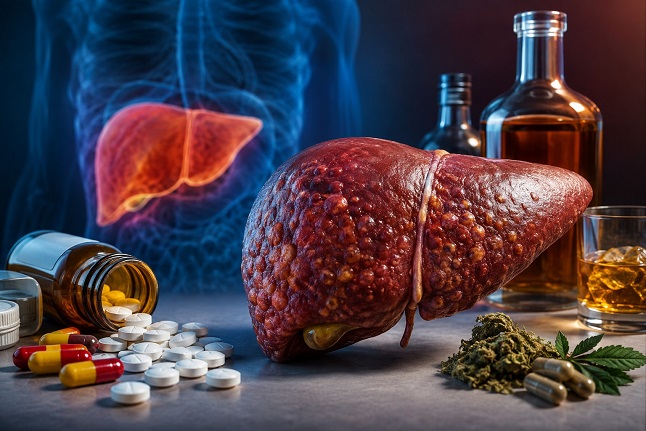 U.S. poison-center data reveal a dramatic rise in toxic liver injuries, with single-ingredient acetaminophen emerging as
the leading substance involved.
What Is Toxic Liver Injury?
The liver acts as the body's chemical-processing center, breaking down medicines, alcohol, and numerous foreign substances, known scientifically as xenobiotics. Normally, these chemicals can be processed safely, but excessive exposure or toxic breakdown products can damage liver cells, trigger inflammation, and potentially cause life-threatening liver failure.
For this
Thailand Medical News report, the researchers analyzed the U.S. National Poison Data System, examining reported exposures among people aged 15 years and older between 2000 and 2024. Liver injury was defined by elevated blood levels of the liver enzymes AST or ALT above 100 U/L.
The researchers were from the University of Virginia, specifically the Department of Psychiatry and Neurobehavioral Sciences, Medical Scientist Training Program, and Department of Emergency Medicine's Division of Medical Toxicology. The research team included Eleanor Blair Towers, Christopher P. Holstege, Scott Schmalzried, and Rita Farah.
More Than 220,000 Liver Injury Exposures
The analysis identified 220,160 reported xenobiotic exposures associated with liver injury. The population-adjusted rate climbed from 10.9 cases per million people in 2000 to 52.9 per million in 2024.
Importantly, these were frequently serious events. More than 80% resulted in inpatient hospitalization. Women accounted for 54% of all reported exposures.
Medications overwhelmingly dominated the cases, representing 85% of exposures among males and 94% among females. Single-ingredient acetaminophen was the most frequently implicated substance, accounting for 33% of cases among males and 45% among females.
Acetaminophen Cases Rose Dramatically
One of the most striking findings involved acetaminophen taken as a single-ingredient product. These exposures associated with liver injury increased 349% among males and 380% among females over the study period.
Researchers found a very different pattern for prescription combination medicines containing acetaminophen. After U.S. regulatory measures in the early 2010s restricted the amount of acetaminophen permitted in certain prescription combination products, related exposures declined by approximately 60% to 85%.
The contrast suggests that regulatory intervention helped reduce problems involving combination medicines, while single-ingredient acetaminophen remained an increasingly important source of reported liver injury.<
;br />
Women experienced higher rates of acetaminophen-associated liver injury than men. Suspected suicide was the most common reason for acetaminophen exposure in both sexes, highlighting that the findings involve not only accidental excessive dosing but also intentional poisoning.
Alcohol, Supplements and Other Substances Also Rising
Alcohol was a distant second among leading substances associated with liver injury. Alcohol-related cases occurred more frequently among men, although reports increased among both men and women during the COVID-19 pandemic.
Researchers also detected increases involving stimulants and street drugs, herbal and dietary supplements, and environmental toxins, although these remained substantially less common than acetaminophen and alcohol.
Conclusions
The findings show that clinically important toxic liver injuries reported to U.S. poison centers have risen dramatically over 25 years. However, poison-center reports do not represent every liver injury occurring nationwide and should not be interpreted as the total incidence in the population. The researchers say continued surveillance, safer medication use, clearer public education, and targeted prevention could help reduce avoidable liver damage.
The study findings were published in the peer reviewed journal: Clinical Gastroenterology and Hepatology.
https://www.cghjournal.org/article/S1542-3565(26)00573-2/abstract
Read Also:
https://www.thailandmedical.news/articles/gastroenterology




 Share
Share
 Tweet
Tweet
 Share
Share