Nikhil Prasad Fact checked by:Thailand Medical News Team Dec 25, 2025 9 months, 2 weeks, 10 hours, 56 minutes ago
Medical News: Preserving Vagus Nerve Connectivity Keeps the Heart Young Longer
A major international research collaboration has uncovered compelling evidence that a single nerve connecting the brain to the heart may hold the key to slowing down heart aging. Scientists have found that preserving the vagus nerve, especially its right-sided branch that connects directly to the heart, plays a critical role in keeping heart cells healthy and resilient even as the body ages.
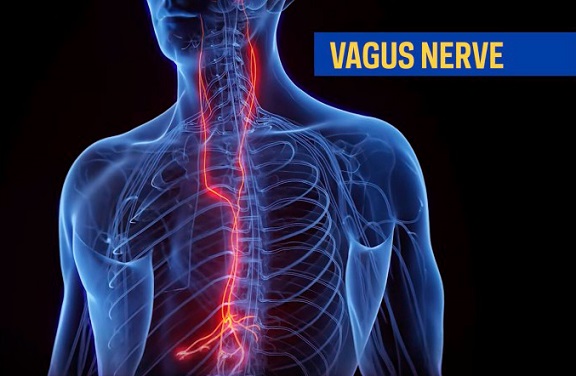 A simple nerve connection between the brain and heart may hold the secret to preventing early heart aging after surgery
Understanding the Heart Brain Connection
A simple nerve connection between the brain and heart may hold the secret to preventing early heart aging after surgery
Understanding the Heart Brain Connection
The vagus nerve is a vital communication highway between the brain and many organs, including the heart. Researchers from the Sant’Anna School of Advanced Studies in Pisa discovered that when this nerve is damaged or cut, the heart begins to age faster, becoming weaker and less coordinated. Surprisingly, this aging effect happens independently of heart rate, meaning the nerve influences deeper cellular health rather than just how fast the heart beats.
How the Study Was Conducted
The research team used a minipig model to closely mimic human heart physiology. The animals underwent a surgical procedure that cut the right cardiac vagus nerve, similar to what can happen during major chest or heart transplant surgeries. Some animals then received a specially designed bioabsorbable nerve conduit that helped guide the damaged nerve to reconnect naturally.
Within weeks, the treated animals showed remarkable improvements. Heart muscle movement became more synchronized, pumping efficiency improved, and damaging changes in heart structure were significantly reduced. In contrast, animals without nerve repair developed early signs of heart failure.
Key Cellular Findings
Detailed tissue analysis revealed that even partial nerve regrowth, restoring only about 20 percent of the original nerve fibers, was enough to deliver major benefits. Oxidative stress markers dropped, aging-related signals inside heart cells normalized, and fibrotic scarring was largely prevented. This suggests that even limited vagus nerve signals can protect heart cells from premature aging and loss of function.
The Role of Bioengineering
Bioengineering played a decisive role in this breakthrough. Researchers developed a biodegradable nerve guidance conduit made from chitosan and poly-ε-caprolactone, which safely dissolves after guiding nerve regeneration. This innovation allowed the nerve to regrow without permanent implants, opening new possibilities for safer surgical recovery. According to this
Medical News report, the technology could transform how surgeons think about protecting the heart during complex operations.
Institutions Behind the Discovery
The study was led by the Sant’Anna School of Advanced Studies and involved experts from the University of Pisa, Scuola Normale Superio
re, Fondazione Toscana G Monasterio, Institute of Clinical Physiology of the CNR, University of Udine, GVM Care and Research, Al-Farabi Kazakh National University, the Leibniz Institute on Ageing in Jena, and École Polytechnique Fédérale de Lausanne.
Why This Matters for Patients
The findings suggest a shift in medical strategy. Instead of treating heart failure years after surgery, doctors may one day prevent it by restoring vagal nerve connections during the operation itself. This approach could be especially important for transplant recipients and patients undergoing major thoracic surgery.
Conclusion
This groundbreaking study shows that the vagus nerve is far more than a simple nerve controlling heart rate. It acts as a powerful protector against heart aging at the cellular level. By preserving or restoring this connection, future surgical techniques may significantly reduce long-term heart damage, improve recovery, and extend healthy heart function for millions of patients worldwide.
The study findings were published in the peer reviewed journal: Science Translational Medicine
https://www.science.org/doi/10.1126/scitranslmed.aea4306
For the latest on heart health, keep on logging to Thailand
Medical News.
Read Also:
https://www.thailandmedical.news/articles/cardiology




 Share
Share
 Tweet
Tweet
 Share
Share