Thailand Medical Study Reveals Immune Gene Variants Behind Post-COVID Hyperglycemia
Nikhil Prasad Fact checked by:Thailand Medical News Team Aug 03, 2026 1 month, 2 weeks, 8 hours, 7 minutes ago
Researchers Identify Genetic Differences That May Influence Blood Sugar Problems After COVID-19
A new study from researchers in Thailand has identified inherited variations in two immune-related genes that may influence whether some people develop high blood sugar after recovering from COVID-19.
The findings provide new insights into why metabolic complications differ among individuals following SARS-CoV-2 infection and suggest that a person's genetic makeup could partly determine their susceptibility to post-COVID hyperglycemia.
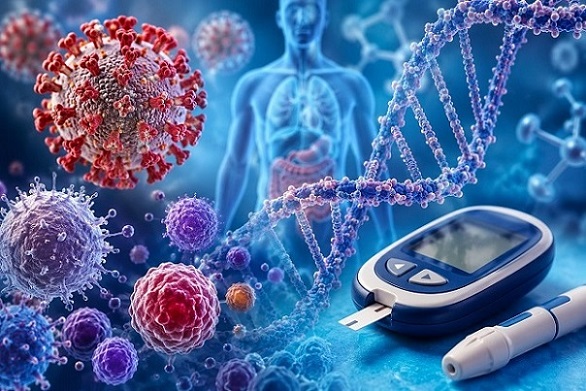 Thai researchers identify immune gene variants that may influence an individual's risk of developing
hyperglycemia after recovering from COVID-19.
The research was conducted by
Thailand Medical scientists from the Graduate Program in Immunology, Department of Immunology, Faculty of Medicine Siriraj Hospital, Mahidol University, the Siriraj Center of Research Excellence for Diabetes and Obesity, Faculty of Medicine Siriraj Hospital, Mahidol University, the Research Division, Faculty of Medicine Siriraj Hospital, Mahidol University, the Medical Program, Faculty of Medicine Siriraj Hospital, Mahidol University, all in Bangkok, Thailand, together with collaborators from Vita-Salute San Raffaele University in Milan, Italy.
Investigating Why Blood Sugar Remains Elevated After COVID-19
Persistent health problems following COVID-19 continue to concern researchers, with abnormal blood sugar regulation emerging as one of the more common metabolic complications. Some individuals who recover from COVID-19 experience persistently elevated blood sugar levels, even if they had never previously been diagnosed with diabetes.
To better understand why this occurs, the researchers enrolled 471 adults who had recovered from laboratory-confirmed mild-to-moderate COVID-19 through the post-COVID follow-up program at Siriraj Hospital.
Participants were divided into two groups based on their HbA1c levels, a measurement that reflects average blood sugar over the previous few months. A total of 252 participants had normal glucose regulation, while 219 had hyperglycemia, defined as an HbA1c level of 5.7% or higher.
Looking for Genetic Factors
The investigators focused on inherited genetic variations known as single nucleotide polymorphisms (SNPs) within genes involved in the body's innate immune response.
After examining selected immune-related genes, they found significant associations involving NOS2, which regulates production of inducible nitric oxide synthase, and CCL2, which produces the inflammatory chemokine monocyte chemoattractant protein-1 (MCP-1).
The researchers emphasized that these genes are involved in regulating immune and inflammatory responses rather than controlling blood sugar directly.
Because inflammation has long been recognized as an important contributor to insulin resistance and metabolic dysfunction, they hypothesized that inherited differences within these immune pathways might influence metabolic recovery following COVID-19.
/>
Key Genetic Variants Associated with Hyperglycemia
After adjusting for important factors including age, body mass index and underlying medical conditions, several genetic variants remained significantly associated with post-COVID hyperglycemia.
Within the NOS2 gene, individuals carrying the rs4795067 AG genotype had approximately 1.77 times greater odds of developing hyperglycemia compared with those carrying the AA genotype.
Conversely, another NOS2 variant, rs35051118 GA, was associated with lower odds of hyperglycemia, suggesting a possible protective effect.
The strongest association was observed in the CCL2 gene. Individuals carrying the rs28730833 TA genotype had nearly threefold higher odds of hyperglycemia after COVID-19. The minor A allele of this variant was also associated with increased risk. In contrast, three additional CCL2 variants—rs1024611 AG, rs4586 TC, and rs41416652 TC—were associated with reduced odds of hyperglycemia, indicating that some inherited variants within the same gene may increase risk while others may be protective.
Differences Extended Beyond Genetics
The study also found important clinical differences between participants with normal blood sugar and those with hyperglycemia.
Individuals with hyperglycemia were generally older and had higher body weight and body mass index. They were also more likely to have hypertension, high cholesterol, diabetes and coronary artery disease. Laboratory testing showed they had higher C-reactive protein levels, indicating persistent low-grade inflammation, as well as higher LDL cholesterol concentrations.
Interestingly, there were no significant differences between the two groups in neutralizing antibody responses, anti-RBD IgG antibody levels, IL-6 concentrations or kidney function, suggesting that the observed metabolic differences were not simply explained by differences in antibody responses to SARS-CoV-2.
Immune Gene Variants Also Influenced Recovery Markers
The researchers performed additional analyses to determine whether individual genetic variants were associated with specific clinical measurements.
Some NOS2 variants were linked to lower levels of inflammatory markers such as IL-6 or C-reactive protein, while certain CCL2 variants were associated with differences in HbA1c levels, antibody responses and inflammatory markers during follow-up. These findings suggest that inherited differences in immune regulation may influence multiple aspects of recovery after COVID-19, including inflammation and glucose metabolism, although the biological mechanisms require further investigation. This Medical News report highlights how immune-metabolic interactions may contribute to differences in long-term recovery among COVID-19 survivors.
Study Limitations
The authors stressed that this was an exploratory candidate-gene study. They noted that multiple testing corrections were not applied and that the findings should therefore be considered hypothesis-generating. They also emphasized that the observed genetic associations require validation in independent populations before they can be considered definitive or applied clinically.
Conclusion
The findings indicate that inherited genetic variants within the immune-related NOS2 and CCL2 genes may contribute to differences in the risk of developing hyperglycemia after recovery from COVID-19. Rather than suggesting that these genes directly cause diabetes, the study supports the idea that variations in immune and inflammatory pathways may influence how the body recovers metabolically after infection. While additional studies involving larger and more diverse populations are needed to confirm these results, the research provides valuable new evidence that host genetics may be one factor underlying the heterogeneous metabolic outcomes observed among post-COVID patients.
The study findings were published in the peer reviewed journal: BioMed Research International.
https://onlinelibrary.wiley.com/doi/10.1155/bmri/7994653
Read Also:
https://www.thailandmedical.news/articles/thailand-medical
https://www.thailandmedical.news/articles/coronavirus
https://www.thailandmedical.news/articles/long-covid




 Share
Share
 Tweet
Tweet
 Share
Share