Nikhil Prasad Fact checked by:Thailand Medical News Team Jul 27, 2026 2 months, 4 weeks, 1 day, 10 hours, 55 minutes ago
Medical News: A remarkable discovery by scientists from the University of Alicante (Spain), University of Porto (Portugal), i3S—Institute for Research and Innovation in Health (Portugal), and the Faculty of Medicine and Faculty of Pharmacy of the University of Porto is shedding new light on how cancer—especially drug-resistant forms—can be targeted more effectively. The research focuses on a natural compound derived from a salt-loving microorganism that appears to attack cancer cells in multiple powerful ways.
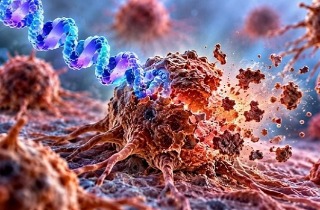
 A salt-derived compound shows powerful effects against resistant cancer cells.
A Powerful Compound from Extreme Environments
A salt-derived compound shows powerful effects against resistant cancer cells.
A Powerful Compound from Extreme Environments
The compound, known as bacterioruberin, comes from Haloferax mediterranei, a microbe that thrives in extremely salty environments. Scientists extracted a bacterioruberin-rich mixture and tested it on lung, breast, and melanoma cancer cells. What makes this compound particularly promising is its ability to interfere with cancer cells through several biological mechanisms rather than relying on a single pathway.
Cancer Cells Slowed, Damaged, and Destroyed
The study showed that the compound significantly reduced cancer cell activity and growth in a time- and dose-dependent manner. The longer the exposure, the stronger the effect. In some cases, cancer cell viability dropped dramatically within 48 hours. The compound also slowed down how quickly cancer cells multiplied. Breast cancer cells showed a sharp decline in growth rates, reaching nearly half their normal levels, while lung cancer cells demonstrated a similar response. Melanoma cells were also affected, although slightly less dramatically in terms of proliferation.
Triggering Internal Stress to Kill Tumors
One of the most important findings was the dramatic increase in reactive oxygen species (ROS) inside cancer cells after treatment. ROS are harmful molecules that, when produced in excess, can damage and kill cells. In this study, ROS levels rose up to 10-fold in lung cancer cells and as high as 14-fold in breast cancer cells. This surge created a toxic internal environment that cancer cells could not survive. Interestingly, cancer cells are more vulnerable to this kind of stress than healthy cells, suggesting a degree of selectivity in how the compound works.
Forcing Cancer Cells to Self-Destruct
The compound also triggered apoptosis, a natural process where cells shut themselves down when damaged. Treated cancer cells showed clear signs of this process, including shrinking, fragmentation, and loss of structure. At higher concentrations, more than half of the lung cancer cells entered this self-destruct phase, indicating a strong and direct anti-cancer effect.
Breakthrough in Drug Resistance
A particularly exciting aspect highlighted in this
Medical News report is the compound’s ability to remain effective against drug-resistant cancer cells. Many cancers become resistant by using a protein called P-glycoprotein (P-gp) to pump drugs out of the cell. However, this com
pound was able to kill resistant cancer cells just as effectively as non-resistant ones. Even more significantly, it partially blocked the action of the P-gp pump, allowing therapeutic substances to stay inside cancer cells longer and work more effectively.
A Potential Game-Changer in Cancer Treatment
These findings suggest that bacterioruberin could act both as a direct anti-cancer agent and as a supporting compound that enhances the effectiveness of existing chemotherapy drugs. Unlike many treatments that fail once resistance develops, this compound appears capable of bypassing or weakening those resistance mechanisms.
Conclusion
Overall, the study demonstrates that bacterioruberin-rich extracts possess strong and multi-layered anti-cancer properties, including the ability to reduce tumor growth, disrupt cancer cell metabolism, induce oxidative stress, trigger apoptosis, and overcome drug resistance mechanisms. These combined effects make it a highly promising candidate for future therapeutic development, particularly for aggressive and treatment-resistant cancers where current options remain limited and often ineffective.
The study findings were published in the peer reviewed International Journal of Molecular Sciences.
https://www.mdpi.com/1422-0067/27/15/6658
For the latest cancer research, keep on logging to Thailand
Medical News.
Read Also:
https://www.thailandmedical.news/articles/cancer




 Share
Share
 Tweet
Tweet
 Share
Share