Canadian Medical Researchers Discover 81 Genes Tied to the Most Dangerous Breast Cancers
Nikhil Prasad Fact checked by:Thailand Medical News Team Jul 23, 2026 2 months, 4 weeks, 1 day, 11 hours, 33 minutes ago
Medical News: Breakthrough sheds new light on the genetic chaos behind aggressive triple-negative breast cancer
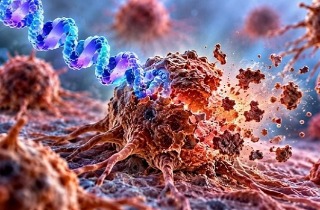
A team of Canadian scientists has made a major breakthrough in understanding one of the deadliest forms of breast cancer by identifying 81 previously unknown genes that help fuel the disease. Their discovery provides fresh insight into why basal-like breast cancer (BLBC), also known as triple-negative breast cancer, is so aggressive and difficult to treat. It also opens promising new directions for developing targeted therapies that could improve survival for patients in the future.
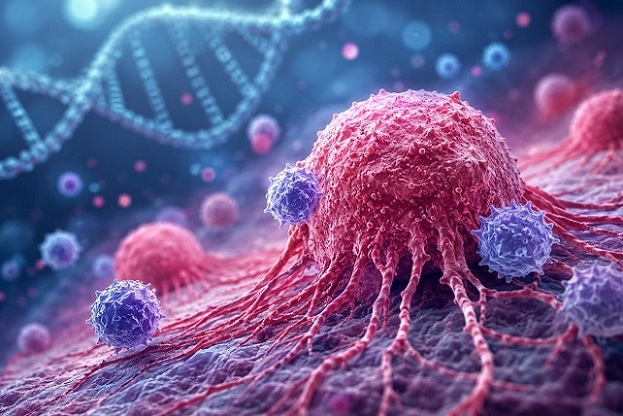 Canadian scientists uncover 81 hidden genes that drive aggressive triple-negative breast cancer, opening new
possibilities for targeted therapies
This
Medical News report highlights groundbreaking work led by researchers from Sinai Health, the Lunenfeld-Tanenbaum Research Institute (LTRI), the University of Toronto's Department of Molecular Genetics, and the Donnelly Centre for Cellular and Biomolecular Research at the University of Toronto. The research was led by Dr. Daniel Schramek, Deputy Director of Discovery Research at Sinai Health, Senior Investigator at LTRI, and Canada Research Chair in Functional Cancer Genomics, together with Dr. Khalid Al-Zahrani, formerly a postdoctoral fellow at LTRI and now Assistant Professor at the University of Toronto.
Understanding the chromosome chaos that powers cancer
Unlike many other forms of breast cancer, basal-like breast cancer lacks three key receptors that doctors normally use to guide treatment. This is why it is commonly known as triple-negative breast cancer. Without these molecular targets, treatment options remain limited, and patients often face poorer outcomes.
The disease is especially common among younger women and disproportionately affects women of colour. A defining feature of BLBC is extensive aneuploidy, a condition in which cancer cells lose large sections of chromosomes or duplicate them many times. These widespread chromosomal abnormalities create what researchers describe as "chromosome chaos."
Healthy cells require a balanced number of chromosomes to function properly. Cancer cells, however, can exploit these imbalances to grow faster, resist stress, spread to distant organs, and evade normal cellular controls. The challenge for scientists has always been determining which genes within these damaged chromosome regions actually drive cancer progression because each altered chromosome segment can contain hundreds of genes.
Dr. Schramek explained that while many breast cancer subtypes now have five-year survival rates approaching 95 percent because researchers successfully identified their key cancer-driving genes, the drivers behind basal-like breast cancer have remained largely unknown, contributing to its poor prognosis.
A revolutionary gene-editing system changes the game
To solve this long-standing problem, the research team developed an innovative genetic screening platform called
CRISPR-KOALA, short for Knockout and Activation Linked Assay.
Previous CRISPR-based systems allowed scientists to switch genes off, helping them study what happens when genes are lost. However, chromosome abnormalities in cancer also create extra copies of genes that become overactive. Existing tools could not accurately model both situations simultaneously.
CRISPR-KOALA overcame this limitation by enabling researchers to both deactivate and activate genes within the same living animal. Using mouse mammary gland models that closely resemble human breast cancer, the team systematically examined more than 3,700 genes located within chromosome regions frequently altered in BLBC.
This dual-function approach allowed researchers to recreate the same genetic gains and losses seen in real tumors, providing a far more realistic picture of how aggressive breast cancers develop than conventional laboratory cell cultures.
Living tumors revealed what laboratory dishes could not
One of the study's most remarkable findings was that 90 percent of the newly discovered cancer-driving genes would have been completely missed using standard cell culture experiments.
Traditional laboratory studies grow cancer cells in flat dishes under controlled conditions. While useful, these models cannot fully reproduce the complex environment inside a living tumor, where cancer cells constantly interact with immune cells, blood vessels, surrounding tissues, changing nutrient supplies, inflammation, and fluctuating oxygen levels.
By studying tumors in living animals, researchers observed biological interactions that simply cannot be recreated in cell cultures. These real-world conditions exposed dozens of previously hidden genetic drivers responsible for cancer growth.
Overall, the screening identified 81 previously unrecognized genes associated with aggressive breast cancer from the larger collection of newly identified cancer drivers, dramatically expanding scientists' understanding of the disease's genetic landscape.
PLGRKT emerges as a promising therapeutic target
Among all the newly identified genes, one called PLGRKT stood out as an especially powerful driver of basal-like breast cancer.
The researchers discovered that PLGRKT enables cancer cells to survive in oxygen-starved regions deep inside tumors. Normally, cells rely heavily on oxygen to efficiently generate energy. However, rapidly growing tumors often outgrow their blood supply, creating low-oxygen environments that would normally kill many cells.
PLGRKT allows cancer cells to switch to alternative energy-producing pathways while simultaneously strengthening their mitochondria and improving their ability to detoxify harmful reactive oxygen species. This enhanced stress resistance enables tumor cells not only to survive but also to continue multiplying under conditions that would typically halt growth.
Because PLGRKT appears to play such an important role in maintaining tumor survival, it represents an attractive candidate for future targeted drug development.
Multiple cancer pathways uncovered
Beyond PLGRKT, the research uncovered dozens of additional genes involved in several critical signaling networks that regulate cancer behavior, including the MAPK, HIPPO, and WNT pathways. These pathways control cell growth, survival, communication, tissue organization, and spread throughout the body.
The findings also demonstrate that different combinations of these newly identified genes contribute to the remarkable biological diversity seen among basal-like breast cancers. This helps explain why patients with apparently similar diagnoses often respond very differently to treatment and why finding universally effective therapies has proven so difficult.
Importantly, the researchers showed that manipulating these newly identified driver genes could substitute for large chromosome abnormalities in experimental mouse models carrying TP53 mutations, providing strong evidence that these genes are genuine cancer drivers rather than simply innocent bystanders.
Conclusion
This landmark Canadian study represents one of the most comprehensive investigations ever conducted into the genetic drivers hidden within the chromosomal abnormalities of basal-like breast cancer. By developing the innovative CRISPR-KOALA platform, the research team successfully overcame a major technological barrier that had limited cancer research for decades. Instead of simply cataloguing chromosome abnormalities, they were able to pinpoint the individual genes responsible for driving one of the world's most aggressive breast cancers. The discovery of 81 previously unknown genes, together with the identification of PLGRKT as a particularly powerful cancer-promoting gene, significantly expands the pool of potential drug targets for future therapies. Equally important, the work demonstrates that studying tumors in living biological systems reveals critical genetic interactions that are largely invisible in conventional laboratory cell cultures. Although much more research is needed before new treatments become available, these findings provide an entirely new framework for understanding how chromosome instability fuels cancer progression and offer renewed hope that more precise, personalized therapies can eventually be developed for patients facing triple-negative breast cancer, one of the most challenging cancers in modern oncology.
The study findings were published in the peer reviewed journal: Nature.
https://www.nature.com/articles/s41586-026-10752-9
For the latest research on breast cancer, keep on logging to Thailand
Medical News.
Read Also:
https://www.thailandmedical.news/articles/cancer




 Share
Share
 Tweet
Tweet
 Share
Share