Nikhil Prasad Fact checked by:Thailand Medical News Team Apr 13, 2026 5 months, 4 weeks, 1 day, 21 hours, 54 minutes ago
Thailand Medical: A fascinating new discovery from Thailand is shedding light on how a traditional Southeast Asian berry could play a powerful role in brain health, memory, and cognitive function. Scientists have found that Cleistocalyx nervosum var. paniala - a deep purple fruit commonly consumed in the region - may actively support the growth and connectivity of brain cells, opening new possibilities for future neurological therapies.
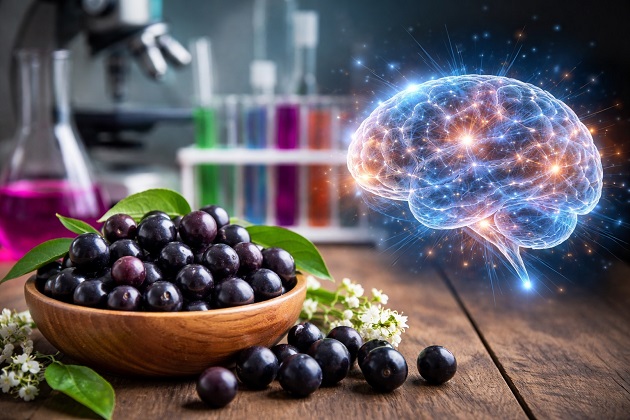 A Thai berry extract shows promising potential to boost brain cell growth and connectivity
What Makes This Berry Special
A Thai berry extract shows promising potential to boost brain cell growth and connectivity
What Makes This Berry Special
The fruit, rich in natural compounds such as cyanidin-3-glucoside and resveratrol, has long been valued for its antioxidant and anti-inflammatory properties. However, this new research takes things a step further by examining how it directly affects brain cells, particularly those in the hippocampus - the region responsible for learning and memory.
Thailand Medical researchers from Chulalongkorn University (Thailand), Mahidol University (Thailand), Rangsit University (Thailand), The George Washington University (USA), and associated research centers including the Chulalongkorn Autism Research and Innovation Center of Excellence and the Center of Excellence on Natural Products for Neuroprotection and Anti-Ageing collaborated on this groundbreaking work.
How the Study Was Conducted
Scientists extracted compounds from the berry and applied them to brain cells derived from laboratory rats. These cells were carefully studied over two weeks to observe changes in gene activity, cell growth, and the formation of connections between neurons.
Importantly, the researchers ensured that only safe concentrations were used. They found that lower doses of the extract were non-toxic and suitable for detailed experimentation, while higher doses could reduce cell viability.
Key Discoveries That Stand Out
The results were striking. The berry extract significantly enhanced neuritogenesis, which is the growth of neuron branches, and synaptogenesis, the formation of connections between brain cells.
Cells treated with the extract showed longer and more complex branching patterns. This suggests that the brain cells were forming stronger and more intricate communication networks. Notably, male-derived cells showed a more pronounced response compared to female-derived cells.
At the genetic level, thousands of genes were altered by the treatment. Many of these genes are directly linked to brain development, memory formation, and synaptic function. For example, the study observed increased activity in genes related to growth factors and neurotransmission, which are essential for healthy brain signaling.
A Deeper Look into Brain Function
Interestingly, the extract also influenced how neurons connect at the microscopic level. In male brain cells, there was a clear increase in markers associated with synaptic connections, suggesting improved communication bet
ween neurons. Female cells showed different patterns, highlighting that biological sex may play a role in how the brain responds to natural compounds.
This Medical News report highlights that such sex-specific responses could be critical when developing future treatments, as therapies may need to be tailored differently for men and women.
Why This Matters for the Future
The implications of these findings are significant. Enhancing neurite growth and synapse formation is crucial for maintaining cognitive health and could potentially help in conditions such as Alzheimer’s disease, developmental disorders, and age-related cognitive decline.
Moreover, the fact that this effect comes from a natural, food-based source makes it even more exciting. It suggests that dietary components could play a larger role in brain health than previously thought.
Final Conclusions
The study provides strong evidence that Cleistocalyx nervosum var. paniala extract can positively influence brain cell development, connectivity, and genetic activity. By promoting neurite outgrowth and synapse formation, the berry demonstrates clear neuroenhancing potential. However, the findings also reveal important sex-dependent differences, indicating that responses may vary between males and females. While these results are promising, further research - especially in human subjects - is needed to confirm these benefits and determine safe and effective dosages. If validated, this humble Thai berry could become a valuable tool in supporting brain health and preventing neurological decline.
The study findings were published in the peer reviewed journal: Nutrients.
https://www.mdpi.com/2072-6643/18/8/1200
For the latest Thai medical studies, keep on logging to
Thailand Medical News.
Read Also:
https://www.thailandmedical.news/articles/thailand-medical
https://www.thailandmedical.news/articles/herbs-and-phytochemicals




 Share
Share
 Tweet
Tweet
 Share
Share