Thailand Medical Study Finds That COVID-19 Leaves Lasting Brain Damage Clues via Blood Biomarkers
Nikhil Prasad Fact checked by:Thailand Medical News Team Jul 17, 2026 2 months, 4 weeks, 1 day, 7 hours, 42 minutes ago
Thailand Medical: For years, doctors have known that many people continue to suffer from brain fog, memory problems, headaches, fatigue, and other neurological issues long after recovering from COVID-19. Now, a
Thailand Medical study has revealed that those who experienced severe or critical COVID-19 show significantly higher levels of blood markers linked to brain inflammation and nerve cell damage, raising fresh concerns about the long-term impact of the virus on the brain.
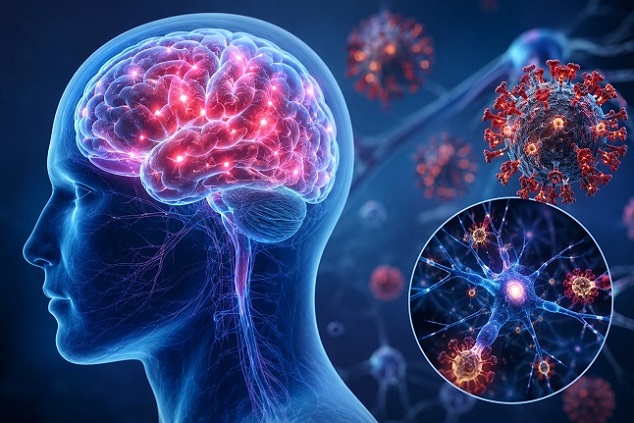 New research shows severe COVID-19 is linked to higher blood markers of inflammation and brain injury that may
help predict long-term neurological complications
The research was conducted by scientists from the Thai Red Cross Emerging Infectious Diseases and Health Science Centre at King Chulalongkorn Memorial Hospital, the Faculty of Medicine, Chulalongkorn University, the Faculty of Science, Chulalongkorn University, and the Thai Red Cross Society, all based in Bangkok, Thailand.
Blood Tests Reveal Hidden Brain Injury
The researchers examined 325 adults who had previously been infected with SARS-CoV-2. Among them, 265 participants continued to experience persistent neurological symptoms at least 12 weeks after infection, while 60 recovered without developing long COVID symptoms.
The team analyzed blood samples for inflammatory proteins and several biomarkers associated with brain injury, including neurofilament light chain (NfL), glial fibrillary acidic protein (GFAP), phosphorylated tau181 (p-tau181), and beta-amyloid proteins.
Their findings showed a striking pattern. Individuals who had suffered severe or critical COVID-19 consistently displayed much higher levels of inflammatory molecules such as IL-6, IL-1β, TNF-α, and IL-8. At the same time, they also had sharply elevated levels of NfL, GFAP, and p-tau181, all of which are widely recognized indicators of damage to nerve cells and supporting brain cells. They also had lower beta-amyloid 42/40 ratios, a pattern often associated with neurodegenerative processes.
Neurological Symptoms Became More Severe
The study found that neurological problems became increasingly common as the severity of the original COVID-19 infection increased.
Patients who had experienced critical illness reported the highest rates of memory problems, dizziness, loss of smell, loss of taste, sleep disturbances, blurred vision, headaches, and concentration difficulties. While headaches and trouble concentrating appeared across all groups, symptoms involving memory, smell, and taste became much more frequent among those with severe disease.
Researchers also observed that older patients were far more likely to develop severe COVID-19 and persistent neurological complications, suggesting that age remains an important risk factor for long-term brain-related consequences.
Inflammation and Brain Damage Appeared to Work Together
One of the study's mo
st important discoveries was the strong relationship between inflammation and markers of brain injury.
This Medical News report highlights that patients with severe and critical disease showed powerful positive correlations between inflammatory cytokines and neurological biomarkers. As inflammatory proteins such as IL-6, IL-1β, and TNF-α increased, blood levels of NfL, GFAP, and p-tau181 also rose significantly. These relationships were weak or almost absent in patients who had experienced only mild or moderate COVID-19.
The researchers believe this suggests that excessive immune activation may contribute directly to damage involving neurons and astrocytes, two critical cell types responsible for maintaining healthy brain function. Persistent inflammation may therefore continue affecting the nervous system long after the virus itself has been cleared.
Biomarkers Could Help Identify High-Risk Patients
The investigators also performed advanced statistical analyses combining multiple biomarkers into a single risk profile.
Rather than relying on one blood marker alone, the combined biomarker model almost perfectly distinguished patients with severe neurological involvement from those with milder disease. The researchers believe that future blood tests measuring combinations of NfL, GFAP, p-tau181, beta-amyloid proteins, and inflammatory cytokines could eventually become valuable tools for identifying long COVID patients who require closer neurological monitoring and earlier medical intervention.
Importantly, additional analyses showed that these biomarker patterns remained consistent even after accounting for differences in age, indicating that the findings were not simply explained by aging alone.
Conclusion
The findings provide compelling evidence that severe COVID-19 is associated with a much greater degree of persistent inflammation and measurable brain injury than mild disease. Blood biomarkers reflecting nerve cell damage, astrocyte activation, and abnormal protein changes closely tracked the intensity of inflammation, suggesting that ongoing immune activity may continue affecting the brain long after acute infection has resolved. Although additional long-term studies are still needed, these biomarkers could eventually help physicians identify patients at highest risk for lasting neurological complications and guide earlier treatment strategies before permanent damage develops.
The study findings were published in the peer reviewed International Journal of Immunopathology and Pharmacology.
https://journals.sagepub.com/doi/full/10.1177/03946320261465568
For the latest COVID-19 news, keep on logging to
Thailand Medical News.
Read Also:
https://www.thailandmedical.news/articles/coronavirus
https://www.thailandmedical.news/articles/long-covid




 Share
Share
 Tweet
Tweet
 Share
Share