Thailand Medical Study Find That Daily Consumption of Watercress Reduces Blood Pressure and Boost Heart Health
Nikhil Prasad Fact checked by:Thailand Medical News Team Jun 22, 2026 3 months, 1 week, 5 days, 6 hours, 18 minutes ago
Thailand Medical: A simple leafy green vegetable commonly known as watercress may offer surprising benefits for heart health, according to a new clinical study conducted in Thailand. Researchers found that daily consumption of watercress for just four weeks significantly lowered blood pressure and improved several markers linked to cardiovascular disease risk.
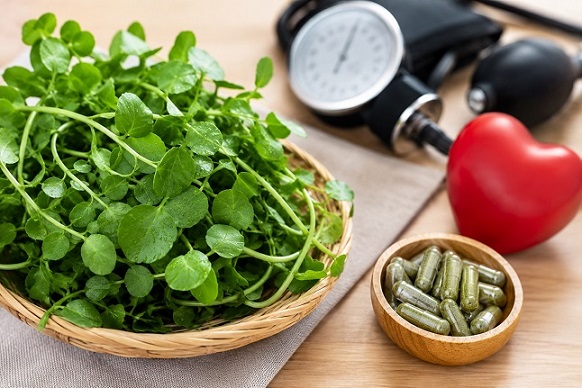 Daily watercress consumption significantly lowered blood pressure and improved key heart health markers in
middle-aged Thai adults.
The study was conducted by
Thailand Medical scientists from the School of Health Sciences Research and the Research Institute for Health Sciences at Chiang Mai University, along with the Department of Surgery, Faculty of Medicine, Chiang Mai University, Thailand. Their findings suggest that watercress could become an easy and natural dietary strategy to support cardiovascular health.
A Growing Need for Natural Heart Protection
Cardiovascular disease remains the leading cause of death worldwide. In Thailand, heart disease continues to be a major public health concern, with deaths steadily increasing over the last two decades. While medications can effectively reduce cardiovascular risk, many people are looking for affordable and natural ways to protect their hearts before serious disease develops.
Watercress (Nasturtium officinale) has attracted growing scientific interest because it is packed with beneficial plant compounds, antioxidants, dietary nitrates, vitamins, and glucosinolates. In fact, it is often ranked among the most nutrient-dense vegetables in the world.
To investigate its potential benefits, researchers enrolled 26 middle-aged Thai adults aged between 40 and 59 who had low-to-moderate cardiovascular risk factors such as elevated blood pressure, high cholesterol, excess body weight, or impaired blood sugar control.
Four Weeks of Watercress Produced Remarkable Blood Pressure Improvements
Participants were randomly assigned to receive either dried watercress capsules or placebo capsules for four weeks. Those in the watercress group consumed the equivalent of 8 grams of dried watercress daily.
By the end of the study, the results were striking. Participants taking watercress experienced significant reductions in both systolic and diastolic blood pressure. Median systolic blood pressure fell to 117 mmHg, while the placebo group recorded a much higher median value of 144 mmHg. Diastolic blood pressure also dropped significantly compared to the placebo group.
Researchers believe these benefits are largely due to watercress's rich nitrate content. Once consumed, dietary nitrates can be converted into nitric oxide within the body. Nitric oxide helps relax blood vessels, improves circulation, and reduces resistance to blood flow, resulting in lower blood pressure.
The study also noted that compounds in watercress may help inhibit angiotensin-converting enzyme (ACE), a key regulator of blood pressure that is
also targeted by many prescription hypertension drugs.
Antioxidant Defenses Improved
Beyond blood pressure improvements, watercress appeared to strengthen the body's antioxidant defenses.
One of the most important findings involved oxidized LDL, often referred to as "damaged cholesterol." Oxidized LDL is considered especially dangerous because it promotes inflammation and contributes to plaque formation inside arteries.
After four weeks, oxidized LDL levels fell substantially in the watercress group, dropping from abnormally elevated levels into the normal range.
At the same time, participants showed a significant increase in overall antioxidant capacity. This suggests that watercress helped the body better neutralize harmful free radicals that can damage blood vessels and accelerate aging.
This Medical News report notes that researchers believe these antioxidant effects may be driven by phenethyl isothiocyanate, a compound produced from watercress glucosinolates. Laboratory studies have shown that this compound activates protective cellular pathways that increase the production of the body's own antioxidant enzymes.
Reduced Estimated Cardiovascular Risk
Researchers also calculated each participant's estimated 10-year cardiovascular disease risk using the Framingham Risk Score.
The watercress group experienced a meaningful decline in their estimated risk, dropping from approximately 9 percent to 5.5 percent after the intervention.
Although the study was too small to prove long-term risk reduction, the findings indicate that improvements in blood pressure and antioxidant status may translate into better cardiovascular outcomes over time.
Interestingly, researchers did not observe significant changes in blood sugar levels, triglycerides, HDL cholesterol, or markers of arterial stiffness. A temporary rise in LDL cholesterol was noted in the watercress group, but investigators believe this finding requires further study and may represent a short-term metabolic adaptation rather than a harmful effect.
Conclusions
The findings suggest that watercress may be far more than just a salad vegetable. In this randomized placebo-controlled study, daily watercress consumption significantly lowered blood pressure, reduced harmful oxidized LDL levels, improved antioxidant defenses, and lowered estimated cardiovascular risk scores among middle-aged Thai adults. While larger and longer-term studies are still needed to confirm these benefits and clarify certain cholesterol-related findings, the results provide compelling evidence that regular watercress consumption could serve as a simple, affordable, and natural approach to supporting cardiovascular health and reducing some of the early risk factors associated with heart disease.
The study findings were published in the peer reviewed journal: Antioxidants.
https://www.mdpi.com/2076-3921/15/6/766
For the latest Thai medical research, keep on logging to
Thailand Medical News.
Read Also:
https://www.thailandmedical.news/articles/thailand-medical




 Share
Share
 Tweet
Tweet
 Share
Share

































