Study Finds That COVID-19 Raises Risk of Developing Obstructive Sleep Apnea Even Years Later
Nikhil Prasad Fact checked by:Thailand Medical News Team Jul 02, 2026 3 months, 2 hours, 6 minutes ago
Medical News: Millions of people who recover from COVID-19 may continue facing unexpected health challenges long after the infection has passed. A new study has found that the virus is linked to a significantly higher risk of developing obstructive sleep apnea (OSA), a serious sleep disorder that can increase the likelihood of heart disease, stroke, diabetes, and cognitive decline.
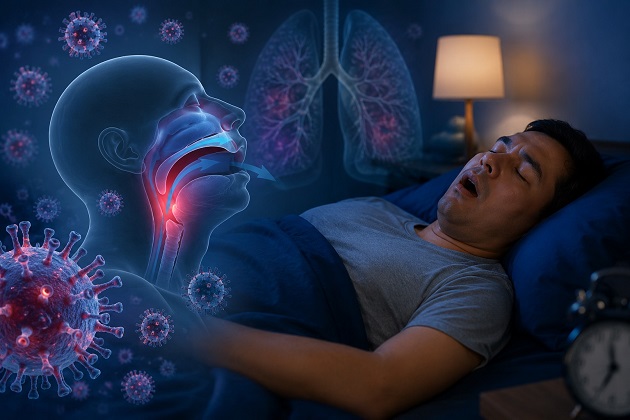 New research shows COVID-19 survivors face a significantly higher long-term risk of developing obstructive sleep
apnea, even years after recovery
Researchers from the Albert Einstein College of Medicine and Montefiore Medical Center, New York, USA, discovered that the increased risk remained evident for as long as 4.5 years after infection, regardless of whether patients were hospitalized or managed their illness at home. This
Medical News report highlights findings that could reshape long-term follow-up care for millions of COVID-19 survivors.
Large Study Followed More Than 900,000 Adults
The research team analyzed electronic health records from 910,393 adults who underwent SARS-CoV-2 testing between March 2020 and August 2024 within the Montefiore Health System in New York. Individuals with a previous diagnosis of obstructive sleep apnea or inadequate follow-up were excluded to ensure only newly diagnosed cases were evaluated.
Participants were grouped into hospitalized COVID-19 patients, non-hospitalized COVID-19 patients, and COVID-negative individuals. After adjusting for age, medical conditions, socioeconomic factors, vaccination status, and other variables, researchers found that hospitalized patients had a 41% higher risk of developing obstructive sleep apnea, while non-hospitalized patients had a 33% higher risk compared to people who never tested positive.
To strengthen the findings, the researchers also compared results with a historical pre-pandemic group of 621,046 people. The increased risk remained consistent, confirming that COVID-19 itself appears to be independently associated with the later development of sleep apnea.
Why COVID-19 May Trigger Sleep Apnea
Obstructive sleep apnea occurs when the upper airway repeatedly collapses during sleep, causing interrupted breathing, reduced oxygen levels, and frequent awakenings that often go unnoticed.
The researchers believe several biological mechanisms may explain why COVID-19 increases the risk. Persistent inflammation after infection may weaken the muscles that keep the airway open during sleep. Elevated inflammatory molecules, including IL-6 and TNF-α, may interfere with breathing control while damaging the body's normal respiratory regulation.
COVID-19 has also been shown to affect the nervous system, including areas of the brainstem responsible for controlling breathing. Long-lasting autonomic nervous system dysfunction, persistent fatigue, muscle weakness, and changes in body weight following infection may further increase the likelihood of airway collapse during sleep. Toge
ther, these factors may either trigger entirely new cases of sleep apnea or reveal previously silent disease.
Certain Groups Face Even Greater Risk
The study found that some populations were especially vulnerable.
Among hospitalized patients, younger adults under 60 years of age, Black individuals, and people with asthma showed stronger links between COVID-19 and new sleep apnea diagnoses.
Among patients who were never hospitalized, women, Hispanic individuals, and people with multiple chronic medical conditions experienced particularly elevated risks.
Interestingly, vaccination status did not significantly change the likelihood of developing sleep apnea after COVID-19, suggesting that the mechanisms responsible for this complication may not be fully prevented by vaccination alone.
Serious Health Problems May Follow
The consequences extended beyond disturbed sleep. Hospitalized COVID-19 patients who later developed obstructive sleep apnea also faced significantly greater risks of heart failure and pulmonary hypertension compared to COVID-negative individuals.
Among non-hospitalized patients, developing sleep apnea was associated with an increased risk of obesity, adding another layer of concern because obesity itself can worsen sleep apnea, creating a harmful cycle that may progressively damage overall health.
The researchers emphasized that many people experiencing ongoing fatigue, poor concentration, excessive daytime sleepiness, loud snoring, or breathing pauses during sleep after COVID-19 should be evaluated for obstructive sleep apnea, even if they do not fit the traditional profile for the condition.
Conclusion
The findings provide compelling evidence that COVID-19 can have lasting effects on sleep health by increasing the risk of developing obstructive sleep apnea years after infection. The results also suggest that the virus may trigger biological changes affecting breathing regulation, inflammation, nerve function, and muscle control. Early screening of high-risk COVID-19 survivors could allow earlier diagnosis and treatment, potentially reducing future cardiovascular complications and improving long-term quality of life for millions of patients worldwide.
The study findings were published in the peer reviewed journal: Scientific Reports.
https://www.nature.com/articles/s41598-026-56469-7
For the latest COVID-19 news, keep on logging to Thailand
Medical News.
Read Also:
https://www.thailandmedical.news/articles/coronavirus
https://www.thailandmedical.news/articles/long-covid




 Share
Share
 Tweet
Tweet
 Share
Share