Nikhil Prasad Fact checked by:Thailand Medical News Team Jul 10, 2026 2 months, 4 weeks, 1 day, 17 hours, 26 minutes ago
Medical News:
Plant Compounds Show Powerful Multi-Target Attack on Tumors
Scientists are drawing fresh attention to a little-known group of natural plant compounds called flavokawains after a comprehensive review found they can attack cancer in multiple ways while causing relatively little harm to healthy cells. Although the research remains in the preclinical stage, the findings suggest these naturally occurring compounds could one day complement or even improve existing cancer therapies.
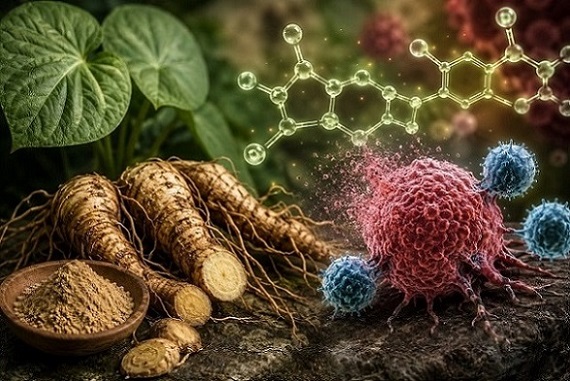 Researchers say naturally occurring flavokawains show broad preclinical potential to suppress tumor
growth and block multiple cancer-promoting pathways
The review was conducted by researchers from the Cancer Biology Laboratory, Department of Biosciences and Bioengineering, Indian Institute of Technology Guwahati (IIT Guwahati), Assam, India, and the AIST-INDIA DAILAB at the National Institute of Advanced Industrial Science and Technology (AIST), Tsukuba, Japan.
Three Natural Compounds with Remarkable Potential
Flavokawains are natural chemicals found mainly in the roots of the kava plant (Piper methysticum), although they are also present in several other medicinal plants. The three principal forms—Flavokawain A, Flavokawain B and Flavokawain C—share similar structures but display distinct biological properties.
After analyzing 53 peer-reviewed preclinical studies, the researchers concluded that these compounds consistently slowed cancer cell growth, triggered cancer cell death, interrupted cell division and reduced the ability of tumors to spread. Unlike many conventional chemotherapy drugs that target only one pathway, flavokawains influence numerous biological processes at the same time, making it harder for cancer cells to survive or develop resistance.
How They Fight Cancer
One of the review's most significant findings is that flavokawains do much more than simply kill cancer cells. They also reshape the tumor microenvironment—the supportive surroundings that allow tumors to grow and spread.
This
Medical News report highlights that laboratory studies found flavokawains reduce the formation of new blood vessels that feed tumors by lowering levels of VEGF and Angiopoietin-1. They also suppress proteins involved in tissue invasion, restore cell adhesion molecules that keep cancer from spreading, disrupt cancer stem cell survival, block inflammatory signaling pathways including PI3K/Akt/mTOR and NF-κB, and activate natural cell-suicide mechanisms known as apoptosis.
Researchers also found these compounds can halt the cell cycle, preventing cancer cells from multiplying while simultaneously activating proteins that repair or eliminate damaged cells. Together, these effects create a coordinated attack against tumors rather than relying on a single mechanism.
Broad Activity Across Many Cancers
Evidence reviewed by the team showed encouraging results
against an unusually wide range of cancers. Laboratory and animal studies reported anti-cancer activity in bladder, breast, colorectal, gastric, liver, lung, prostate, ovarian, cervical, melanoma, leukemia, lymphoma, brain, head and neck, bone and several other cancers.
Some studies also demonstrated that flavokawains enhanced the effectiveness of chemotherapy drugs such as cisplatin, gemcitabine, doxorubicin and docetaxel, suggesting these natural compounds could eventually serve as treatment boosters while potentially allowing lower doses of toxic medications. The review also noted generally favorable safety findings in preclinical testing, although comprehensive human studies remain essential before any clinical recommendations can be made.
A Promising but Early Step
While the findings are exciting, the researchers emphasize that flavokawains have not yet been proven effective in people. Most evidence comes from laboratory experiments and animal models, meaning carefully designed clinical trials will be necessary to determine their safety, optimal dosage and real-world effectiveness against human cancers before these compounds can become part of standard medical care.
The study findings were published in the peer reviewed journal: Cancers.
https://www.mdpi.com/2072-6694/18/14/2211
For the latest cancer research, keep on logging to Thailand
Medical News.
Read Also:
https://www.thailandmedical.news/articles/cancer




 Share
Share
 Tweet
Tweet
 Share
Share