Nikhil Prasad Fact checked by:Thailand Medical News Team Jun 30, 2026 3 months, 4 days, 7 hours, 9 minutes ago
Medical News: Scientists are uncovering major new insights into how human papillomavirus (HPV) causes cancer, offering fresh hope for earlier detection and better treatments. Once mainly linked to cervical cancer, HPV is now known to play a role in several other cancers, including those affecting the throat, anus, penis, and even parts of the nasal cavity.
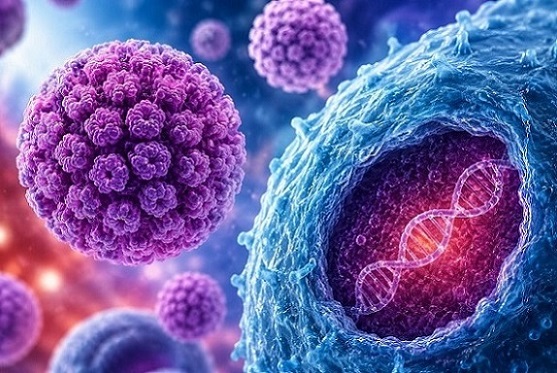 Scientists uncover how HPV triggers cancer and reveal new ways to detect and treat it early
This latest body of research comes from scientists at the Department of Medical and Molecular Sciences, College of Health Sciences, University of Delaware, USA, along with multiple international research teams contributing to a special collection of studies.
How HPV Disrupts the Body’s Natural Defenses
HPV works by interfering with the body’s built-in protection systems. It produces proteins that disable key molecules responsible for controlling cell growth. Two of the most dangerous viral proteins, known as E6 and E7, shut down tumor suppressors that normally prevent cells from becoming cancerous. Without these safeguards, cells begin to grow uncontrollably.
Other viral proteins such as E1 and E2 help the virus copy its genetic material inside human cells. Researchers found that E2 plays a particularly important role in controlling cancer-causing genes. When E2 is functioning properly, it keeps harmful viral activity under control. However, when the virus inserts itself into human DNA, this control is lost, allowing cancer-related genes to become highly active.
Early Cellular Changes That Signal Trouble
One of the most important discoveries is that HPV begins altering cells long before cancer develops. A lesser-known protein called E5 appears to trigger early changes that make cells more aggressive. This includes activating a process that allows cells to move and spread more easily, a key step in cancer development.
Scientists also identified changes in microRNAs and DNA methylation—both of which act like switches that control gene activity. These early molecular changes could serve as warning signs, helping doctors identify patients at risk before cancer fully develops.
This
Medical News report highlights how these early molecular disruptions are not random events but part of a structured progression that begins with viral infection and gradually reshapes the host cell environment. Researchers emphasize that HPV integration into human DNA is a turning point, after which the infection becomes far more dangerous. This stage is also associated with widespread genetic instability, immune system evasion, and activation of cancer-promoting pathways.
Breakthrough Diagnostic Tools Changing Screening
New diagnostic tools are emerging from this research. One promising method involves methylation testing, which can distinguish between low-risk and high-risk cervical conditions. In a clinical study of over 100 women, researchers found that many patients initially considered for sur
gery could have safely avoided it based on methylation results. In some cases, up to 85 percent of unnecessary surgical procedures could potentially be prevented.
Another breakthrough involves urine testing. Scientists discovered that certain proteins in urine differ significantly between healthy individuals and those with advanced pre-cancerous conditions. These proteins are linked to structural changes in tissues and may reflect how HPV disrupts the body’s cellular framework. This opens the door to simple, non-invasive screening methods.
New Treatments Show Encouraging Results
Researchers are also exploring innovative treatment options. One study found that latex extracted from the fig plant (Ficus carica) can kill cancer cells while leaving normal cells largely unharmed. Importantly, it also appears to enhance immune system activity by increasing the presentation of viral antigens, helping the body better recognize infected cells.
Therapeutic vaccines are another promising area. Some experimental vaccines have already shown the ability to eliminate pre-cancerous lesions and clear HPV infections in a significant number of patients. In certain trials, more than half of treated individuals experienced complete regression of high-grade lesions.
HPV’s Role Beyond Cervical Cancer
The research also highlights that HPV is linked to a wider range of diseases than previously believed. It plays a role in rare cancers such as penile cancer and certain tumors in the nasal region. At the same time, scientists are identifying cancers that appear similar but are not caused by HPV, which require entirely different treatment strategies.
Conclusions
The latest findings provide a much deeper understanding of how HPV drives cancer development at multiple levels. From early molecular disruptions to large-scale genetic and immune system changes, the virus reshapes the body in ways that favor tumor growth. These discoveries are already influencing how doctors approach screening, diagnosis, and treatment. The ability to detect early warning signs, avoid unnecessary surgeries, and develop targeted therapies represents a major step forward. Combined with vaccination efforts, these advances could significantly reduce the global burden of HPV-related cancers and improve long-term patient outcomes.
The study findings were published in the peer reviewed International Journal of Molecular Sciences.
https://www.mdpi.com/1422-0067/27/13/5865
For the latest on HPV and cancers caused by HPV, keep on logging to Thailand
Medical News.
Read Also:
https://www.thailandmedical.news/articles/cancer
https://www.thailandmedical.news/articles/stds




 Share
Share
 Tweet
Tweet
 Share
Share

































