COVID-19 Significantly Increases the Risk of Ischemic Strokes, with Elevated Risks Persisting for Months to Years
Nikhil Prasad Fact checked by:Thailand Medical News Team Jul 07, 2026 2 months, 4 weeks, 1 day, 15 hours, 23 minutes ago
Medical News: The landscape of cardiovascular and cerebrovascular health has been profoundly altered by the global arrival of SARS-CoV-2. Initially characterized as a primarily respiratory pathogen, scientific consensus has since revealed that the virus behaves like an aggressive systemic vascular agent. Clinical data confirms that COVID-19 significantly elevates the risk of acute ischemic strokes. Alarmingly, this threat does not dissipate when the initial respiratory symptoms fade. Large-scale longitudinal investigations reveal that survivors face a lingering, heightened vulnerability to arterial blockages that can persist for months or even up to three years post-infection.
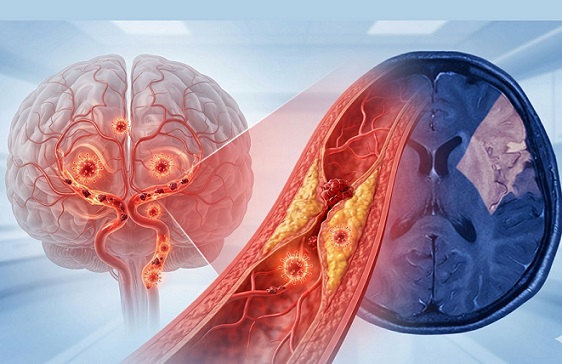 Researchers warn that the risk for ischemic strokes remains increased even after years of an exposure to COVID-19
As the scientific community tracks the long-term aftermath of the pandemic, this development stands out as a critical subject in global
Medical News. Researchers are uncovering complex pathological networks where viral mechanisms intersect with preexisting chronic illnesses. The data indicates that an infection can transform a patient’s vascular environment into a pro-thrombotic state. This shifts the clinical understanding of stroke prevention, highlighting that a previous bout of even mild COVID-19 should be regarded as a major independent risk factor for cerebrovascular events.
The Immediate Threat: Acute Phase Hypercoagulability
During the acute phase of a COVID-19 infection, the body is forced into a hypercoagulable state characterized by a severe tendency toward blood clotting. This phenomenon is driven by a massive release of pro-inflammatory cytokines, frequently referred to as a "cytokine storm." These proteins over-activate the immune system, inadvertently triggering widespread endothelial cell dysfunction and platelet activation. When the inner lining of the blood vessels (the endothelium) is damaged, it loses its natural ability to inhibit clot formation, creating an ideal environment for arterial blockages to develop.
The risk multiplies sharply for patients who experience severe forms of the illness. Meta-analyses and retrospective cohort studies show that COVID-19 patients face up to a 2.5-fold increase in general stroke risk compared to uninfected individuals.
For those whose condition requires intensive care unit (ICU) confinement, the odds of a thrombotic complication can spike by up to 500%. In comparison with other respiratory viral illnesses like seasonal influenza, the likelihood of suffering an ischemic stroke during hospitalization is more than seven times higher for those diagnosed with COVID-19.
Mechanisms of Damage: Viral Infiltration and Plaque Instability
Beyond general systemic inflammation, SARS-CoV-2 attacks blood vessels directly. The virus enters human cells by binding to angiotensin-converting enzyme 2 (ACE2) receptors, which are highly abundant on endothelial cells. By depleting these receptors, the virus disrupts the vital renin-angiotensin-aldosterone system. Thi
s depletion favors the accumulation of Angiotensin II, an enzyme that exacerbates blood vessel constriction, fuels local tissue inflammation, and further compromises cellular integrity within the brain and heart arteries.
Research published in Nature Cardiovascular Research provided a critical breakthrough in understanding how this direct damage translates into long-term stroke risk. Autopsy analyses and arterial tissue studies revealed that the virus directly infects coronary and cerebral arteries, specifically targeting macrophages—the immune cells found inside atherosclerotic plaque. Once inside, the virus replicates and causes the fatty plaque to become highly inflamed. This local inflammatory response can easily destabilize previously quiet arterial plaques, causing them to rupture and release debris that forms immediate blockages in the brain's vascular network.
The Long-Term Trajectory: A Three-Year Shadow
The most concerning revelation from recent epidemiological datasets is the extended duration of this vascular vulnerability. Data extracted from large medical databases, including the UK Biobank, shows that the danger extends far into the post-acute recovery phase. Patients who required hospitalization for COVID-19 exhibit an elevated risk of major adverse cardiac and cerebrovascular events for up to three years after their initial recovery.
The epidemiological data highlights a stark contrast in long-term risk profiles based on a patient's prior health status. When compared to healthy, COVID-negative peers, individuals who required hospitalization for COVID-19 face a dramatically higher threat of experiencing a stroke or major cardiac event for up to three years post-infection. Specifically, survivors with no prior history of vascular disease carry a seven-fold increase in risk over this three-year window. For those who already had preexisting vascular disease before contracting the virus, the severe infection compounds their vulnerability even further, resulting in an alarming twelve-fold increase in risk compared to their uninfected counterparts.
Strikingly, for an individual without a history of heart issues, a severe case of COVID-19 serves as a cardiovascular risk equivalent. This means the infection alone places them at a comparable long-term risk level to someone living with established, major risk factors like Type 2 diabetes or peripheral artery disease.
Genetic Vulnerabilities and Clinical Outcomes
The interaction between a patient's genetics and the viral pathogen further refines this danger profile. Multi-year observational studies have uncovered a distinct link involving the ABO blood group locus. Individuals with non-O blood types (A, B, and AB) experience a significantly more pronounced post-COVID stroke risk compared to those with type O blood. Because roughly 60% of the global population possesses a non-O blood type, this genetic interplay leaves a massive cohort of survivors exceptionally vulnerable to delayed immunothrombotic events.
When an ischemic stroke does occur alongside a COVID-19 infection, the clinical prognosis is typically worse. Hospital registry data indicates that concurrent stroke and COVID-19 patients suffer from significantly higher rates of in-hospital mortality, accelerated early neurological deterioration, and longer, more complex rehabilitation courses. The combination of active systemic inflammation and focal brain tissue starvation creates an intricate clinical scenario that standard stroke therapies find difficult to manage effectively.
Evolving Strategies for Post-COVID Cerebrovascular Care
As clinicians adapt to this reality, medical protocols are shifting to emphasize long-term monitoring and proactive risk mitigation. The traditional approach of evaluating a patient’s stroke risk solely based on age, blood pressure, smoking status, and cholesterol levels is no longer sufficient. A patient’s history of severe viral infections must now be factored into their long-term health profile.
To counter this persistent threat, healthcare providers are exploring extended antiplatelet or anticoagulant regimens for individuals who have survived severe cases of COVID-19. Initial clinical data suggests that the targeted use of primary prevention therapies can help attenuate the heightened risk of subsequent strokes and heart attacks. Moving forward, public health systems must prioritize continuous monitoring and robust preventive care structures to properly manage the substantial cerebrovascular burden left in the wake of the pandemic.
References:
https://www.heart.org/en/news/2024/10/09/covid-19-may-increase-heart-attack-and-stroke-risk-for-years
https://link.springer.com/article/10.1186/s12985-024-02548-y
https://link.springer.com/article/10.1007/s10072-021-05679-0
https://www.cureus.com/articles/365910-covid-19-and-stroke-evaluating-correlations-risk-factors-and-patient-outcomes#!/
https://journals.lww.com/annals-of-medicine-and-surgery/fulltext/2023/06000/how_is_ischemic_stroke_linked_to_a.107.aspx
https://www.nature.com/articles/s41598-025-13173-2
https://www.frontiersin.org/journals/medicine/articles/10.3389/fmed.2026.1750243/full
https://www.ahajournals.org/doi/10.1161/ATVBAHA.124.321001
https://www.nature.com/articles/s44161-023-00336-5
https://www.insideprecisionmedicine.com/topics/coronavirus/covid-19-causes-heart-attack-and-stroke-by-inflaming-arterial-plaque/
https://link.springer.com/article/10.1007/s10072-021-05299-8
For the latest on Ischemic Strokes and COVID-19, keep on logging to Thailand
Medical News
Read Also:
https://www.thailandmedical.news/articles/coronavirus
https://www.thailandmedical.news/articles/long-covid




 Share
Share
 Tweet
Tweet
 Share
Share