Forget About Viruses, The Next Threat Will Be Cancer Cells That Can Transmit Between Humans, Just Like Bivalve Transmissible Neoplasia
Nikhil Prasad Fact checked by:Thailand Medical News Team Jun 25, 2026 2 months, 4 weeks, 11 hours, 6 minutes ago
Medical News: For decades, infectious diseases have been dominated by fears of viruses, bacteria, and emerging pathogens. Cancer, on the other hand, has always been viewed as a disease confined to a single individual—a tragic consequence of the body's own cells mutating beyond control. But an extraordinary body of scientific evidence from nature suggests that this long-held distinction may not be as absolute as once believed. Scientists have now documented multiple examples of cancers that have evolved into contagious biological entities capable of spreading from one individual to another, raising unsettling questions about whether a similar phenomenon could one day emerge in humans.
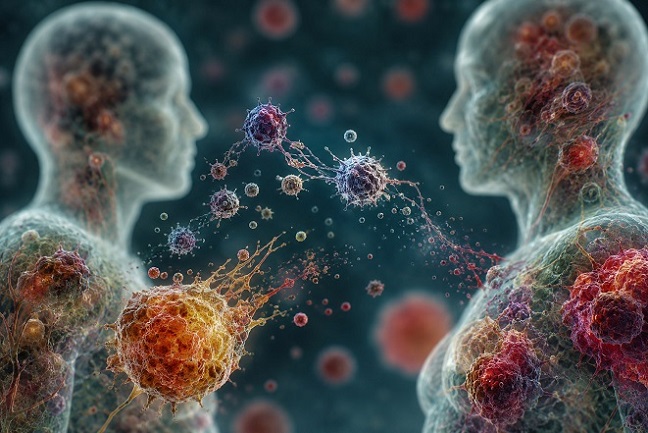 Scientists warn that rare transmissible cancers in animals reveal an evolutionary pathway that, while highly unlikely, could redefine future infectious disease risks
Although there is currently no evidence that human cancers naturally spread between unrelated people, discoveries over the last two decades have fundamentally changed scientists' understanding of what cancer can become under the right evolutionary pressures. The existence of transmissible cancers in marine organisms and mammals demonstrates that cancer cells can evolve into independent parasitic lineages capable of surviving beyond the death of their original host.
When Cancer Stops Being a Disease and Becomes an Infectious Organism
Most cancers die with the individual in whom they arise. Their survival depends entirely on the host remaining alive. However, in extremely rare evolutionary circumstances, cancer cells can acquire characteristics allowing them to behave almost like infectious parasites.
For such a transformation to occur, cancer cells must overcome several formidable biological obstacles. They must survive outside their original host, remain viable during transfer, successfully invade another individual, avoid destruction by the recipient's immune system, establish themselves within new tissues, and continue evolving while maintaining their ability to infect additional hosts.
Essentially, these cancer cells cease behaving like ordinary tumors and instead become self-sustaining biological lineages with evolutionary goals separate from those of the original animal. Scientists refer to these remarkable diseases as clonally transmissible cancers.
Marine Shellfish Reveal Nature's Most Extraordinary Cancer Evolution
Perhaps the most compelling evidence comes from marine bivalves. In 2016, researchers published a landmark study in Nature demonstrating that several devastating leukemia-like diseases affecting shellfish were not independent cancers but contagious cancer cell lineages spreading between animals.
The investigators examined soft-shell clams (Mya arenaria), bay mussels (Mytilus trossulus), common cockles (Cerastoderma edule), and golden carpet shell clams (Polititapes aureus). Genetic analysis produced an astonishing discovery. The cancer cells inside diseased animals were genetically different from their hosts, proving they originated elsewhere before invading new individuals.
Rather than developing independently in every infected shellfish, these cancer cells were being transmitted horizontally through seawater. Once released into the marine environment, the malignant cells survived long enough to enter new hosts through their circulatory system, known as the hemolymph, where they multiplied aggressively.
Even more remarkable was evidence that one transmissible cancer lineage found in Polititapes aureus had originated from an entirely different clam species, Venerupis corrugata. This demonstrated that cancer cells had evolved the ability not only to infect new individuals but even to cross species barriers.
Scientists now recognize bivalve transmissible neoplasia (BTN) as multiple independently evolved contagious cancers rather than a single disease. These lineages have contributed to severe declines in shellfish populations worldwide and continue circulating through marine ecosystems.
The relatively simple immune systems of bivalves, combined with their dense populations and constant exposure to seawater containing free-floating cells, create ideal conditions for transmissible cancers to evolve and spread.
Mammals Have Also Fallen Victim to Contagious Cancers
Although considerably rarer, transmissible cancers have also emerged in mammals.
One of the best-known examples is Tasmanian devil facial tumour disease (DFTD), first identified during the mid-1990s. This highly aggressive cancer spreads when devils bite one another during feeding or mating. Tumor cells are physically implanted into wounds where they establish new cancers.
Researchers later discovered not one but two separate transmissible cancer lineages—DFTD1 and DFTD2—indicating that contagious cancers evolved independently more than once within the species.
These cancer cells possess remarkable immune evasion strategies. By dramatically reducing expression of major histocompatibility complex (MHC) molecules, they effectively become invisible to much of the host immune system. The disease has devastated Tasmanian devil populations across large parts of Tasmania, prompting extensive international conservation efforts, including promising vaccine research currently under development.
Dogs provide another extraordinary example through canine transmissible venereal tumour (CTVT), arguably the oldest continuously surviving cancer on Earth.
Genetic studies estimate that this cancer first appeared approximately 11,000 years ago in a single ancient dog. Since then, the original cancer clone has spread globally through sexual contact while accumulating millions of genetic mutations. Despite this enormous genetic burden, it continues functioning as a remarkably stable transmissible parasite, infecting dogs across virtually every continent.
Why Human Cancer Is Not Contagious Today
Despite these remarkable examples, cancer remains non-contagious among humans under normal circumstances.
Organizations including the U.S. National Cancer Institute and the American Cancer Society emphasize that people cannot catch cancer through casual contact such as touching, kissing, coughing, or sharing food.
Nevertheless, medicine has documented several extremely rare situations involving direct transfer of living cancer cells.
Perhaps the most dramatic occurred in 2007 when organs from a donor with undetected breast cancer were transplanted into four recipients. The transplanted cancer cells established tumors in every recipient, and three eventually died despite intensive treatment.
Rare maternal-to-fetal transmission has also been documented, with cancer cells crossing the placenta during pregnancy. Additional isolated cases include surgeons accidentally implanting tumor cells into surgical wounds and laboratory workers developing tumors after accidental needle-stick injuries involving cancer cells.
These incidents demonstrate that human cancer cells can survive transfer under exceptional circumstances, but none evolved into self-sustaining chains of human-to-human transmission.
The Powerful Biological Barriers Protecting Humanity
Humans possess several evolutionary advantages that make transmissible cancers extraordinarily difficult to establish.
The greatest obstacle is the remarkable diversity of human leukocyte antigen (HLA) genes, the human equivalent of MHC molecules. These proteins allow immune systems to distinguish self from non-self with extraordinary precision. Any foreign cancer cells entering another individual are usually recognized immediately and destroyed.
Unlike marine shellfish, humans are not immersed in water containing viable circulating cells. Physical barriers, sophisticated adaptive immunity, and enormous genetic diversity combine to make successful cancer transmission exceptionally unlikely.
However, modern medicine has introduced new environments where immune defenses may be weakened. Organ transplantation, long-term immunosuppressive therapy, chemotherapy, stem-cell transplantation, and other advanced treatments create situations where foreign cells may survive longer than they otherwise would.
Could Evolution Eventually Produce a Human Transmissible Cancer?
Evolutionary biologists emphasize that there is absolutely no evidence a naturally contagious human cancer currently exists or is emerging. Nevertheless, studies of BTN, DFTD, and CTVT demonstrate that evolution has repeatedly discovered this pathway in different branches of the animal kingdom.
Theoretically, a future transmissible human cancer would require an exceptionally rare combination of evolutionary innovations, including extreme immune evasion, survival outside the body, efficient transfer between individuals, and the ability to establish long-term infections across genetically diverse populations.
Potential transmission routes, while entirely speculative, could include sexual contact similar to CTVT, medical procedures involving living tissues, or an extraordinarily mutated cancer capable of suppressing HLA recognition in ways resembling Tasmanian devil tumors.
Scientists stress that these scenarios remain highly hypothetical, but their plausibility is rooted in real biological precedents rather than science fiction. This
Medical News report highlights why ongoing research into transmissible cancers is becoming increasingly important as scientists seek to understand the evolutionary limits of malignant cells.
Bioweapon Research
What is concerning however are claims by certain individuals that there are currently United States-funded biolabs around the world that are researching how to weaponize cancer-cells for use as a potential military bioweapon. Accordingly, there are also advances as to how to generate airborne-transmissible cancer cells!
Lessons That Could Shape Future Medicine
Research into transmissible cancers is already transforming oncology. Understanding how BTN cells survive in seawater, how DFTD evades immunity, and how CTVT has maintained stability for thousands of years may uncover entirely new approaches for treating aggressive human cancers. These investigations are also improving organ donor screening, transplant safety, cancer immunotherapy, and surveillance systems capable of detecting unusual disease clusters before they become larger public health concerns.
Rather than creating panic, these discoveries underscore the extraordinary adaptability of cancer cells and the importance of remaining scientifically vigilant. Nature has repeatedly demonstrated that under exceptional ecological and evolutionary pressures, malignant cells can become infectious parasites. While humans remain protected by powerful immunological defenses and no naturally transmissible human cancer has ever been documented, these remarkable animal diseases remind researchers that evolution often produces outcomes once considered impossible. Continued international research into these rare cancers will be essential for strengthening medical preparedness, improving cancer biology, and ensuring that if such an evolutionary surprise were ever to emerge, humanity would recognize and confront it far more rapidly than previous generations could have imagined.
References:
https://www.nature.com/articles/nature18599
https://en.wikipedia.org/wiki/Clonally_transmissible_cancer
https://linkinghub.elsevier.com/retrieve/pii/S2589004220304557
https://www.tcg.vet.cam.ac.uk/about/DFTD
https://academic.oup.com/icb/article/58/6/1043/5106665
https://www.tcg.vet.cam.ac.uk/about/ctvt
https://www.cell.com/iscience/fulltext/S2589-0042(20)30455-7
For the latest on cancer, keep on logging to Thailand
Medical News.
Read Also:
https://www.thailandmedical.news/articles/cancer




 Share
Share
 Tweet
Tweet
 Share
Share