Nikhil Prasad Fact checked by:Thailand Medical News Team Jun 16, 2026 3 months, 1 week, 3 hours, 51 minutes ago
Medical News: Scientists Reveal How Shape-Shifting Immune Cells Drive Cancer, Inflammation and Healing
Macrophages, a type of immune cell found throughout the human body, are emerging as some of the most influential players in health and disease. A major new review has highlighted how these remarkable cells can continuously change their behavior depending on their surroundings, helping to fight infections and repair tissues in some situations while fueling cancer growth and chronic disease in others.
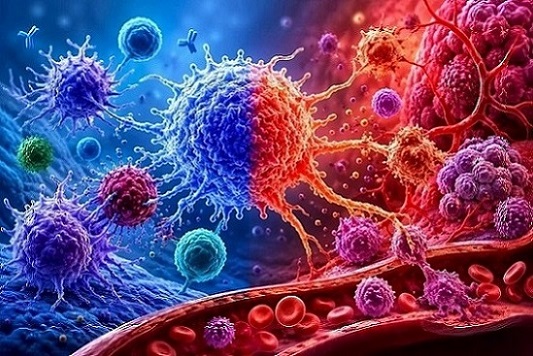 Scientists discover how adaptable macrophages can either protect the body or fuel disease depending
on their environment
The study was conducted by Alessandra Falda from the Laboratory Medicine Unit, Integrated Diagnostic Services-DIDAS, Padua University Hospital, Padua, Italy. The review brings together a vast body of evidence showing that macrophages are far more complex than previously believed and may become key targets for future therapies.
Immune Cells That Constantly Adapt
For many years, scientists categorized macrophages into two main groups. One type, known as M1 macrophages, was viewed as aggressive cells that attack microbes and cancer cells. The other type, M2 macrophages, was considered responsible for reducing inflammation and helping damaged tissues heal.
However, newer research shows that this simple classification does not accurately reflect what happens inside the body. Instead, macrophages exist on a broad spectrum and can shift between different states depending on signals they receive from nearby tissues, immune cells, and even metabolic byproducts.
This ability to adapt, known as macrophage plasticity, allows them to respond rapidly to changing conditions. Unfortunately, it also means they can be manipulated by diseases.
How Diseases Hijack Macrophages
One of the most striking findings discussed in the review is how cancer cells exploit macrophages for their own survival. Within tumors, macrophages often become transformed into tumor-associated macrophages, commonly called TAMs. These altered cells help tumors evade immune attacks, encourage blood vessel formation, and support the spread of cancer to distant organs.
The review details how this process occurs in breast cancer, ovarian cancer, lung cancer, pancreatic cancer, glioblastoma, colorectal cancer, leukemia, lymphoma, and multiple myeloma. In many cases, tumors release chemical signals, oxygen-starved conditions, and metabolic waste products such as lactate that push macrophages toward tumor-supporting behavior.
Researchers found that macrophages can even help cancer cells enter the bloodstream, establish metastatic colonies, and suppress the activity of immune cells that would otherwise destroy malignant tissue.
This
Medical News report highlights that the same immune cells capable of eliminating cancer under certain circumstances can become powerful allies of tumors when exposed to the wrong microenvironment.
&nbs
p;
Beyond Cancer: Roles in Autoimmune and Chronic Diseases
The review also emphasizes that macrophage behavior varies dramatically across different diseases. In autoimmune disorders, inflammatory macrophages often become overactive and contribute to tissue destruction. In inflammatory bowel disease, metabolic disorders, infectious diseases, and neurological conditions, macrophages can either worsen disease or help restore normal tissue function depending on their activation state.
Researchers noted that macrophages are heavily influenced by genetic regulation, cellular metabolism, signaling molecules, and epigenetic mechanisms. One particularly intriguing discovery involves histone lactylation, a process through which lactate can alter gene activity and push macrophages toward anti-inflammatory states.
Advanced technologies such as single-cell sequencing and mass cytometry are now revealing dozens of previously unknown macrophage subtypes, highlighting an extraordinary level of diversity.
New Therapeutic Possibilities
The findings suggest that future treatments may focus not on eliminating macrophages but on reprogramming them. Scientists are exploring several promising approaches, including therapies that convert tumor-supporting macrophages back into cancer-fighting cells.
Other experimental strategies include CAR-M therapies, which involve genetically engineering macrophages to recognize and attack tumors, along with biomaterial-based platforms designed to alter macrophage behavior inside diseased tissues.
Researchers are also investigating biomarkers such as soluble CD163, soluble CD14, and soluble mannose receptor levels, which may help doctors track disease activity and predict patient outcomes.
Conclusions
The review paints a picture of macrophages as highly intelligent and adaptable immune cells whose behavior is shaped by their environment rather than fixed biological programming. This flexibility explains why macrophages can protect the body in one setting yet drive disease progression in another. Understanding the molecular signals that control macrophage identity could open the door to a new generation of precision therapies for cancer, autoimmune diseases, chronic inflammatory disorders, metabolic conditions, and neurological illnesses. As scientists continue to uncover the complex networks governing macrophage plasticity, these cells are increasingly being viewed not merely as participants in disease but as central regulators whose manipulation could fundamentally change modern medicine.
The study findings were published in the peer reviewed International Journal of Molecular Sciences.
https://www.mdpi.com/1422-0067/27/12/5333
For the latest in immunology, keep on logging to Thailand
Medical News.
Read Also:
https://www.thailandmedical.news/articles/immunology




 Share
Share
 Tweet
Tweet
 Share
Share