Nikhil Prasad Fact checked by:Thailand Medical News Team Jun 05, 2026 4 months, 3 days, 10 hours, 19 minutes ago
Medical News: Colorectal cancer is increasingly being diagnosed in younger adults around the world, creating concern among health experts who have struggled to fully explain the trend. While genetics, diet, obesity, and lifestyle factors have all been implicated, a new scientific paper is drawing attention to another possible contributor: a little-known bacterium called Mycobacterium avium subspecies paratuberculosis (MAP).
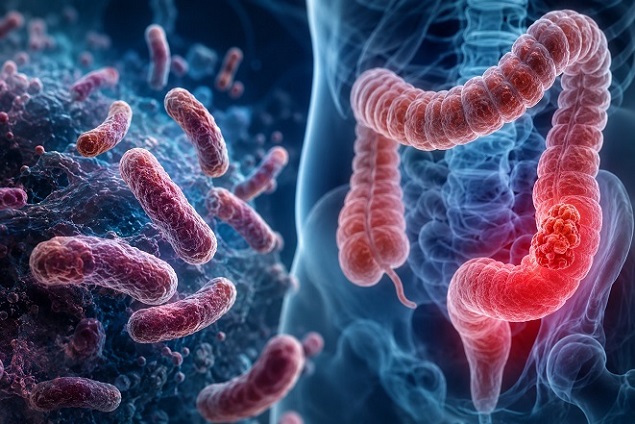 Researchers are investigating whether chronic infection with MAP may contribute to the development of colorectal
cancer through inflammation and other cancer-promoting mechanisms
Researchers are now suggesting that MAP, a bacterium primarily known for causing Johne’s disease in cattle and other ruminants, may play a role in the development of colorectal cancer. The latest findings are generating renewed interest in the possibility that chronic infections could contribute to cancer formation in ways that have previously been overlooked.
Growing Evidence Links MAP to Colon Tumors
The new perspective article was authored by Coad Thomas Dow from the McPherson Eye Research Institute, University of Wisconsin System, Madison, Wisconsin, USA. The paper examines recently published research showing that MAP was detected not only in colorectal cancer tissues but also in precancerous lesions.
One of the most striking observations came from a study that found MAP in 13.3 percent of healthy control tissues, 46.7 percent of precancerous colorectal lesions, and 57.1 percent of colorectal cancer samples. The increasing prevalence of MAP as tissues progress from normal to precancerous and cancerous stages suggests that the bacterium may be involved early in the disease process.
Researchers note that the detection of MAP in adenomas and serrated lesions is particularly significant because these abnormalities often develop years before invasive cancer appears. This raises the possibility that MAP may contribute to the biological events that initiate tumor formation.
A Persistent Pathogen with Unusual Abilities
MAP possesses several characteristics that make it a plausible candidate for involvement in cancer development. The bacterium can survive inside immune cells known as macrophages and evade normal immune defenses for prolonged periods.
This ability allows MAP to establish chronic infections that can persist for years. Long-term infection is known to create continuous inflammation, a process already recognized as an important factor in the development of several cancers. Scientists explain that chronic inflammation can damage tissues, promote abnormal cell growth, increase oxidative stress, and create genetic instability. Over time, these effects may encourage the transformation of normal colon cells into cancerous cells.
Human Exposure May Be More Common Than Expected
Unlike many bacteria that primarily affect animals, MAP has numerous opportunities to come into contact with humans. The organism is shed in the feces, milk, and colostrum of infected animals and can survive in soil and water for extended periods.
Studies have dete
cted MAP in water systems and even in some pasteurized dairy products. Because of its widespread presence in agricultural environments, researchers believe that human exposure may be far more common than many people realize.
This has led scientists to examine the issue through a One Health framework, which recognizes the interconnected relationship between human health, animal health, and environmental factors.
This
Medical News report highlights that MAP is not only being investigated in relation to colorectal cancer but has also been associated in previous studies with Crohn’s disease, type 1 diabetes, and multiple sclerosis.
Possible Mechanisms Behind Cancer Development
The paper outlines several biological pathways through which MAP might contribute to colorectal carcinogenesis.
Persistent MAP infection may activate inflammatory signaling pathways, including NF-kB-mediated responses that are known to play important roles in cancer biology. The bacterium may also weaken the intestinal barrier, allowing additional microbial products and inflammatory molecules to enter surrounding tissues.
Another intriguing possibility involves the activation of human endogenous retroviruses, or HERVs. These ancient viral genetic elements are embedded within human DNA and have increasingly been linked to cancer development and genomic instability. Researchers suggest that MAP-induced immune and epigenetic changes could potentially activate HERVs, creating additional cancer-promoting effects.
Together, these mechanisms provide a biologically plausible explanation for how chronic MAP infection could contribute to tumor formation.
Challenges and Remaining Questions
Despite the growing evidence, researchers emphasize that MAP has not yet been proven to cause colorectal cancer. One of the major challenges is that the bacterium is notoriously difficult to detect. MAP can adopt unusual forms that are hard to culture and identify using conventional laboratory techniques.
Critics also argue that cancerous tissues may simply provide an environment that allows MAP to thrive, rather than the bacterium initiating the disease itself. As a result, scientists stress that current evidence demonstrates an association rather than direct causation.
Conclusions
The emerging evidence linking MAP to colorectal cancer is attracting increasing attention because it offers a potential new explanation for a disease whose incidence continues to rise globally, particularly among younger adults. The detection of MAP in both precancerous and cancerous tissues, combined with its known ability to promote chronic inflammation and immune dysregulation, provides a compelling rationale for further investigation. While the current evidence does not prove that MAP directly causes colorectal cancer, the findings strongly support the need for larger multinational studies, improved detection methods, and experimental research to determine whether the bacterium plays an active role in cancer development. If future studies confirm such a connection, it could open entirely new opportunities for prevention, screening, and treatment while reshaping current understanding of infection-associated cancers.
The study findings were published in the peer reviewed journal: Pathogens.
https://www.mdpi.com/2076-0817/15/6/604
For the latest on Colorectal Cancer, keep on logging to Thailand
Medical News.
Read Also:
https://www.thailandmedical.news/articles/cancer




 Share
Share
 Tweet
Tweet
 Share
Share