Thailand Medical Study Finds Phytochemicals from Areca Nut May Help Fight Alzheimer’s Disease and Parkinson’s Disease
Nikhil Prasad Fact checked by:Thailand Medical News Team Jun 08, 2026 3 months, 1 week, 1 day, 21 hours, 40 minutes ago
Thailand Medical: A new Thailand Medical Study has uncovered promising evidence that phytochemical compounds found in the areca nut plant may help combat two of the world’s most devastating brain disorders—Alzheimer’s disease and Parkinson’s disease. Researchers discovered that several phytochemicals in Areca catechu, commonly known as areca nut, were able to target key biological pathways linked to inflammation, nerve cell death, and brain degeneration, raising hopes for the development of future plant-based therapies.
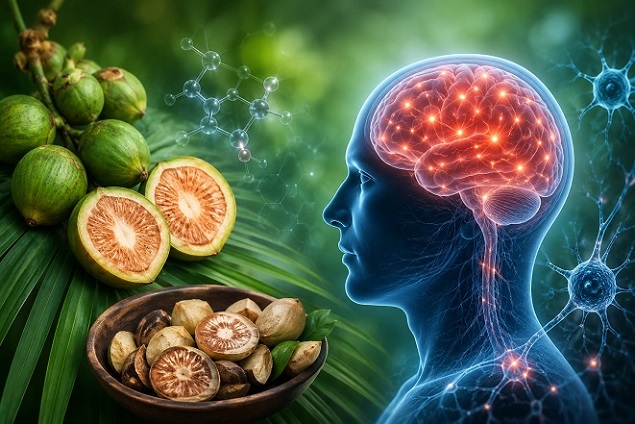 Thailand Medical researchers discover that natural compounds from areca nut may help reduce brain inflammation
and protect against Alzheimer’s and Parkinson’s disease
Growing Need for Better Treatments
Alzheimer’s disease and Parkinson’s disease are the two most common neurodegenerative disorders worldwide. As populations age, the number of people affected by these conditions is expected to rise dramatically in the coming decades. Despite years of research, currently available medications mainly provide temporary symptom relief and do little to halt the underlying disease process.
Scientists have therefore been exploring natural products that might offer broader and safer therapeutic benefits. Areca catechu has been used for centuries across Southeast Asia and China as a traditional remedy for a variety of ailments, including digestive problems, depression, fever, and wound healing. Previous studies had hinted at its neuroprotective properties, but the exact mechanisms behind these effects remained unclear.
Study Team Explores Areca Nut’s Potential
The
Thailand Medical research was conducted by scientists from the College of Public Health Sciences, Chulalongkorn University, Bangkok; the Center of Excellence on Natural Products for Neuroprotection and Anti-Ageing (Neur-Age NatChula), Chulalongkorn University, Bangkok and the Department of Clinical Chemistry, Faculty of Allied Health Sciences, Chulalongkorn University, Bangkok.
Using advanced laboratory techniques, network pharmacology analysis, molecular docking studies, cell experiments, and animal model testing, the researchers sought to identify which compounds in areca nut might influence the biological processes involved in Alzheimer’s and Parkinson’s disease.
Key Disease Drivers Identified
The team identified six major molecular targets that appear to play central roles in both diseases. These included TNF-alpha, IL-1 beta, IL-6, CASP3, MAPK3, and AKT1.
These molecules are heavily involved in chronic inflammation and programmed cell death. In Alzheimer’s and Parkinson’s disease, excessive activation of inflammatory pathways causes damage to neurons and accelerates disease progression. The study found that areca nut compounds may interfere with these harmful processes.
Researchers also discovered that the plant’s a
ctive compounds were linked to important biological pathways such as TNF signaling, IL-17 signaling, Toll-like receptor signaling, and pathways directly associated with Alzheimer’s disease. These findings suggest that the plant does not act on just one target but may influence multiple disease mechanisms simultaneously.
Powerful Phytochemicals Show Strong Activity
Among the many phytochemicals identified, several stood out because of their strong interactions with disease-related proteins.
The most promising phytochemicals included lucidine B, oxolucidine B, solanocapsine, evodiamine, and liquiritigenin. Computer-based molecular docking studies showed that these compounds bound strongly to proteins involved in inflammation and neurodegeneration. Remarkably, some of these natural compounds demonstrated stronger predicted binding affinities than several currently used drugs for Alzheimer’s and Parkinson’s disease.
This suggests that these naturally occurring substances may possess significant therapeutic potential and warrant further investigation.
Laboratory Experiments Confirm Anti-Inflammatory Effects
To verify the computer predictions, the researchers conducted experiments using BV-2 microglial cells, which are commonly used to study neuroinflammation.
Inflammation in the brain is considered one of the major drivers of neurodegenerative diseases. When the cells were stimulated to produce inflammatory responses, treatment with areca nut extracts significantly reduced the activity of all six key disease-related genes.
Importantly, the extracts achieved these effects at concentrations that were not toxic to the cells. This finding provided direct experimental evidence that the plant extracts can suppress harmful inflammatory signaling pathways associated with brain degeneration.
In the middle stages of the investigation, this Medical News report noted that the study was moving beyond theoretical computer models and demonstrating real biological effects in living cells, greatly strengthening the significance of the findings.
Lifespan Improvement Seen in Alzheimer’s Model
The researchers also tested the extracts in a genetically modified Caenorhabditis elegans worm model that produces amyloid-beta, one of the hallmark proteins involved in Alzheimer’s disease.
The results were encouraging. One of the areca nut extracts significantly increased the worms’ average lifespan by nearly 17.5 percent. This suggests that the extract may provide protective effects against amyloid-beta-related toxicity, a key process in Alzheimer’s disease development.
Although the worm model is far simpler than the human brain, such findings are often considered an important early step toward identifying compounds with genuine therapeutic potential.
Conclusion
The study provides compelling evidence that Areca catechu contains multiple bioactive compounds capable of targeting several of the most important mechanisms involved in Alzheimer’s and Parkinson’s disease. Rather than acting through a single pathway, the extracts appear to reduce neuroinflammation, suppress harmful inflammatory genes, influence cell survival mechanisms, and improve survival in an Alzheimer’s disease model. While much more research, including human clinical studies, will be needed before any treatment can be developed, the findings highlight areca nut as a promising source of future neuroprotective compounds. The work also demonstrates how traditional medicinal plants may hold valuable clues for addressing some of the most challenging neurological disorders facing modern medicine.
The study findings were published in the peer reviewed International Journal of Molecular Sciences.
https://www.mdpi.com/1422-0067/27/12/5169
For the latest Thai medical research, keep on logging to
Thailand Medical News.
Read Also:
https://www.thailandmedical.news/articles/herbs-and-phytochemicals
https://www.thailandmedical.news/articles/thailand-medical
https://www.thailandmedical.news/articles/thailand-medical




 Share
Share
 Tweet
Tweet
 Share
Share