Nikhil Prasad Fact checked by:Thailand Medical News Team Jun 08, 2026 4 months, 2 days, 17 hours, 26 minutes ago
Medical News: Enterovirus B Mutation Risks Could Shape Future Outbreaks
Enterovirus B (EVB), one of the most widespread groups of human enteroviruses, may be quietly evolving in ways that could influence future disease outbreaks, according to a new study that used advanced computer modeling and machine learning to identify the virus’s most dangerous mutation hotspots. The findings could help researchers better predict which viral strains are most likely to become more infectious or successful in spreading among human populations.
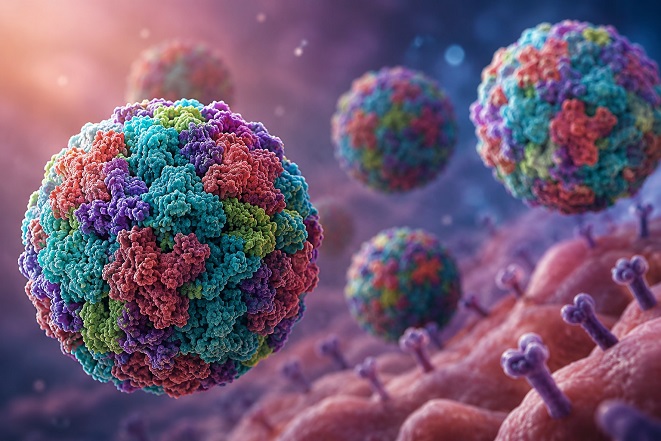 Researchers uncover key mutation hotspots that may influence the future evolution and spread of Enterovirus B
The study was conducted by researchers from the School of Public Health, Health Science Center, Ningbo University, China; Jiaxing Center for Disease Control and Prevention, China; and the Department of Public Health, Ningbo No. 2 Hospital, China.
Enterovirus B Remains a Major Global Health Concern
Enterovirus B is responsible for a wide variety of illnesses, including hand, foot and mouth disease, viral meningitis, myocarditis, neonatal sepsis, and other serious infections. Children are particularly vulnerable. Despite its global impact, there are currently no approved antiviral drugs or vaccines specifically targeting most EVB infections.
The virus includes numerous strains, among them Coxsackievirus B types 1 to 6 and several echoviruses. These viruses continue to circulate widely around the world and are frequently associated with outbreaks.
Because enteroviruses mutate rapidly, scientists are increasingly concerned about genetic changes that might make them more capable of infecting people, spreading efficiently, or surviving environmental pressures.
Using Artificial Intelligence to Predict Viral Evolution
To better understand which mutations could pose the greatest threat, researchers focused on four representative EVB strains: Coxsackievirus B1, Coxsackievirus B3, Echovirus 6, and Echovirus 30.
The team performed what is known as computational saturation mutagenesis, a technique that virtually creates and tests every possible mutation across viral proteins. Thousands of potential mutations were evaluated for their effects on three critical viral characteristics: structural stability, receptor-binding ability, and overall viral fitness.
Structural stability determines whether the virus can maintain an intact shell. Receptor-binding ability affects how effectively the virus attaches to human cells. Fitness reflects how successfully the virus can reproduce and survive.
Machine learning models were then trained using experimental mutation data to predict how these changes would influence viral success.
Most Mutations Hurt the Virus Rather Than Help It
One of the study’s most striking discoveries was that the overwhelming majority of mutations were actually harmful to the virus.
Roughly 70 to 80 percent of mutations weakened viral structural stability, while another large proportion had little effect. Only about 2 to 3 perc
ent of mutations improved stability and were therefore considered potentially high-risk.
This suggests that EVB has already evolved a highly optimized structure and that most random genetic changes make the virus less effective rather than more dangerous.
The researchers found that beneficial mutations tended to occur in specific flexible regions of the viral shell, particularly within loops and terminal regions of key viral proteins.
Critical Mutation Hotspots Identified
The study revealed several regions where mutations consistently provided advantages to the virus.
Among the most concerning hotspots were the N-terminal and C-terminal regions of the VP1 protein and the EF loop of the VP2 protein. These areas repeatedly appeared as locations where mutations could improve viral fitness, strengthen receptor binding, or enhance structural stability.
Researchers also discovered that many mutations capable of increasing receptor-binding strength were concentrated within small sections of VP1 and VP2 that directly interact with human cellular receptors.
A stronger receptor interaction could theoretically allow the virus to enter cells more efficiently, potentially increasing infectivity.
Some High-Risk Mutations Are Already Circulating
Perhaps the most important finding was that several high-risk mutations identified through computer analysis have already appeared in naturally circulating viruses.
The researchers observed that some of these mutations became common within major evolutionary branches of EVB, suggesting they provided real-world advantages during viral evolution.
In particular, certain mutations were found repeatedly across different viral lineages and even emerged independently multiple times. Such repeated appearances are often considered evidence that the mutations enhance survival or transmission.
This
Medical News report highlights how these genetic changes may have already influenced the evolutionary history of Enterovirus B and could continue shaping future outbreaks.
New Tool Could Improve Viral Surveillance
The researchers believe their multi-phenotype assessment strategy represents a significant advance in viral risk prediction.
Instead of focusing on only one characteristic, the new approach simultaneously evaluates structural stability, receptor-binding ability, and viral fitness. This provides a much more realistic picture of which mutations are likely to succeed in nature.
By identifying dangerous mutations before they become widespread, public health authorities may eventually gain valuable early-warning capabilities that help guide surveillance programs, vaccine design efforts, and antiviral drug development.
Conclusions
The study provides compelling evidence that only a very small fraction of Enterovirus B mutations offer meaningful advantages to the virus, but those that do tend to cluster within specific regions of its capsid proteins. The N- and C-terminal regions of VP1 and the EF loop of VP2 emerged as particularly important mutation hotspots. Importantly, several of these high-risk mutations have already appeared in circulating viral strains and have played significant roles in viral evolution. The findings demonstrate that combining structural biology, machine learning, and evolutionary analysis can create powerful tools for identifying future viral threats before they become major public health problems. Such predictive approaches may become increasingly valuable as scientists seek better ways to monitor and control emerging infectious diseases.
The study findings were published in the peer reviewed journal: Viruses.
https://www.mdpi.com/1999-4915/18/6/645
For the latest on enteroviruses, keep on logging to Thailand
Medical News.
Read Also:
https://www.thailandmedical.news/articles/coronavirus
https://www.thailandmedical.news/articles/infectious-diseases




 Share
Share
 Tweet
Tweet
 Share
Share