Incidences of Herpes Zoster Ophthalmicus as a Result of Shingles Are Rising Globally
Nikhil Prasad Fact checked by:Thailand Medical News Team Jun 06, 2026 4 months, 2 weeks, 2 days, 11 hours, 21 minutes ago
Medical News: A growing body of epidemiological evidence is raising alarm among ophthalmologists and infectious disease specialists worldwide as cases of herpes zoster ophthalmicus (HZO), a potentially sight-threatening complication of shingles, continue to rise across multiple regions. The condition, caused by the reactivation of the varicella-zoster virus (VZV), is emerging as a significant public health concern, particularly among aging populations and individuals with weakened immune systems.
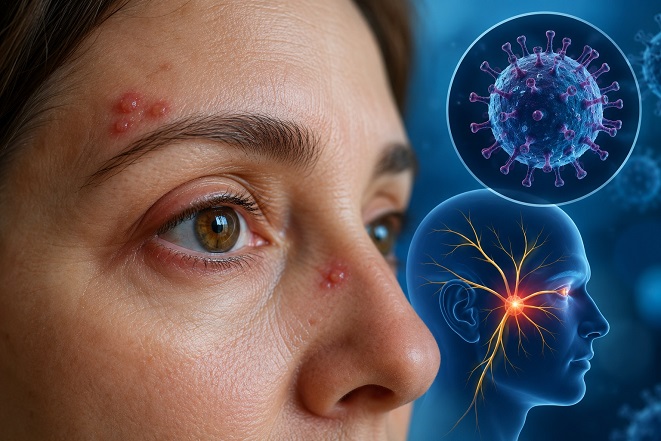 Rising global cases of herpes zoster ophthalmicus are increasing the risk of vision-threatening complications among older
adults and immunocompromised individuals
Herpes zoster ophthalmicus develops when the dormant varicella-zoster virus, the same virus responsible for chickenpox, reactivates and spreads along the ophthalmic branch of the trigeminal nerve. While shingles itself affects millions globally, approximately 10 to 20 percent of all shingles patients develop HZO, placing them at risk of serious ocular complications that can lead to permanent vision impairment or blindness.
Global Rise in Cases Sparks Concern
Recent epidemiological analyses indicate that the incidence of HZO has been steadily increasing over the last two decades, with no signs of a significant reversal. In the United States alone, roughly one million people develop shingles each year, and an estimated 100,000 to 200,000 of these cases involve the eye. Population-based studies have estimated HZO incidence rates ranging from approximately 30.9 to 43.2 cases per 100,000 person-years, with annual increases averaging about 3.6 percent.
The burden of disease is particularly pronounced among older adults. Incidence rates climb dramatically after the age of 60 and exceed 173 cases per 100,000 individuals among those aged 70 to 80 years. As populations continue to age globally, healthcare experts anticipate a corresponding rise in HZO cases.
Studies from Europe, North America, and Asia have reported similar trends. In Japan, South Korea, China, and several Southeast Asian nations, increasing rates of shingles and HZO have been documented, especially among elderly populations. Hospital-based studies in China have reported that the proportion of shingles patients developing ophthalmic involvement nearly doubled over a decade, while clinical observations from India indicate growing numbers of elderly and immunocompromised patients presenting with severe disease.
Findings from the Burdwan Medical College Investigation
One of the latest retrospective investigations examined HZO cases treated at Burdwan Medical College between 2018 and 2024. Researchers analyzed demographic characteristics, risk factors, seasonal patterns, and clinical outcomes among affected patients.
The study found that the incidence of HZO reached approximately 6.6 cases per 100,000 individuals within the evaluated population. Most patients were over 60 years old, highlighting age as one of the strongest risk factors. Diabetes mellitus emerged as a major contributing factor, while immunocompromised individuals were disproportionately represented among severe cases.
Researchers also noted that m
any patients presented with delayed diagnosis, increasing the likelihood of serious ocular complications. The findings emphasized the need for better public awareness and earlier referral to ophthalmologists when shingles affects the facial region.
Why the Virus Targets the Eye
After a person recovers from chickenpox, the varicella-zoster virus remains dormant inside nerve cells for decades. Age-related declines in immune function, chronic illnesses such as diabetes, cancer, HIV infection, organ transplantation, or immunosuppressive medications can trigger viral reactivation.
When reactivation occurs within the ophthalmic branch of the trigeminal nerve, patients often experience intense nerve pain, tingling, burning sensations, and fever before a characteristic blistering rash appears on one side of the forehead, scalp, eyelid, or nose.
A particularly important warning sign is Hutchinson’s sign, characterized by vesicular lesions on the tip or side of the nose. This indicates involvement of the nasociliary nerve and significantly increases the likelihood of eye complications. Patients frequently develop eye redness, swelling, excessive tearing, severe light sensitivity, blurred vision, and intense ocular pain. Because these symptoms may progress rapidly, medical experts consider HZO an ophthalmic emergency.
Serious Complications Can Develop Quickly
The consequences of untreated or inadequately treated HZO can be devastating. The virus can damage virtually every structure of the eye.
Common complications include keratitis, which causes corneal inflammation and scarring, anterior uveitis, retinitis, scleritis, optic neuritis, and secondary glaucoma. Neurotrophic keratitis, a chronic condition resulting from nerve damage to the cornea, can lead to persistent ulcers and irreversible vision loss.
Beyond ocular damage, many patients develop postherpetic neuralgia (PHN), a chronic pain disorder that can persist for months or even years after the rash resolves. Studies suggest that between 20 and 30 percent of HZO patients experience PHN, with older adults facing the highest risk.
Researchers have also identified links between HZO and increased risk of stroke. Viral-induced inflammation affecting blood vessels can contribute to vascular damage and ischemic events during the months following infection.
New Evidence Supports Extended Antiviral Therapy
Treatment strategies for HZO have evolved considerably over the years. Standard therapy involves prompt administration of antiviral medications such as acyclovir, valacyclovir, or famciclovir, ideally within 72 hours of symptom onset.
Early antiviral intervention significantly reduces viral replication, lowers the risk of ocular complications, and shortens disease duration. Depending on the severity of eye involvement, physicians may also prescribe corticosteroid eye drops, lubricating agents, pressure-lowering medications, and pain management therapies.
Recent findings from the Zoster Eye Disease Study (ZEDS) have provided additional support for prolonged low-dose antiviral therapy in selected patients. Researchers found that extended antiviral treatment may reduce recurrent eye inflammation and chronic pain, potentially improving long-term outcomes for patients with persistent disease.
Vaccination Remains the Strongest Defense
Public health authorities continue to emphasize vaccination as the most effective strategy for preventing shingles and its ocular complications.
The recombinant zoster vaccine, commonly known as Shingrix, has demonstrated high efficacy in preventing shingles and significantly reducing the risk of severe HZO. Health agencies recommend vaccination for adults aged 50 years and older, as well as younger adults with compromised immune systems.
Despite the vaccine's effectiveness, uptake remains inconsistent in many countries. Experts warn that insufficient vaccination coverage may contribute to the continuing rise in HZO cases, particularly as populations continue to age and chronic diseases become more prevalent.
Growing Need for Awareness and Early Intervention
This
Medical News report highlights a troubling trend that extends beyond simple increases in shingles cases. The rising incidence of herpes zoster ophthalmicus represents a growing threat to vision health worldwide. Evidence from the United States, Europe, and Asia consistently points toward increasing disease burden driven by aging populations, higher rates of diabetes and immunosuppressive conditions, and gaps in vaccination coverage. The Burdwan Medical College study further reinforces that older adults and individuals with underlying metabolic or immune disorders face the greatest risk. Healthcare providers must remain vigilant for early symptoms, especially facial rashes involving the forehead, eyelid, or nose. Rapid diagnosis and treatment within the first 72 hours can dramatically reduce complications, preserve vision, and improve quality of life. Expanding vaccination programs, educating vulnerable populations, and improving access to ophthalmic care will be essential to preventing thousands of avoidable cases of blindness and chronic pain in the years ahead.
References:
https://www.moorfields.nhs.uk/for-patients/information-hub/ocular-shingles
https://www.nebraskamed.com/health/conditions-and-services/eye-care/what-is-ocular-shingles-and-how-is-it-treated
https://healthy.kaiserpermanente.org/health-wellness/health-encyclopedia/he.shingles-of-the-eye-care-instructions.ack4333
https://impactfactor.org/PDF/IJCPR/17/IJCPR,Vol17,Issue2,Article133.pdf
https://pubmed.ncbi.nlm.nih.gov/37192736/
https://modernod.com/topics/corneaanterior-segment/update-on-the-zoster-eye-disease-study-1/38584/
https://link.springer.com/article/10.1007/s00417-023-06277-w
https://www.researchsquare.com/article/rs-2891711/v1
https://www.aao.org/eyenet/article/hzo-painful-problem
https://www.aaojournal.org/article/S0161-6420(19)32108-6/abstract
https://www.aaojournal.org/article/S0161-6420(19)32369-3/fulltext
For the latest on Herpes Zoster Ophthalmicus, keep on logging to Thailand
Medical News.
Read Also:
https://www.thailandmedical.news/articles/ophthalmology-(eye-diseases)




 Share
Share
 Tweet
Tweet
 Share
Share