Nikhil Prasad Fact checked by:Thailand Medical News Team May 30, 2026 4 months, 1 week, 6 days, 18 hours, 17 minutes ago
Medical News: A new study has found that a standardized extract from Ginkgo biloba may help reverse some of the damaging effects of aging on the tiny energy-producing structures inside human brain cells. The findings offer fresh hope that natural compounds could one day help protect the aging brain from decline and neurodegenerative disorders.
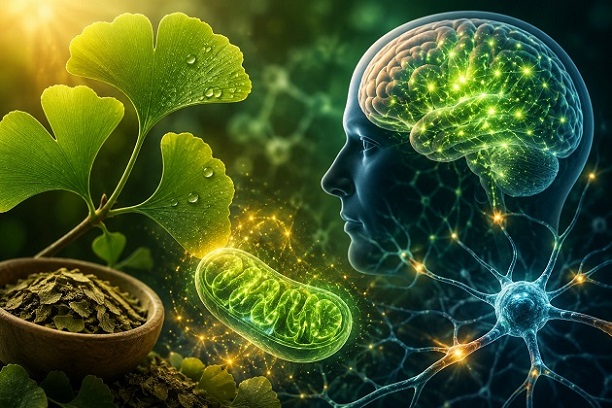 Ginkgo biloba extract restored energy production and reduced oxidative stress in aging human brain cells and support cells
Researchers from the Neurobiology Lab for Brain Aging and Mental Health at the University Psychiatric Clinics UPKl in Basel, Switzerland, and the Department of Biomedicine at the University of Basel, Switzerland, investigated how a Ginkgo biloba extract known as GBE LI1370 affects aging-related mitochondrial dysfunction in human cells.
Why Mitochondria Matter in Aging
Mitochondria are often called the power plants of cells because they generate the energy needed for normal cellular function. As people age, these structures gradually become less efficient. They produce less energy, accumulate more harmful oxidative molecules, and become increasingly vulnerable to damage. Scientists believe this mitochondrial decline plays a major role in aging and diseases such as Alzheimer's disease.
To explore whether Ginkgo biloba could help counter these effects, the research team used human induced pluripotent stem cells, or iPSCs. These cells were obtained from both young and older donors and can be transformed into brain cells, allowing scientists to study aging in a human-based laboratory model.
Aging Cells Show Clear Signs of Energy Failure
The study revealed striking differences between cells derived from younger individuals and those obtained from older donors.
Cells from older donors showed significantly lower production of ATP, the molecule that serves as the cell's primary energy currency. They also displayed weaker mitochondrial membrane potential, an important indicator of mitochondrial health. At the same time, these aged cells produced much higher levels of damaging reactive oxygen species and mitochondrial superoxide molecules.
The researchers observed these same aging-related problems not only in stem cells but also in neurons and astrocytes derived from those cells. Astrocytes are support cells that help nourish and protect neurons in the brain.
Importantly, the study is among the first to demonstrate clear mitochondrial impairment in human iPSC-derived astrocytes from older donors.
Ginkgo Biloba Restores Cellular Energy
When the aging cells were exposed to Ginkgo biloba extract for 24 hours, significant improvements were observed.
ATP production increased in both young and aged cells, indicating stronger energy generation. Mitochondrial membrane potential also improved, suggesting healthier and more efficient mitochondria.
The extract consistently reduced oxidative stress markers. Levels of mitochondrial reactive oxygen species and superoxide molecules dropped substantially after treatment, indicating that the ext
ract helped protect cells from damaging oxidative processes.
According to this
Medical News report, the benefits were not limited to stem cells. Neurons and astrocytes derived from older donors also responded positively to the treatment.
In aged neurons, ATP production increased noticeably while oxidative stress levels fell. Similar improvements were seen in aged astrocytes, where ATP production rose dramatically and mitochondrial function became significantly stronger.
Better Cellular Breathing and Metabolism
The researchers also examined how effectively the mitochondria were using oxygen and producing energy.
Using advanced Seahorse metabolic analysis, they found that aged cells had reduced oxygen consumption, weaker respiratory capacity, and poorer overall energy metabolism compared to younger cells.
Treatment with the Ginkgo extract improved several important metabolic measures, including basal respiration, maximal respiration, ATP-linked respiration, and spare respiratory capacity. These findings suggest the extract may help mitochondria operate more efficiently and produce energy more effectively.
What Makes Ginkgo Biloba So Effective?
Scientists believe several naturally occurring compounds in Ginkgo biloba may contribute to these benefits. These include flavonoids, terpene lactones, bilobalide, and proanthocyanidins. Previous research has shown these substances can protect mitochondria, reduce oxidative stress, support neuronal growth, and help maintain cellular survival pathways.
The new findings suggest that these protective effects may extend to human aging brain cells and their supporting astrocytes.
Conclusions
The study provides compelling evidence that Ginkgo biloba extract can improve mitochondrial health in human cells affected by aging. By increasing energy production, strengthening mitochondrial function, lowering oxidative stress, and improving cellular metabolism, the extract demonstrated broad protective effects across stem cells, neurons, and astrocytes derived from older individuals.
Although the research was conducted in laboratory-grown cells and involved a relatively small donor group, the results establish an important foundation for future investigations. Larger studies involving more diverse populations will be needed to determine whether these cellular benefits can eventually translate into meaningful protection against age-related cognitive decline and neurodegenerative diseases in humans.
The study findings were published in the peer reviewed journal: Antioxidants.
https://www.mdpi.com/2076-3921/15/6/689
https://www.thailandmedical.news/articles/anti-aging
For the latest on herbs and phytochemicals, keep on logging to Thailand
Medical News.
Read Also:
https://www.thailandmedical.news/articles/herbs-and-phytochemicals




 Share
Share
 Tweet
Tweet
 Share
Share