Nikhil Prasad Fact checked by:Thailand Medical News Team May 29, 2026 4 months, 2 weeks, 18 hours, 56 minutes ago
Medical News: For decades, scientists believed that Alzheimer's disease, Parkinson's disease, amyotrophic lateral sclerosis (ALS), multiple sclerosis (MS), and other neurodegenerative disorders were driven primarily by genetics, aging, and environmental factors. However, an emerging body of research is now pointing toward a surprising new suspect: toxins produced by microbes living in the gut, mouth, lungs, and other parts of the body.
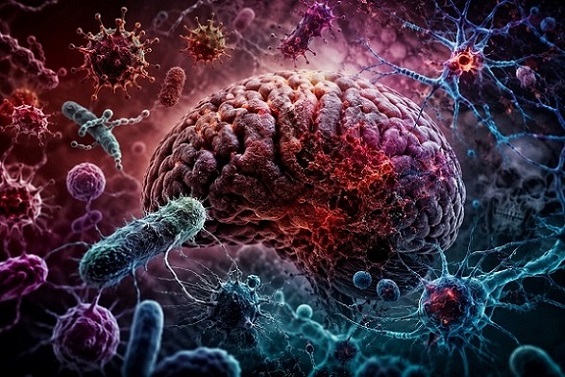 Scientists are uncovering growing evidence that bacterial and fungal toxins may contribute to Alzheimer's,
Parkinson's, ALS, multiple sclerosis, and other neurological disorders by triggering inflammation and neuronal damage.
A major new review is shedding light on how bacterial and fungal toxins may contribute to inflammation, oxidative stress, protein misfolding, mitochondrial dysfunction, and blood-brain barrier damage—key biological processes that are known to drive neurodegeneration. The findings suggest that microbes may play a far more important role in brain health than previously imagined.
The research was conducted by scientists from the Department of Life Sciences at Yeungnam University in Gyeongsan, Republic of Korea, and the Ocean and Fisheries Development International Cooperation Institute and the International Graduate Program of Fisheries Science at Pukyong National University in Busan, Republic of Korea.
The Gut-Brain Axis Comes Under the Spotlight
The human digestive tract contains trillions of microorganisms collectively known as the gut microbiota. Under healthy conditions, these microbes help digest food, regulate metabolism, produce vitamins, and support immune function.
Problems arise when the balance of microorganisms becomes disrupted, a condition known as dysbiosis. When this occurs, harmful bacteria and fungi can flourish and begin producing toxic compounds that may leak through the intestinal barrier into the bloodstream.
Researchers increasingly believe that these toxins can eventually reach the brain. Some may cross the blood-brain barrier directly, while others trigger widespread inflammation that indirectly damages brain tissue.
The review highlights how poor diet, environmental pollutants, infections, aging, antibiotic use, and chronic illness can all contribute to microbial imbalance and increased toxin production.
Five Major Ways Microbial Toxins Damage the Brain
According to the researchers, microbial toxins appear to contribute to neurodegenerative diseases through five interconnected mechanisms.
The first is neuroinflammation. Toxins activate immune cells in the brain, causing the release of inflammatory molecules that gradually damage neurons.
The second is oxidative stress. Toxic compounds increase the production of reactive oxygen species that attack proteins, fats, DNA, and cellular structures.
The third is protein misfolding and aggregation. Many toxins appear capable of triggering the abnormal folding of proteins such as beta-amyloid, tau, and alpha-synuclein.
Th
e fourth is mitochondrial dysfunction. Since mitochondria serve as cellular power plants, damage to them can deprive neurons of energy and accelerate cell death.
The fifth mechanism involves disruption of the blood-brain barrier, allowing more toxins, inflammatory molecules, and pathogens to enter the brain.
Lipopolysaccharide: One of the Most Dangerous Bacterial Toxins
One of the strongest pieces of evidence involves lipopolysaccharide (LPS), a toxin found on the outer membrane of Gram-negative bacteria.
Species including Escherichia coli, Klebsiella pneumoniae, Proteobacteria, Pseudomonas aeruginosa, and various intestinal pathogens produce LPS.
Scientists have found that LPS activates microglia, the immune defense cells of the brain. Once activated, these cells release inflammatory cytokines including TNF-α, IL-1β, and IL-6. While useful during infections, chronic activation can lead to progressive neuronal damage.
Studies cited in the review found that Alzheimer's patients frequently have blood concentrations of LPS that are three to six times higher than healthy individuals. Experimental studies have repeatedly shown that LPS exposure promotes beta-amyloid accumulation, tau abnormalities, cognitive decline, and Parkinson-like pathology.
The Surprising Role of Gum Disease Bacteria
One of the most intriguing discoveries involves Porphyromonas gingivalis, a bacterium responsible for chronic periodontal disease.
This microbe produces powerful enzymes known as gingipains. Researchers have identified both P. gingivalis DNA and gingipain toxins inside the brains of Alzheimer's patients.
Laboratory studies showed that gingipains promote the formation of beta-amyloid plaques, tau tangles, neuroinflammation, and neuronal death. In mouse models, blocking gingipain activity reduced plaque formation, inflammation, and brain cell loss.
Other oral microbes linked to Alzheimer's disease include Treponema species, Eubacterium nodatum, Actinomyces naeslundii, and Prevotella intermedia. Scientists believe chronic oral infections may represent a previously underestimated risk factor for dementia.
Bacterial Amyloids May Seed Neurodegeneration
Several bacteria manufacture proteins that closely resemble the toxic amyloid proteins found in human neurodegenerative diseases.
One notable example is curli, a bacterial amyloid produced by Escherichia coli and other enteric bacteria. Curli helps bacteria form biofilms, but researchers believe it may also influence the brain.
Because curli structurally resembles human beta-amyloid and alpha-synuclein, scientists suspect it may act as a molecular template that encourages human proteins to misfold and aggregate.
These protein aggregates are hallmarks of Alzheimer's disease and Parkinson's disease. Long-term exposure to bacterial amyloids may therefore accelerate disease progression by promoting protein accumulation and chronic inflammation.
Clostridium Species and Their Potent Neurotoxins
The review also highlights several members of the Clostridium family, which produce some of the most powerful toxins known.
Clostridium botulinum produces botulinum toxin, which blocks neurotransmitter release and causes paralysis.
Clostridium tetani produces tetanus toxin, which disrupts inhibitory signaling in the nervous system and causes severe muscle spasms and neurological dysfunction.
Other Clostridium species produce enterotoxins, toxin B, epsilon toxin, and lethal toxins that can damage neurons, impair cellular communication, and promote inflammation.
Researchers noted that elevated levels of toxin-producing Clostridium species have also been observed in individuals with autism spectrum disorder, suggesting that microbial toxins may influence neurodevelopment as well as neurodegeneration.
Fungal Infections and Mycotoxins Enter the Picture
The review provides extensive evidence linking fungi and fungal toxins to neurological disease.
Scientists have detected fungal DNA and proteins in brain tissues obtained from Alzheimer's patients. Species identified include Candida, Aspergillus, Fusarium, Malassezia, Cryptococcus, Alternaria, Botrytis, Cladosporium, Penicillium, and Saccharomyces.
Many of these fungi produce toxic compounds known as mycotoxins.
Aflatoxins
Produced mainly by Aspergillus species, aflatoxins are among the most notorious fungal toxins. These compounds generate oxidative stress, damage DNA, and trigger inflammatory responses. Researchers suspect long-term exposure may contribute to neurodegenerative processes.
Ochratoxin A
Produced by Aspergillus and Penicillium species, Ochratoxin A has attracted particular attention because of its effects on the nervous system.
Studies show that Ochratoxin A can impair mitochondrial function, increase oxidative stress, reduce dopamine levels, and activate cell death pathways. Some researchers believe chronic exposure could increase vulnerability to Parkinson's disease.
Fumonisin B1
Produced by Fusarium species, Fumonisin B1 interferes with sphingolipid metabolism. Since sphingolipids are essential for maintaining myelin, the protective coating surrounding nerve fibers, this toxin may contribute to the demyelination seen in multiple sclerosis.
Patulin
Patulin has been shown to increase calcium influx into neurons, generate reactive oxygen species, impair glucose metabolism, reduce neuronal survival, and promote cellular stress.
Penitrem A
Penitrem A increases oxidative stress and interferes with neurotransmitter transport. Experimental studies show it can damage neurons and reduce cell survival.
Microbial Toxins and Specific Brain Diseases
The evidence reviewed suggests that different toxins may contribute to different neurological disorders.
Alzheimer's disease has been associated with LPS, gingipains, bacterial amyloids, fungal infections, chronic inflammation, beta-amyloid accumulation, and tau pathology.
Parkinson's disease has been linked to alpha-synuclein aggregation, gut dysbiosis, bacterial amyloids, LPS exposure, fungal toxins, and chronic inflammation affecting dopamine-producing neurons.
Multiple sclerosis may be influenced by mycotoxins such as Fumonisin B1, which can disrupt myelin integrity and weaken the blood-brain barrier.
ALS has been linked to fungal infections, toxin-induced glutamate dysregulation, oxidative stress, and neuroinflammation. Researchers have identified fungal species including Fusarium, Trichoderma, Botrytis, Candida, Cryptococcus, Malassezia, and Penicillium in ALS patient samples.
Even autism spectrum disorder has been associated with altered gut microbial populations, increased intestinal permeability, elevated toxin-producing Clostridium species, and abnormal immune activation.
A New Frontier for Neurological Research
This
Medical News report highlights that one of the most important aspects of the review is the growing realization that neurodegenerative diseases may not be caused by a single factor. Instead, they may arise from complex interactions involving genetics, aging, immunity, environmental exposures, microbial infections, and toxin production.
Researchers caution that many of the findings remain preliminary and that definitive cause-and-effect relationships have not yet been established in humans. Nevertheless, the growing body of evidence is difficult to ignore.
Conclusion
The review presents compelling evidence that microbial toxins may represent an overlooked driver of neurodegenerative disease. Toxins produced by bacteria and fungi appear capable of triggering virtually every major pathological process associated with Alzheimer's disease, Parkinson's disease, ALS, multiple sclerosis, and related disorders. These toxins can promote inflammation, oxidative damage, protein aggregation, mitochondrial failure, blood-brain barrier disruption, and ultimately neuronal death. While further long-term human studies are urgently needed, the findings open exciting new possibilities for disease prevention and treatment. Future therapies may focus on restoring healthy microbial communities, blocking toxin production, strengthening the blood-brain barrier, or neutralizing the harmful effects of microbial toxins before irreversible brain damage occurs.
The study findings were published in the peer reviewed journal: Biomolecules.
https://www.mdpi.com/2218-273X/16/6/790
For the latest on brain diseases, keep on logging to Thailand
Medical News.
Read Also:
https://www.thailandmedical.news/articles/alzheimer,-dementia-




 Share
Share
 Tweet
Tweet
 Share
Share