Nikhil Prasad Fact checked by:Thailand Medical News Team May 15, 2026 4 months, 3 weeks, 3 days, 12 hours, 8 minutes ago
Medical News: A disturbing new study has revealed that the SARS-CoV-2 spike protein may actively accelerate the growth and progression of aggressive brain cancers, raising fresh concerns about the long-term neurological consequences of COVID-19.
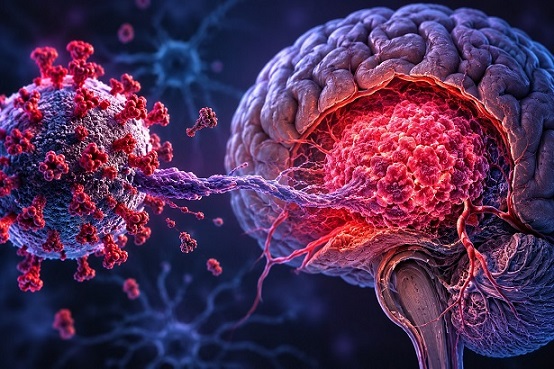 New research shows that the SARS-CoV-2 spike protein may trigger dangerous cancer-growth pathways
in aggressive brain tumors
Researchers from the Delhi Pharmaceutical Sciences and Research University in India, the Hong Kong Institute of Science and Innovation-CAS Limited in Hong Kong, the University of Dundee in the United Kingdom, the University of Pittsburgh in the United States, and Southwest University in China found that the virus appears capable of activating dangerous cancer-related pathways inside glioma cells. Gliomas, especially glioblastoma multiforme, are among the deadliest forms of brain cancer and are notoriously difficult to treat.
The scientists used advanced gene sequencing technologies, spatial transcriptomics, and laboratory experiments to investigate how SARS-CoV-2 interacts with brain tissue and tumor cells. Their findings suggest that COVID-19 may not only damage the brain through inflammation but could also create conditions that help brain tumors become more aggressive.
How The Virus Gains Access to The Brain
Scientists have known for several years that SARS-CoV-2 can affect the nervous system. Many COVID-19 patients have experienced headaches, confusion, brain fog, dizziness, memory problems, strokes, and other neurological complications.
The study found that several types of brain cells carry proteins that allow the virus to enter cells. These include ACE2, NRP1, TMPRSS2, FURIN, FCGR1A, and HSPG2. Researchers discovered that oligodendrocytes, astrocytes, endothelial cells, neurons, and immune-related microglia cells all showed varying levels of these viral entry receptors.
More importantly, malignant glioma cells showed significantly higher expression of many of these receptors compared to healthy brain cells. This means glioma tissues may be especially vulnerable to SARS-CoV-2 infection and its damaging effects.
The researchers also found evidence that COVID-19 may weaken the blood-brain barrier, the protective structure that normally shields the brain from harmful pathogens and toxins. Once this barrier becomes compromised, the virus may gain easier access to sensitive brain tissue.
Spike Protein Activated Tumor Growth Pathways
One of the most alarming parts of the study involved experiments using primary glioblastoma cells exposed to the receptor-binding domain (RBD) of the SARS-CoV-2 spike protein.
The results showed that exposure to the spike protein significantly increased tumor cell proliferation in certain glioblastoma cell lines. Researchers observed rapid activation of several major oncogenic pathways that are strongly associated with cancer growth and survival.
Among the pathways activated were MAPK, ERK1/2, Akt, and mTOR signaling pathways. The MAPK pathway became activated within just one hour after exposure to the spike protein, while activation of the mTOR pathway followed several
hours later. These signaling cascades are known to regulate tumor growth, cell survival, metabolism, and resistance to treatment.
Interestingly, tumor cells that had lower levels of viral entry receptors responded less aggressively to spike protein exposure, suggesting that receptor abundance may determine how strongly tumors react to SARS-CoV-2.
Inflammation Inside Tumors Intensified
The researchers also uncovered evidence that COVID-19-related inflammation may further worsen brain cancer progression.
Glioma tissues showed elevated levels of inflammatory molecules such as TNF, IL-6, IFN-γ, ANG2, and CXCR4. These molecules are already known to contribute to severe COVID-19 symptoms and are also heavily involved in cancer growth, immune suppression, and tumor spread.
Using single-cell RNA sequencing and spatial transcriptomics, scientists mapped how these inflammatory markers were distributed across tumor tissue. They found extensive immune-cell infiltration, inflammatory hotspots, necrotic regions, and hypoxia-related activity throughout glioma samples.
This
Medical News report highlights growing fears among cancer researchers that SARS-CoV-2 infection could potentially reshape the tumor microenvironment in ways that favor cancer progression and worsen patient outcomes.
COVID-19 And Brain Cancer May Be More Closely Linked Than Previously Thought
The study also identified overlaps between COVID-19-induced genetic changes and genes involved in glioma development. In particular, astrocytes and mesenchymal cells appeared strongly linked to tumor-promoting processes triggered during infection.
Researchers warned that glioma patients may face especially high risks because many already have weakened immune systems due to chemotherapy, radiation, or immunosuppressive therapies. The virus may therefore exploit both the compromised immune state and the tumor environment simultaneously.
The findings also suggest that SARS-CoV-2 infection may contribute to chronic inflammation and abnormal signaling that continue even after the acute infection phase has passed.
Conclusions
The new study provides compelling evidence that SARS-CoV-2 and its spike protein may directly contribute to the progression of aggressive brain cancers such as glioblastoma. Researchers demonstrated that glioma cells express high levels of viral entry receptors and that exposure to the spike protein can activate powerful oncogenic signaling pathways linked to tumor growth and survival. The findings also showed extensive inflammation, immune disruption, and altered tumor microenvironments in glioma tissues associated with COVID-19-related mechanisms. While further clinical research is still needed to determine the exact impact in patients, the study raises serious concerns about how COVID-19 could affect individuals with existing brain tumors or those vulnerable to neurological disease.
The study findings were published in the peer reviewed journal: In Silico Research in Biomedicine.
https://www.sciencedirect.com/science/article/pii/S3050787126001988
For the latest COVID-19 news, keep on logging to Thailand
Medical News.
Read Also:
https://www.thailandmedical.news/news/sars-cov-2-nucleocapsid-protein-increases-rantes-levels-in-glioblastoma-cells
https://www.thailandmedical.news/news/covid-19-and-glioblastoma-onset
https://www.thailandmedical.news/news/breaking-texas-md-anderson-study-finds-that-covid-19-accelerates-brain-tumor-progression-and-possibly-causes-new-onset-glioblastomas
https://www.thailandmedical.news/news/breaking-covid-19-news-study-finds-that-covid-19-hospitalization-linked-to-elevated-glioblastoma-risk-a-type-of-aggressive-brain-cancer
https://www.thailandmedical.news/news/sars-cov-2-and-cancer-increased-neuropilin-1-expression-as-a-result-of-covid-19-can-lead-to-progression-of-primary-brain-tumors-besides-neurological-i
https://www.thailandmedical.news/news/urgent-validation-needed-on-study-findings-showing-that-covid-19-mrna-jabs-altered-the-biochemical-composition-of-glial-and-glioma-brain-cells




 Share
Share
 Tweet
Tweet
 Share
Share