Nikhil Prasad Fact checked by:Thailand Medical News Team May 18, 2026 4 months, 3 weeks, 4 days, 20 hours, 17 minutes ago
Medical News: A new Japanese study has revealed that COVID-19 may leave behind long-lasting disruptions in important blood fats known as lipids, potentially helping scientists better understand why some individuals continue suffering from Long COVID months after the initial infection has resolved. The findings provide fresh insight into the biological changes linked to post-acute sequelae of SARS-CoV-2 infection, commonly known as Long COVID or PASC.
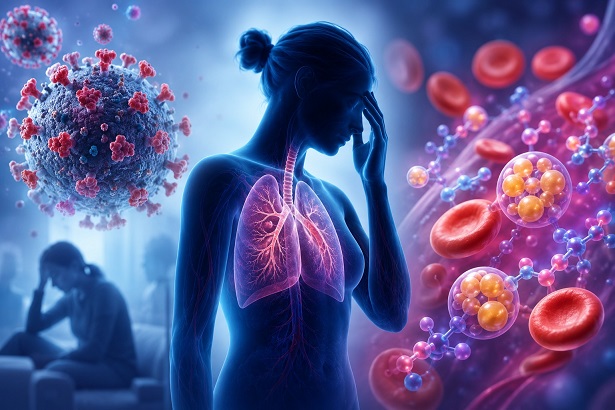 Japanese researchers discover unusual blood lipid changes that may help explain the development of Long COVID
symptoms
The research was conducted by scientists from the Department of Infectious Diseases and the Department of Clinical Laboratory Medicine at The University of Tokyo Graduate School of Medicine, the Institute of Science Tokyo, Tokyo Health Care University, the Graduate School of Pharmaceutical Sciences at The University of Tokyo, and Nihon Waters K.K. in Japan.
Long COVID continues to affect millions worldwide, with symptoms including chronic fatigue, breathing problems, chest pain, memory difficulties, and neurological complications. Despite years of research, scientists still do not fully understand why some patients recover completely while others remain ill for months or years.
Scientists Focus on Lipid Metabolism
Researchers have increasingly suspected that disruptions in metabolism, particularly lipid metabolism, may play a major role in Long COVID. Lipids are not simply fats stored in the body. Many act as signaling molecules that regulate inflammation, immune responses, lung function, and cellular communication.
In the new study, researchers examined two major classes of lipids called sphingolipids and glycerophospholipids. These molecules are known to influence viral infections and immune system activity. Previous studies had already shown that COVID-19 can alter these lipids during the acute phase of infection.
To investigate further, the researchers analyzed blood serum samples from 199 COVID-19 patients, including 13 individuals who later developed Long COVID, along with samples from 109 healthy volunteers. The team collected samples across multiple stages of infection and recovery to monitor how lipid levels changed over time.
Major Changes Seen in Key Blood Lipids
The scientists found that several important sphingolipids were significantly reduced in COVID-19 patients compared to healthy individuals. These included sphingosine 1-phosphate, ceramides, sphingomyelins, and lactosylceramides. Some glycerophospholipids such as lysophosphatidylcholine and phosphatidylglycerol were also found at lower levels.
At the same time, other lipid molecules including phosphatidylcholine and phosphatidylethanolamine showed elevated levels in infected patients. These findings suggest that SARS-CoV-2 infection creates widespread metabolic disturbances that can persist well beyond the initial illness.
Interestingly, the researchers did not find a single lipid that clearly separated Long COVID patients from those who recovered normally. However, one lipid called phosphatidylglycerol, or PG, showed unusual changes over time in patients who
later developed Long COVID.
Lung-Related Lipid May Hold Important Clues
Using advanced statistical analysis, the scientists discovered that PG levels sharply increased around days 10 to 12 after infection in patients who later developed Long COVID. This pattern was not observed in patients who recovered without persistent symptoms. Two specific forms of PG, known as PG(32:0) and PG(34:4), appeared especially linked to these changes.
Researchers believe this may be significant because PG is an important component of pulmonary surfactant, a substance that coats the lungs and helps keep the air sacs open during breathing. COVID-19 is known to damage alveolar type 2 cells, the specialized lung cells responsible for producing surfactant.
Damage to these cells could potentially alter PG levels and contribute to lingering respiratory symptoms seen in Long COVID patients.
This
Medical News report notes that the researchers described their findings as exploratory but potentially important for understanding the biological pathways involved in Long COVID development.
Study Limitations and Future Directions
The researchers acknowledged several limitations. Only 13 participants in the study developed Long COVID, making it difficult to draw firm conclusions. In addition, Long COVID itself is highly complex and can involve many different symptom patterns, which may not share identical biological mechanisms.
Still, the study offers valuable clues that lipid metabolism disruptions may play a role in persistent post-COVID illness. Scientists believe future research involving larger patient groups and longer follow-up periods could help confirm whether these lipids can serve as reliable biomarkers or even treatment targets.
Conclusions
The findings from this Japanese study suggest that COVID-19 causes major disturbances in important blood lipids involved in lung health, inflammation, and immune regulation. Although researchers did not identify a single definitive Long COVID biomarker, the unusual behavior of phosphatidylglycerol during recovery raises important questions about how the virus may trigger lingering biological damage. These discoveries may eventually contribute to better diagnostic tools, earlier risk prediction, and more targeted therapies for individuals suffering from Long COVID and related post-viral complications.
The study findings were published in the peer reviewed journal: Scientific Reports.
https://link.springer.com/article/10.1038/s41598-026-50505-2
For the latest on Long COVID, keep on logging to Thailand
Medical News.
Read Also:
https://www.thailandmedical.news/articles/long-covid




 Share
Share
 Tweet
Tweet
 Share
Share