Nikhil Prasad Fact checked by:Thailand Medical News Team May 17, 2026 4 months, 3 weeks, 5 days, 19 hours, 27 minutes ago
Medical News: A new international study is raising concerns about a rare but potentially dangerous heart condition linked to commonly used fluoroquinolone antibiotics such as ciprofloxacin and levofloxacin. Researchers found evidence suggesting that these widely prescribed drugs may trigger Kounis syndrome, a condition often described as an “allergic heart attack.”
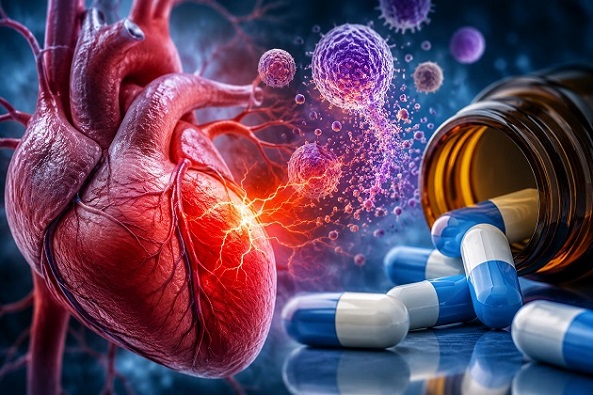 Common fluoroquinolone antibiotics may trigger a rare allergic reaction capable of causing heart attack-like
symptoms within minutes.
The research was conducted by scientists from the Medicines and Medical Devices Agency of Serbia in Belgrade and the Faculty of Medical Sciences, University of Kragujevac, Serbia, including experts from the Departments of Pharmacology and Toxicology, Pharmacy, and Surgery.
What Is Kounis Syndrome?
Kounis syndrome happens when a severe allergic reaction causes inflammation in the coronary arteries that supply blood to the heart. During the allergic reaction, the body releases chemicals such as histamine and inflammatory mediators that can suddenly narrow blood vessels, destabilize plaques inside arteries, or even trigger blood clots.
Patients can experience chest pain, shortness of breath, heart rhythm problems, or symptoms that resemble a classic heart attack. In some cases, the condition can rapidly become life-threatening.
Doctors classify the syndrome into several forms. One type affects people with otherwise healthy coronary arteries, while another strikes people who already have heart disease. A more severe form can even involve clotting inside heart stents.
Common Antibiotics Under Scrutiny
Fluoroquinolones are among the most frequently prescribed antibiotics worldwide and are used to treat urinary tract infections, respiratory infections, gastrointestinal infections, and other bacterial illnesses. However, these drugs have already faced regulatory scrutiny in Europe and other regions due to serious side effects affecting nerves, muscles, joints, and the heart.
The new study explored reports from the World Health Organization’s global drug safety database called VigiBase and combined those findings with published medical case reports. Researchers discovered 65 reported cases initially connected to fluoroquinolones and Kounis syndrome. After removing duplicate reports and closely reviewing the data, they identified 17 strong cases suitable for deeper analysis.
Among these cases:
-Ciprofloxacin accounted for 8 cases
-Levofloxacin accounted for 4 cases
-Gemifloxacin accounted for 2 cases
-Moxifloxacin accounted for 2 cases
-Garenoxacin accounted for 1 case
Most patients developed symptoms within minutes or hours after taking the antibiotic.
Shocking Clinical Patterns Revealed
Researchers noticed a strikingly consistent pattern. Many patients first developed allergic symptoms such as rash, breathing difficulty, swelling, or severe hypersensitivity reactions. Shortly afterward, they experienced chest pain or signs of acute cor
onary syndrome.
Several patients showed ST-segment elevation on electrocardiograms, a dangerous finding usually associated with heart attacks. In many cases, coronary angiography revealed normal arteries, strongly suggesting the heart event was caused by allergic inflammation and artery spasm rather than traditional blockage.
One particularly serious case involved a patient who developed clotting inside a previously implanted coronary stent after ciprofloxacin exposure. Other patients required intensive care treatment, emergency angioplasty, oxygen therapy, corticosteroids, antihistamines, or adrenaline injections.
Interestingly, most patients recovered after the antibiotic was stopped and appropriate emergency treatment was given.
Why These Drugs May Trigger Heart Damage
The researchers explained that fluoroquinolones are already known to trigger severe allergic reactions in some people. The drugs can activate mast cells, immune cells that release inflammatory substances capable of affecting blood vessels and heart tissue.
This
Medical News report highlights that the researchers believe these immune reactions may directly trigger coronary artery spasm or destabilize existing artery plaques, leading to sudden cardiac complications.
The study also noted that regulatory authorities have started recognizing the issue. Product information for some fluoroquinolones now includes warnings about Kounis syndrome or allergic coronary events.
Doctors Urged to Stay Alert
The researchers emphasized that Kounis syndrome remains underdiagnosed because its symptoms closely resemble a standard heart attack. Many physicians may fail to recognize that an allergic reaction and a cardiac event are happening simultaneously.
Although the researchers stressed that the findings do not prove definitive causation, they warned that the repeated clinical patterns across multiple countries and patient groups are concerning enough to justify further investigation.
The study concluded that fluoroquinolone-associated Kounis syndrome appears to be a rare but clinically important complication that healthcare professionals should not ignore. Doctors are being encouraged to carefully monitor patients who suddenly develop allergic symptoms together with chest pain after taking these antibiotics. The researchers also called for larger studies, improved pharmacovigilance reporting, and greater awareness among emergency physicians and cardiologists so that future cases can be recognized and treated more quickly.
The study findings were published in the peer reviewed journal: Pharmaceuticals.
https://www.mdpi.com/1424-8247/19/5/771
For the latest on the dangers of using Fluoroquinolone antibiotics, keep on logging to Thailand
Medical News.
Read Also:
https://www.thailandmedical.news/articles/med-news




 Share
Share
 Tweet
Tweet
 Share
Share