Nikhil Prasad Fact checked by:Thailand Medical News Team May 10, 2026 4 months, 3 weeks, 4 days, 36 minutes ago
Medical News: A growing body of scientific evidence is suggesting that psilocybin, the psychedelic compound found in “magic mushrooms,” may hold surprising potential for treating depression, anxiety, chronic inflammation, and even neurodegenerative diseases in older adults. Researchers are now exploring whether the compound could become a new kind of therapy for aging-related brain disorders that current medicines often fail to treat effectively.
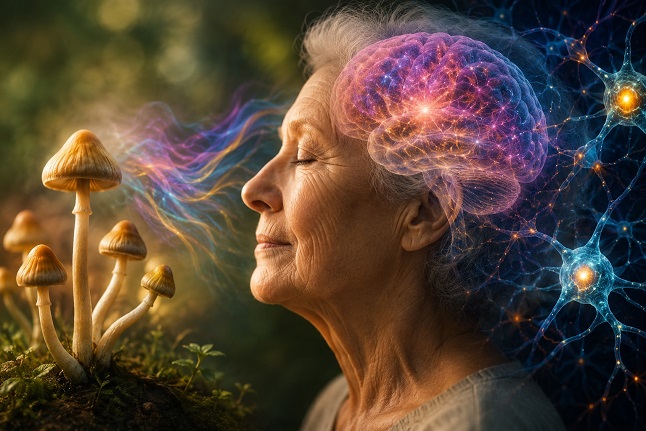 Scientists are exploring how psilocybin may reduce brain inflammation and improve mental health in older adults
Scientists from the Medical University of Lodz in Poland and the Pomeranian Medical University in Szczecin, Poland, conducted a major review examining how psilocybin may help combat “inflammaging,” the chronic low-grade inflammation linked to aging and diseases such as Alzheimer’s disease, Parkinson’s disease, and late-life depression.
Chronic Inflammation May Be Driving Brain Decline
As people age, the body often enters a state of constant low-level inflammation. This process, known as inflammaging, is now believed to damage the brain over time. Researchers say it can trigger harmful immune reactions, disrupt brain connections, and increase the risk of depression, memory loss, dementia, and anxiety disorders.
The review explained that inflammatory chemicals such as IL-6, TNF-alpha, and CRP rise in older adults and may worsen brain degeneration. Current antidepressants and psychiatric drugs often provide only limited relief in elderly patients, especially those already taking multiple medications for other illnesses. Psilocybin appears different because it may target several disease pathways at once.
How Psilocybin Works in the Brain
After psilocybin enters the body, it is rapidly converted into psilocin, a compound that activates serotonin 5-HT2A receptors in the brain. These receptors influence mood, perception, cognition, and emotional processing.
Researchers found that psilocybin may stimulate brain repair processes by increasing brain-derived neurotrophic factor, or BDNF, which helps form new neural connections. The compound also appears to improve communication between brain regions and may help “reset” dysfunctional brain networks linked to depression and rumination.
Importantly, studies reviewed by the scientists showed that psilocybin could reduce inflammatory activity in immune cells and lower inflammatory markers such as TNF-alpha and IL-6. This
Medical News report highlights that the drug may work not only as a psychedelic but also as a neuroimmune regulator capable of calming damaging inflammation in the aging brain.
Benefits Seen in Depression and Anxiety
Clinical trials reviewed in the paper showed rapid improvements in depression and anxiety symptoms after one or two supervised psilocybin sessions.
In one major study involving patients with major depressive disorder, more th
an 70 percent responded positively to treatment, while over half achieved remission within weeks. Some benefits reportedly lasted months.
Cancer patients experiencing severe fear of death and emotional distress also experienced dramatic psychological improvements after psilocybin-assisted therapy. Many participants described reduced anxiety about dying and a renewed sense of peace and emotional connection.
Researchers believe these emotional shifts may be particularly valuable for older adults dealing with chronic illness, loneliness, or existential distress.
Possible Hope for Alzheimer’s and Parkinson’s Disease
The review also described emerging evidence suggesting psilocybin may eventually help patients with neurodegenerative diseases.
In Parkinson’s disease patients, small pilot studies found improvements in mood, anxiety, daily functioning, and even some cognitive and motor symptoms after psilocybin therapy. Researchers also noted that the compound was generally well tolerated alongside standard Parkinson’s medications.
Meanwhile, clinical trials are now underway to investigate psilocybin in people with mild cognitive impairment and early Alzheimer’s disease. Animal studies have also hinted that psilocybin may slow biological aging itself. Researchers observed increased survival in older mice, reduced oxidative stress, and activation of longevity-related pathways after treatment.
Safety Still Requires Careful Monitoring
Although psilocybin showed a relatively favorable safety profile in controlled medical settings, researchers stressed that caution is still essential, especially in older adults.
Temporary increases in blood pressure, headaches, nausea, dizziness, and episodes of anxiety were among the most commonly reported side effects. Individuals with a history of psychosis or severe psychiatric illness may face greater risks.
The researchers emphasized that unsupervised use of psychedelic substances can be dangerous and should not be confused with medically supervised therapy.
Conclusions
The findings suggest that psilocybin may eventually become a powerful new therapeutic option for aging-related mental and neurological disorders. Unlike many traditional psychiatric medications that target only symptoms, psilocybin appears to influence inflammation, brain plasticity, emotional regulation, and neural connectivity simultaneously.
However, researchers caution that the science is still in its early stages. Older adults remain severely underrepresented in psychedelic clinical trials, and much more research is needed to determine optimal dosing, long-term safety, cardiovascular risks, and how aging brains uniquely respond to psychedelic compounds. Scientists are now calling for large-scale clinical studies specifically focused on elderly populations before psilocybin can move into mainstream geriatric medicine.
The study findings were published in the peer reviewed International Journal of Molecular Sciences.
https://www.mdpi.com/1422-0067/27/10/4229
For the latest on Psilocybin, keep on logging to Thailand
Medical News.
Read Also:
https://www.thailandmedical.news/news/psychedelic-microdosing-rewires-brain-and-lifts-mood
https://www.thailandmedical.news/news/psychedelic-compounds-could-restore-vision-loss-caused-by-glaucoma
https://www.thailandmedical.news/news/single-dose-psilocybin-quietly-rewires-the-brain
https://www.thailandmedical.news/news/time-for-medical-and-regulatory-agencies-to-embrace-psilocybin-mainstream
https://www.thailandmedical.news/news/psilocybin-emerging-as-a-game-changer-in-mental-health-treatment
https://www.thailandmedical.news/news/psilocin-and-its-role-in-enhancing-brain-plasticity
Medical Disclaimer: All content published by Thailand Medical News is based on scientific research and is intended for informational and educational purposes only. It is not medical advice, diagnosis, or treatment. Readers must not attempt to use, apply, or experiment with any protocols, compounds, or therapies mentioned without first consulting a qualified and licensed medical doctor. Many findings discussed are experimental or preliminary, and only a licensed healthcare professional can determine what is safe and appropriate for an individual’s specific medical condition




 Share
Share
 Tweet
Tweet
 Share
Share

































