Nikhil Prasad Fact checked by:Thailand Medical News Team May 07, 2026 4 months, 2 weeks, 12 hours, 40 minutes ago
Medical News: Researchers from the Institute of Microbiology at the University Hospital Center and University of Lausanne in Switzerland, along with the Spiez Laboratory of the Swiss Federal Institute for NBC-Protection in Switzerland, had in a study in 2021, identified several promising natural compounds that may help stop deadly hantaviruses and other hemorrhagic fever viruses from entering human cells.
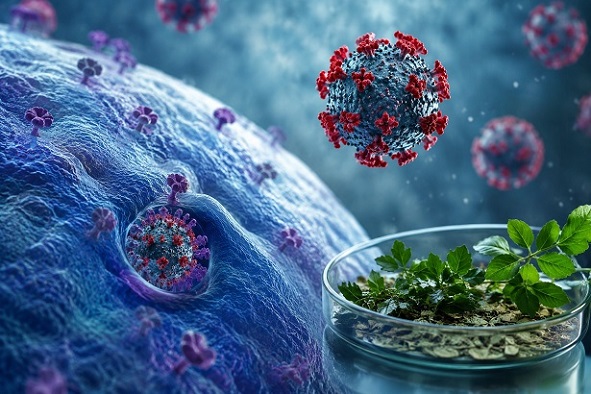 Swiss researchers identify plant-derived compounds capable of stopping deadly hantaviruses from entering human cells
Hantaviruses are dangerous viruses carried mainly by rodents and can cause severe illnesses with high death rates. In Asia, some hantaviruses trigger hemorrhagic fever with renal syndrome, while in the Americas they can cause hantavirus cardiopulmonary syndrome, a serious lung disease that can kill up to 40 percent of infected patients. Despite the threat, treatment options remain very limited and no widely approved antiviral drugs currently exist.
Searching Nature for Antiviral Solutions
The Swiss research team focused on finding compounds capable of blocking viruses during the earliest stage of infection — the moment when viruses first attach to and enter human cells. Preventing entry is considered one of the most effective ways to stop viruses before they begin replicating inside the body.
To carry out the study, scientists screened a library containing 320 natural plant-derived compounds. Instead of working directly with the dangerous viruses in every experiment, the researchers used specially engineered pseudoviruses that mimic the entry process of hantaviruses, Ebola virus, and Lassa virus but are safer to handle in laboratories.
The engineered viruses contained a green fluorescent marker. When the viruses successfully infected cells, the cells glowed green under special imaging systems. This allowed researchers to quickly identify compounds capable of preventing infection.
Several Compounds Showed Strong Antiviral Activity
The study identified five major compounds with significant antiviral effects:
-Tetrandrine
-Nitrarine dihydrochloride
-Rotenone
-Monensin sodium salt
-Emetine dihydrochloride
Among these, emetine dihydrochloride stood out because it blocked multiple dangerous viruses, including Hantaan virus, Ebola virus, and Lassa virus. Researchers described it as showing broad-spectrum antiviral activity.
Tetrandrine also produced strong effects, especially against Andes virus, Ebola virus, and Lassa virus. Rotenone appeared more selective, mainly targeting Andes virus and Lassa virus.
Importantly, many of these compounds managed to stop viral activity without severely harming healthy cells, a key requirement for future drug development.
Blocking Viruses Before They Take Over Cells
The researchers discovered that some compounds interfered specifically with the viral entry process. Viruses norm
ally use the host cell’s internal transport system, including endosomes, to enter and spread infection. Compounds such as tetrandrine and monensin sodium salt appeared to trap viruses during this stage, preventing them from escaping into the cell interior.
This
Medical News report highlights that targeting viral entry could become a powerful strategy not only for hantaviruses but also for future emerging viral outbreaks. Because many hemorrhagic fever viruses use similar methods to infect cells, a single drug could potentially work against several deadly pathogens.The study also confirmed earlier findings involving a compound called EIPA, which reduced Hantaan virus infection by about 65 percent in laboratory tests.
Tests With Real Pathogenic Viruses
After the initial screening, the scientists moved on to experiments using authentic pathogenic Hantaan virus inside high-security biosafety level-3 laboratories.The results were especially encouraging for tetrandrine and emetine dihydrochloride. Both compounds dramatically reduced levels of live virus infection in infected cells.
Researchers also calculated what is known as a therapeutic index, which compares a drug’s effectiveness against its toxicity. Emetine dihydrochloride showed the most favorable safety profile among the tested compounds, suggesting it could have strong potential for future antiviral development if additional studies confirm the findings.
The scientists emphasized that drug repurposing may offer a faster path toward antiviral treatments. Since some of these compounds are already known in medicine or traditional herbal practices, researchers may be able to speed up development compared to creating entirely new drugs from scratch.
Conclusions
The study provided important new evidence that natural compounds may hold the key to future treatments against deadly hemorrhagic fever viruses. By focusing on viral entry, scientists identified several molecules capable of stopping hantaviruses and related pathogens before they can establish infection inside cells. The findings are especially important because current treatment options for hantavirus infections remain extremely limited worldwide.
Researchers believe the screening platform they developed could also help scientists rapidly identify treatments during future viral outbreaks. Although more animal studies and human clinical trials are still needed, compounds like emetine dihydrochloride and tetrandrine may eventually become part of a new generation of broad-spectrum antiviral therapies capable of fighting multiple deadly viruses.
The study findings were published in the peer reviewed journal: Viruses.
https://www.mdpi.com/1999-4915/13/4/685
For the latest on hantavirus, keep on logging to Thailand
Medical News.
Read Also:
https://www.thailandmedical.news/articles/hantavirus-news
https://www.thailandmedical.news/news/a-new-strain-of-hantavirus-possibly-behind-the-three-deaths-and-numerous-h2h-infections-on-a-cruise-ship




 Share
Share
 Tweet
Tweet
 Share
Share

































