Hantavirus Cruise Ship Outbreak Sparks Global Alarm but WHO Says Pandemic Risk Is Extremely Low
Nikhil Prasad Fact checked by:Thailand Medical News Team May 08, 2026 4 months, 4 weeks, 1 day, 10 hours, 41 minutes ago
Medical News: A deadly outbreak involving the rare Andes strain of hantavirus aboard the expedition cruise vessel MV Hondius has triggered a sweeping international health response, with authorities across Europe, Africa, Asia, and the Americas scrambling to trace passengers who may have been exposed. Despite growing public anxiety and comparisons to the early days of COVID-19, the World Health Organization has stressed that the outbreak does not represent the beginning of another global pandemic.
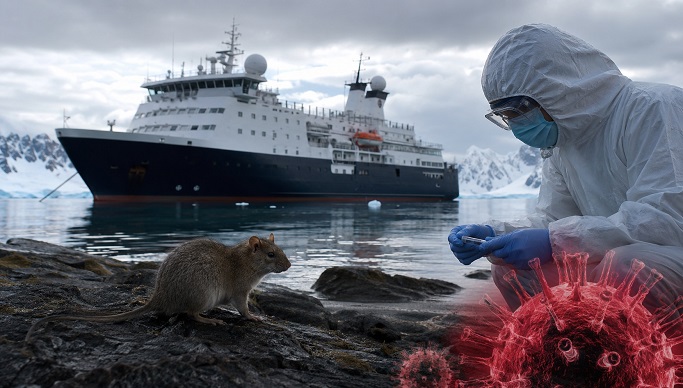 WHO officials say the deadly Andes hantavirus outbreak aboard the MV Hondius remains a limited health threat despite
international concern
The outbreak has already resulted in three deaths and several confirmed infections, while dozens of passengers from at least 12 countries disembarked the vessel before the disease was officially identified. Yet WHO officials insist the overall public health threat remains low because the Andes strain behaves very differently from SARS-CoV-2.
WHO Says Andes Hantavirus Is Not Like COVID-19
Speaking during a media briefing yesterday, WHO infectious disease epidemiologist Maria Van Kerkhove firmly rejected suggestions that the outbreak could spiral into a worldwide crisis.
She emphasized that hantaviruses are fundamentally different from respiratory viruses such as influenza or SARS-CoV-2. According to WHO officials, the Andes strain can spread between humans only under conditions involving close and intimate contact, particularly in confined settings.
Van Kerkhove stated that this outbreak “is not COVID and is not influenza,” adding that transmission patterns are far less efficient and far more limited. WHO Director-General Tedros Adhanom Ghebreyesus echoed those reassurances, saying the organization currently assesses the public health risk as low.
However, WHO officials notably stopped short of definitively ruling out airborne characteristics in extremely enclosed environments.
They confirmed that genomic sequencing is currently underway in three international laboratories to determine whether any mutations, sublineages, or new viral variants may be contributing to the unusual cluster of infections aboard the vessel.
The findings from those sequencing efforts are expected to become crucial in determining whether the virus has undergone changes that could affect transmission dynamics.
Deadly Timeline Aboard the MV Hondius
The luxury expedition vessel, operated by Oceanwide Expeditions, departed Ushuaia, Argentina, on April 1 for a polar exploration voyage that eventually headed toward Europe.
The first known illness reportedly appeared on April 6, when a 70-year-old passenger became sick onboard. Five days later, on April 11, the passenger died aboard the ship. At that point, the cause of illness remained unknown.
On April 24, the ship stopped at the remote British territory of St. Helena in the South Atlantic. During that stop, the deceased passenger’s body was removed from the vessel and approximately 30 to 40 passengers
disembarked.
One of those passengers was the dead man’s 69-year-old Dutch wife, who later traveled to South Africa. She became severely ill before boarding a KLM flight to the Netherlands and died in Johannesburg on April 26. Laboratory testing later confirmed she had been infected with the Andes hantavirus strain.
By May 2, a German woman who had developed symptoms onboard also died. Several other passengers required emergency evacuation for specialized medical treatment in Europe and South Africa.
WHO later confirmed that at least five passengers tested positive for the Andes strain of hantavirus.
Global Contact Tracing Operation Expands
Because dozens of passengers left the ship before the outbreak was officially recognized, health authorities across multiple countries have launched extensive contact tracing operations.
Passengers who disembarked in St. Helena originated from countries including the United Kingdom, the United States, Canada, Singapore, Switzerland, Germany, Turkey, Denmark, New Zealand, Sweden, the Netherlands, and Saint Kitts and Nevis.
Authorities are now monitoring individuals across four continents.
Singapore confirmed that two men who had traveled from St. Helena to Johannesburg before returning home were placed in isolation and tested. Their laboratory results remain pending.
In the United States, officials in Georgia and Arizona are monitoring passengers who returned from the voyage, although none have developed symptoms so far.
France reported that a citizen identified as a contact case linked to the outbreak is in isolation with mild symptoms while testing proceeds.
Meanwhile, Dutch authorities revealed that a flight attendant who briefly interacted with the infected Dutch woman in Johannesburg later developed symptoms and was placed in isolation for testing. If confirmed positive, the individual could become the first known secondary case outside the cruise ship environment itself.
This
Medical News report notes that the international spread of potentially exposed passengers before diagnosis has become one of the most concerning aspects of the incident, even though WHO continues to stress that sustained global transmission remains highly unlikely.
Scientists Investigate Possible Source in South America
Investigators believe the outbreak likely began before passengers even boarded the cruise ship.
WHO officials revealed that the Dutch couple linked to the earliest cases had traveled through Argentina, Chile, and Uruguay during a bird-watching trip before embarking on the MV Hondius. The couple reportedly visited locations where rodent species known to carry Andes hantavirus are common.
Health authorities in Argentina are now focusing attention on Ushuaia, the southern port city where the cruise began.
Scientists from Argentina’s Malbrán Institute are preparing field investigations involving rodent testing at waste disposal sites and surrounding wildlife habitats to determine whether infected rats are actively circulating in the region.
The WHO is also coordinating with Argentine authorities to reconstruct the movements of infected travelers and has arranged for 2,500 diagnostic kits to be distributed to laboratories in several countries.
Why Andes Virus Is So Unusual
Hantaviruses are typically transmitted to humans through exposure to infected rodent urine, saliva, or droppings. In most cases worldwide, direct human-to-human spread does not occur.
The Andes strain, however, is considered unique. Researchers have long suspected that Andes hantavirus possesses limited capacity for person-to-person transmission, particularly among close family members or caregivers exposed to respiratory secretions and bodily fluids.
The virus can cause hantavirus pulmonary syndrome, a severe disease marked by fever, muscle pain, respiratory distress, and fluid accumulation in the lungs.Fatality rates can be extremely high in severe cases.
According to Argentina’s Health Ministry, hantavirus deaths in the country have increased significantly in recent years. Last year alone, 28 deaths were recorded, with nearly one-third of infections proving fatal.
The incubation period can range from one week to six weeks (studies and other experts say that it can even be as long as 8 weeks), creating major challenges for contact tracing and surveillance efforts.
Cruise Ship Remains Under International Scrutiny
As the situation unfolded, the MV Hondius continued sailing toward Spain’s Canary Islands with more than 140 passengers and crew members still aboard.
WHO Director-General Tedros said he had remained in regular contact with the ship’s captain throughout the ordeal and noted that morale onboard improved once the vessel resumed movement after temporary delays.
Passengers onboard have reportedly been instructed to wear masks, while crew members caring for symptomatic individuals have been advised to use higher-grade protective equipment.
Oceanwide Expeditions stated that the first confirmed hantavirus diagnosis did not occur until May 2, after many passengers had already left the vessel. The company insists it has remained in constant communication with international health authorities regarding quarantine and screening protocols.
Spanish authorities are also coordinating possible repatriation flights for passengers from several nations once the vessel reaches the Canary Islands.
WHO Monitoring Genomic Mutations Closely
Perhaps the most closely watched aspect of the outbreak now involves the ongoing genomic sequencing efforts.
WHO officials confirmed that laboratories in three countries are analyzing viral samples to determine whether the strain involved carries unusual mutations or represents an emerging sublineage.
Experts are particularly interested in whether any genetic changes could explain the apparent efficiency of transmission within the ship’s confined environment.
Public health officials are also examining whether prolonged exposure aboard the cruise ship, with its enclosed cabins, shared dining spaces, and extended close interactions, created ideal conditions for transmission that would not normally occur in everyday community settings.
While fear surrounding the outbreak continues to spread online, WHO officials maintain that the event is highly unlikely to evolve into a pandemic scenario.
Current evidence strongly suggests the virus remains dependent on close-contact transmission patterns and lacks the rapid widespread airborne capability seen with COVID-19. Nonetheless, health agencies worldwide are intensifying surveillance, genomic analysis, and contact tracing to ensure any unexpected changes in viral behavior are identified early before broader international spread becomes possible.
For the latest hantavirus news, keep on logging to Thailand
Medical News.
Read Also:
https://www.thailandmedical.news/articles/hantavirus-news




 Share
Share
 Tweet
Tweet
 Share
Share