A New Strain of Hantavirus Possibly Behind the Three Deaths and Numerous H2H Infections on a Cruise Ship
Nikhil Prasad Fact checked by:Thailand Medical News Team May 06, 2026 4 months, 2 weeks, 1 day, 13 hours, 2 minutes ago
Medical News: WHO Investigates Possibility of A Mutated Human-Transmissible Hantavirus
Global health authorities are scrambling to investigate what may be one of the most alarming
hantavirus outbreaks seen in decades after three passengers aboard the expedition cruise ship MV Hondius died and multiple others developed severe respiratory illness. Scientists from the World Health Organization (WHO), the European Centre for Disease Prevention and Control (ECDC), and infectious disease institutes in South Africa are now urgently examining whether a mutated strain of hantavirus capable of more efficient human-to-human transmission may be responsible.
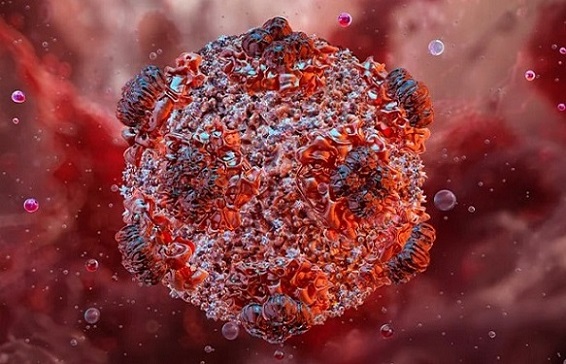 WHO scientists investigate whether a mutated Andes-like hantavirus strain caused deadly human-to-human
infections aboard the MV Hondius cruise ship
Image Credit: StockShots
The outbreak has generated intense concern because hantaviruses are traditionally considered rodent-borne pathogens that rarely spread directly between humans. However, WHO officials have now openly acknowledged that the transmission pattern observed aboard the ship strongly suggests that at least some infections may have occurred through close human contact.
Maria Van Kerkhove, WHO technical adviser and epidemiologist, stated during an international briefing that investigators believe several passengers may have contracted the infection from infected cabin mates or intimate partners. She emphasized that transmission appeared to involve “really close contacts, the husband and wife, people who’ve shared cabins,” adding that investigators are still attempting to determine whether a mutated Andes-like strain is involved.
A Voyage That Turned into A Medical Nightmare
The Dutch-operated expedition cruise ship departed Ushuaia, Argentina, on April 1 with 88 passengers and 59 crew members onboard. The vessel was scheduled to travel across the South Atlantic Ocean with stops in Antarctica, Ascension Island, and Cape Verde.
Only five days into the voyage, a 70-year-old Dutch passenger developed fever, headache, fatigue, and mild diarrhea. According to WHO findings, his condition deteriorated rapidly into severe respiratory distress consistent with hantavirus pulmonary syndrome. Despite medical intervention onboard, he died on April 11.
Nearly two weeks later, his 69-year-old wife began experiencing gastrointestinal symptoms after accompanying his body ashore at Saint Helena. WHO officials said she became critically ill during a flight to Johannesburg and died shortly after arrival in South Africa on April 26.
A third passenger, another woman onboard the ship, developed symptoms including fever and generalized weakness on April 28 before rapidly progressing into respiratory failure and dying on May 2.
At least seven suspected or confirmed cases have now been identified. On
e British passenger remains in intensive care in Johannesburg, while several others continue to experience milder symptoms including fever, cough, gastrointestinal illness, and breathing difficulties.
WHO Increasingly Concerned About Human-To-Human Spread
The possibility that the virus may have adapted for improved human transmission has become the central focus of the international investigation.
Hantaviruses are usually contracted when individuals inhale aerosolized particles from rodent droppings, urine, or saliva. Human-to-human transmission has historically been documented only with the Andes hantavirus strain circulating in parts of Argentina and Chile.
WHO officials noted that several aspects of the outbreak are highly unusual. The timeline of symptom development, the clustering among intimate partners, and the appearance of multiple cases in the confined environment of the ship have raised suspicions that the virus may possess mutations enhancing transmissibility.
WHO representatives also confirmed that investigators had been informed there were reportedly “no rats onboard” the vessel, although experts caution that rodents could have entered through food supplies, cargo, or docking operations in South America.
This
Medical News report notes that scientists are now conducting full genomic sequencing of viral samples obtained from infected patients in an effort to identify mutations that may have altered viral behavior.
Scientists Race to Sequence the Virus
Researchers at South Africa’s National Institute for Communicable Diseases are currently performing deep genomic analysis to identify the exact strain involved.
Dr. Lucille Blumberg, one of the infectious disease experts assisting the investigation, explained that sequencing hantaviruses is a highly complex process requiring detailed viral fingerprinting.
She stated that researchers are attempting to determine whether the outbreak strain is a conventional Andes virus or a previously unidentified variant with novel mutations.
Morgan Gorris of Los Alamos National Laboratory explained that identifying the precise strain could provide critical clues about where passengers were initially exposed. She noted that different hantavirus strains are strongly associated with particular geographic regions and rodent hosts.
Several investigators suspect that the outbreak may have originated during shore excursions in Argentina or from environmental exposure during birdwatching activities. Others have suggested that infected rodents or contaminated food supplies could have unknowingly entered the vessel prior to departure.
Why Hantavirus Can Become Rapidly Fatal
Medical experts warn that hantavirus infections can initially resemble common viral illnesses, making early diagnosis extremely difficult.
Symptoms often begin with fever, chills, headache, muscle pain, nausea, vomiting, diarrhea, and abdominal discomfort. Within days, however, the disease can progress into hantavirus pulmonary syndrome, a devastating condition involving massive leakage of fluid from blood vessels into the lungs.
Patients can suddenly develop severe shortness of breath, dangerously low blood oxygen levels, shock, and cardiovascular collapse.
Professor Sabra Klein from Johns Hopkins Bloomberg School of Public Health explained that hantaviruses cause extensive immune activation and vascular injury that can overwhelm the respiratory and circulatory systems.
Doctors treating severe cases often rely entirely on supportive care, including oxygen therapy, ventilators, intravenous fluids, vasopressor medications, and extracorporeal membrane oxygenation (ECMO) life support.
There is currently no approved antiviral drug or vaccine specifically targeting hantavirus infections.
Cruise Ship Quarantine Sparks International Concern
Nearly 150 passengers and crew members remain under monitoring because the incubation period for hantavirus can range from one to eight weeks. WHO officials warned that additional cases may still emerge in the coming weeks. Cape Verde authorities initially refused permission for the vessel to dock, forcing the ship to remain anchored offshore while emergency medical evacuations were coordinated.
WHO representative Ann Lindstrand confirmed that critically ill crew members would be transferred for advanced care while the ship proceeds toward the Canary Islands, where remaining passengers will undergo further medical examinations and possible quarantine procedures before repatriation.
European and African health authorities have also initiated large-scale contact tracing involving airline passengers, healthcare workers, and airport personnel potentially exposed to infected travelers.
Despite comparisons being made to the early COVID-19 cruise ship outbreaks, WHO officials stressed that hantavirus behaves very differently and is not believed to spread through casual airborne exposure.
However, experts remain deeply unsettled by the possibility that the virus may be evolving.
Several virologists have warned that RNA viruses possess the ability to mutate unpredictably under selective pressures. If confirmed, the emergence of a hantavirus strain with enhanced human transmissibility could represent a significant new public health threat requiring aggressive international monitoring.
References:
https://www.who.int/emergencies/disease-outbreak-news/item/2026-DON599
https://www.nejm.org/doi/full/10.1056/NEJMoa2009040
https://academic.oup.com/jid/article/226/8/1362/6369311
https://www.who.int/news-room/fact-sheets/detail/hantavirus
https://www.cdc.gov/hantavirus/about/index.html
https://www.sciencedirect.com/science/article/abs/pii/S1386653221002973
https://journals.plos.org/plospathogens/article?id=10.1371/journal.ppat.1013401
https://journals.asm.org/doi/10.1128/mbio.02372-18
https://journals.plos.org/plosone/article?id=10.1371/journal.pone.0133407
For the latest on the Hantavirus Outbreak, keep on logging to Thailand
Medical News.
Read Also:
https://www.thailandmedical.news/articles/hantavirus-news




 Share
Share
 Tweet
Tweet
 Share
Share

































