Nikhil Prasad Fact checked by:Thailand Medical News Team May 11, 2026 4 months, 3 weeks, 5 days, 11 hours, 32 minutes ago
Medical News: Researchers are reporting major progress in the search for a simpler and more accurate way to detect prostate cancer early, using tiny molecular signals found in blood, urine, and other body fluids instead of relying mainly on invasive biopsies and traditional PSA tests.
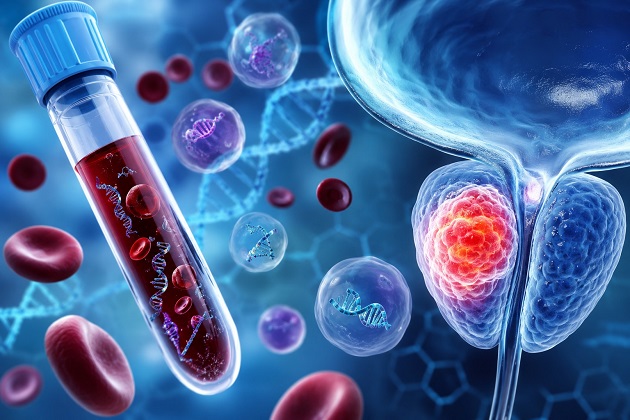 New liquid biopsy technologies may soon detect prostate cancer earlier and more accurately than traditional PSA testing
The study was conducted by scientists from the Department of Biochemistry, College of Science and Technology, Covenant University, Ota, Nigeria; Covenant Applied Informatics and Communication Africa Centre of Excellence (CApIC–ACE), Covenant University, Ota, Nigeria; Covenant University Public Health and Wellbeing Research Cluster (CUPHWERC), Ogun State, Nigeria; and Afrique One Reach, Centre Suisse de Recherche Scientifique, Abidjan, Côte d'Ivoire.
Prostate cancer remains one of the most common cancers affecting men worldwide. Current screening methods mainly depend on prostate-specific antigen or PSA testing. However, PSA testing has long been criticized because it can produce false alarms and may also miss dangerous cancers. Many men end up undergoing painful biopsies unnecessarily, while others are diagnosed too late.
The new systematic review examined whether “epigenetic signatures” found in liquid biopsies could improve early detection. Epigenetics refers to changes that affect how genes behave without changing the DNA itself. Researchers focused mainly on DNA methylation markers and microRNAs, tiny molecules that can reveal whether cancer is developing.
Tiny Molecular Clues Found in Blood and Urine
The researchers analyzed 67 studies involving thousands of participants between 2015 and 2025. They found that certain molecular markers could often detect prostate cancer more accurately than PSA alone.
One of the strongest findings involved combinations of biomarkers rather than relying on a single marker. Multi-gene panels consistently produced better accuracy rates.
Among the most important DNA methylation markers identified were GSTP1 and RASSF1A. Although these markers alone produced only moderate accuracy, combining them with other markers significantly improved results. Some combined testing models achieved sensitivity levels above 90 percent while also maintaining high specificity.
Particularly impressive was a serum-based model combining GADD45a methylation with PSA and circulating free DNA. That combination achieved an accuracy score of 0.937, with sensitivity reaching 94.1 percent and specificity at 87.5 percent. These numbers suggest the test could correctly identify most cancers while reducing unnecessary biopsies.
MicroRNA Panels Outperformed PSA
The review also highlighted the growing importance of microRNAs. These are tiny non-coding RNA molecules that help regulate gene activity and are increasingly being linked to cancer development.
Several microRNAs repeatedly appeared abnormal in prostate cancer patients, especially miR-21, miR-141, miR-375, miR-125b, and miR-221. In many studies,
panels containing multiple microRNAs performed far better than PSA testing alone.
One Chinese study described in the review found that a five-microRNA blood panel achieved nearly perfect diagnostic accuracy during testing phases. Another study from India reported a two-microRNA panel with complete discrimination between cancer patients and controls.
Importantly, many of these microRNA tests performed especially well in the PSA “grey zone” of 4–10 ng/mL, where traditional PSA testing often struggles to determine whether cancer is truly present.
This
Medical News report highlights how urine-based testing may become especially attractive because it is completely non-invasive. Some urine biomarker panels reached 100 percent specificity, meaning healthy individuals were unlikely to be falsely diagnosed.
Liquid Biopsies Could Replace Many Painful Procedures
The review explained that liquid biopsies are becoming increasingly attractive because they can detect tumor-related material circulating in body fluids. Scientists can now identify these cancer-linked signals using advanced technologies such as next-generation sequencing, droplet digital PCR, and quantitative PCR methods.
Researchers also noted that extracellular vesicles, including exosomes, may play a major role in future testing. These microscopic particles carry genetic material directly from tumors and may help doctors monitor cancer progression more accurately.
Despite the promising findings, the researchers warned that challenges remain. Different studies used varying testing methods, patient groups, and laboratory platforms, making direct comparisons difficult. Larger international clinical trials will still be needed before these tests can become routine in hospitals.
Conclusions
The findings strongly suggest that liquid biopsy-based epigenetic testing may eventually revolutionize early prostate cancer diagnosis. By combining DNA methylation markers, microRNA signatures, and traditional PSA testing, doctors may soon have access to far more accurate screening tools that are safer, less invasive, and more reliable. These new approaches could dramatically reduce unnecessary biopsies while helping identify aggressive cancers much earlier when treatment outcomes are far better. However, experts stress that standardized testing methods and large-scale global validation studies are still urgently needed before widespread clinical adoption becomes possible.
The study findings were published in the peer reviewed journal: Frontiers in Oncology.
https://www.frontiersin.org/journals/oncology/articles/10.3389/fonc.2026.1800705/full
For the latest on prostate cancer, keep on logging to Thailand
Medical News.
Read Also:
https://www.thailandmedical.news/articles/cancer




 Share
Share
 Tweet
Tweet
 Share
Share