Nikhil Prasad Fact checked by:Thailand Medical News Team May 02, 2026 4 months, 3 weeks, 2 days, 6 hours, 40 minutes ago
Medical News: A new scientific review is providing critical insights into how COVID-19 may contribute to long-term neurological complications, highlighting a specific biological mechanism that links viral infection to progressive brain cell damage. The research identifies a breakdown in cellular antioxidant defenses, particularly at the level of the cell membrane, as a key factor that may drive neuronal injury through a process known as ferroptosis.
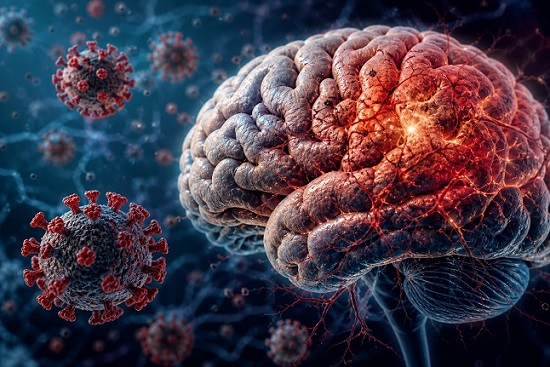 COVID-19 triggers ferroptosis and oxidative damage leading to brain cell injury
The study was conducted by researchers from LogSynk Ltd., Seoul, Republic of Korea, and the Department of Life Science at Ewha Womans University, Seoul, Republic of Korea.
COVID-19 and Persistent Neurological Symptoms
Although COVID-19 initially presents as a respiratory infection, it is now well established that the virus can affect multiple organ systems, including the central nervous system. A significant number of individuals experience lingering neurological symptoms following infection, such as cognitive impairment, memory disturbances, fatigue, and reduced mental clarity. These manifestations, commonly associated with long COVID, are increasingly being linked to underlying metabolic and oxidative disruptions rather than direct viral damage alone.
Oxidative Stress and Lipid Peroxidation
At the core of the proposed mechanism is oxidative stress, a condition characterized by an imbalance between the production of reactive oxygen species and the body’s ability to neutralize them. Neurons are particularly susceptible to oxidative injury due to their high metabolic demand and the composition of their membranes, which are rich in polyunsaturated fatty acids.
The study identifies lipid peroxidation as a central pathological process. This occurs when reactive oxygen species attack membrane lipids, initiating a chain reaction that propagates across the membrane. Once this process exceeds the capacity of cellular antioxidant systems, it leads to structural membrane damage and impaired neuronal function. This progression ultimately results in ferroptosis, an iron-dependent form of regulated cell death increasingly implicated in neurodegenerative disorders.
Failure of the Plasma Membrane Redox System
A key focus of the review is the plasma membrane redox system (PMRS), a specialized antioxidant network that operates at the interface of the cell membrane. This system plays a critical role in maintaining membrane integrity by supporting the regeneration of reduced coenzyme Q, a molecule that acts as a lipid-phase antioxidant and interrupts the propagation of lipid radicals.
Unlike intracellular antioxidant pathways, the PMRS functions directly at the site where lipid peroxidation is initiated. The study proposes that SARS-CoV-2-induced metabolic stress compromises the function of this system. As PMRS activity declines, the cell membrane becomes increasingly vulnerable to oxidative damage, allowing lipid peroxidation to progress unchecked and increasing susceptibility to ferroptotic injury.
NAD+ Depletion and Metabolic Constraints
This &
lt;a href="https://www.thailandmedical.news/">
Medical News report highlights that one of the most significant findings involves the depletion of NAD+, a molecule essential for cellular energy metabolism and redox balance. COVID-19 infection accelerates NAD+ consumption through mechanisms such as activation of DNA repair pathways and inflammatory signaling processes.
The reduction in NAD+ availability limits the generation of NADH and NADPH, which are required to sustain multiple antioxidant defense systems. This includes the PMRS as well as other pathways that protect against ferroptosis. As a result, neurons experience a progressive loss of redox buffering capacity, making them increasingly susceptible to oxidative damage.
Iron Dysregulation and Ferroptotic Cascade
The study further highlights the role of iron dysregulation in amplifying neuronal injury. COVID-19-associated inflammation disrupts normal iron homeostasis, leading to an increase in labile iron within cells. This iron catalyzes chemical reactions that generate highly reactive species, accelerating lipid peroxidation and further destabilizing cell membranes.
Inflammation, mitochondrial dysfunction, NAD+ depletion, and iron imbalance interact to create a self-reinforcing cycle of oxidative damage and ferroptotic cell death.
Progressive Nature of Neuronal Damage
The review emphasizes that the transition from oxidative stress to irreversible neuronal injury is gradual. In the early stages, cells may compensate for increased oxidative burden through existing antioxidant mechanisms. However, sustained metabolic stress and continued depletion of NAD+ progressively weaken these defenses.
This temporal progression may explain why neurological symptoms often persist or emerge after the acute phase of infection. What initially presents as reversible metabolic dysfunction may evolve into structural neuronal damage over time.
Therapeutic Implications
The findings suggest that conventional antioxidant approaches may not be sufficient to prevent or reverse this form of neuronal injury, as they do not address the underlying metabolic and enzymatic constraints. Instead, targeted strategies aimed at restoring cellular redox balance are proposed.
Potential therapeutic approaches include the restoration of NAD+ levels to support metabolic function, activation of NRF2-dependent antioxidant pathways, enhancement of coenzyme Q-mediated membrane protection, and regulation of iron homeostasis to reduce oxidative pressure. While these strategies remain under investigation, they provide a more mechanistically grounded framework for intervention.
Conclusion
This study presents a detailed and biologically coherent model linking COVID-19 to ferroptosis-driven brain injury through the combined effects of metabolic exhaustion, antioxidant system failure, and iron-mediated oxidative damage. The identification of plasma membrane redox system dysfunction as a contributing factor underscores the importance of membrane-level redox control in maintaining neuronal integrity. Although direct clinical validation is still required, the findings strongly suggest that long COVID neurological symptoms may arise from a progressive collapse of cellular defense mechanisms rather than isolated viral effects. These insights provide a critical foundation for future research and may inform the development of targeted therapeutic strategies aimed at preserving brain function and mitigating long-term neurological complications.
The study findings were published in the peer reviewed journal: Antioxidants.
https://www.mdpi.com/2076-3921/15/5/572
For the latest COVID-19 news, keep on logging to Thailand
Medical News.
Read Also:
https://www.thailandmedical.news/articles/coronavirus
https://www.thailandmedical.news/articles/long-covid




 Share
Share
 Tweet
Tweet
 Share
Share

































