New H4N6 Bird Flu Virus Discovered in China Shows Alarming Mammal and Human Adaptation
Nikhil Prasad Fact checked by:Thailand Medical News Team Apr 20, 2026 5 months, 11 minutes ago
Medical News: A newly identified strain of bird flu is raising fresh concerns among scientists after showing unusual abilities to adapt to mammals, including features that may allow it to infect humans more easily. The virus, known as H4N6, was discovered in migratory birds in eastern China and is now being closely studied for its potential risks.
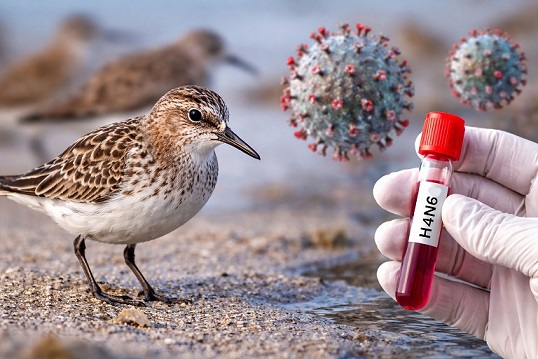 A newly discovered bird flu strain shows early signs of adapting to mammals, raising concerns over
future cross-species transmission
A Virus Found in Migratory Birds
Researchers detected the virus during routine surveillance of wild birds along a major migration route in Zhejiang Province. Out of 400 samples collected, one tested positive for this new strain, which was isolated from a small shorebird species known as the red-necked stint. Laboratory testing confirmed that the virus could replicate efficiently, a key factor that helps viruses spread and survive.
The research team came from the Key Laboratory of Applied Biotechnology on Animal Science and Veterinary Medicine of Zhejiang Province, Zhejiang Engineering Research Center for Veterinary Diagnostics and Advanced Technology, Zhejiang International Science and Technology Cooperation Base for Veterinary Medicine and Health Management, Belt and Road International Joint Laboratory for One Health and Food Safety, China-Australia Joint Laboratory for Animal Health Big Data Analytics, College of Veterinary Medicine of Zhejiang A&F University in Hangzhou, China, and the College of Veterinary Medicine, South China Agricultural University in Guangzhou, China.
A Genetic Mix from Multiple Sources
Detailed genetic analysis revealed that this H4N6 strain is not a simple virus. Instead, it is a “reassortant,” meaning it is made up of genetic material from multiple bird flu viruses. Some of its genes came from wild birds, while others were linked to viruses commonly found in poultry. This mixing of genes often happens in areas where wild birds and farm animals interact, creating opportunities for new viral combinations to emerge.
What makes this strain especially noteworthy is that it carries specific mutations associated with adaptation to mammals. These changes suggest the virus may be evolving in ways that could make cross-species infection easier.
Ability to Bind to Human-Type Receptors
One of the most concerning findings is that the virus can bind to two types of receptors. Bird flu viruses typically attach to receptors found in birds, but this strain can also bind to receptors commonly found in humans. This dual-binding ability is often seen in viruses that have the potential to jump between species.
This
Medical News report highlights that laboratory tests confirmed the virus could infect both bird and mammalian cells without needing prior adaptation. This suggests that the virus already possesses traits that could allow it to infect mammals more efficiently than typical bird flu strains.
/>
Evidence From Animal Studies
Further experiments showed that the virus could replicate in several types of mammalian cells. In mouse models, infected animals experienced mild illness, including weight loss and lung inflammation. While the virus did not cause death or spread beyond the respiratory system, its ability to infect lung tissue indicates it can establish infection in mammals.
The study also found that the virus remained stable under moderately high temperatures and could survive in the environment for extended periods, increasing the chances of transmission.
High Exposure in Nearby Poultry Farms
Perhaps one of the most striking findings came from nearby chicken farms. Blood tests showed that a large percentage of chickens had already been exposed to H4-type viruses, with some farms showing infection rates as high as 100 percent. This suggests that similar viruses may already be circulating widely in poultry populations.
Such widespread exposure increases the risk of further genetic mixing, which could produce even more adaptable or dangerous strains in the future.
Why This Matters Now
Although the virus is currently classified as low pathogenic, meaning it does not cause severe disease in birds, its genetic traits tell a more complex story. The ability to infect mammals, bind to human-type receptors, and circulate in poultry creates a combination of risk factors that scientists cannot ignore. Furthermore, there is no data at the moment as to what infection outcomes will be seen in humans i.e. disease severity, increased fatality etc.
Conclusion
The emergence of this H4N6 strain is a reminder that even so-called mild bird flu viruses can evolve in unexpected ways. Its ability to infect mammals, combined with widespread exposure in poultry and ongoing genetic mixing, creates a situation that deserves close monitoring. While there is no immediate evidence of human infections, the biological features observed in this virus suggest that the gap between animal and human transmission could narrow if further mutations occur. Continued surveillance, stricter biosecurity in farms, and deeper research into how these viruses evolve will be essential to prevent potential outbreaks. The findings reinforce the importance of early detection and global cooperation in managing emerging infectious diseases before they escalate into larger public health threats.
The study findings were published in the peer reviewed journal: Virologica Sinica.
https://www.sciencedirect.com/science/article/pii/S1995820X26000428
For the latest on the H4N6 Bird Flu Virus, keep on logging to Thailand
Medical News.
Read Also:
https://www.thailandmedical.news/articles/h5n1-avian-flu
(Note: Thailand Medical News is the first media to break this story to the public on Monday 20
th April 2026 at 8.45am (Bangkok time)…any other media or sites/accts that are constantly perusing our websites or social media accts to discover new stories are advised to quote our site as the original source of the story or else risk legal law suits!)




 Share
Share
 Tweet
Tweet
 Share
Share