Nikhil Prasad Fact checked by:Thailand Medical News Team Apr 18, 2026 5 months, 3 days, 4 hours, 48 minutes ago
Thailand Medical: A team of
Thailand Medical researchers has unveiled a promising new way to treat common skin cancer without surgery, using an advanced medicated patch that delivers drugs directly through the skin. The innovation could transform how patients with basal cell carcinoma, the most common form of skin cancer, receive treatment.
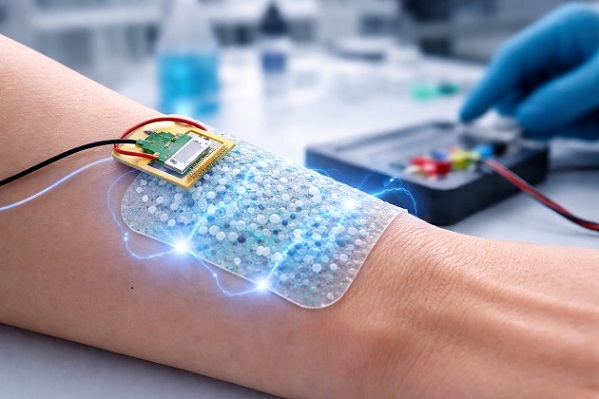 A new electrically enhanced hydrogel patch delivers targeted skin cancer treatment more effectively and safely
A New Approach to Skin Cancer Treatment
A new electrically enhanced hydrogel patch delivers targeted skin cancer treatment more effectively and safely
A New Approach to Skin Cancer Treatment
Basal cell carcinoma accounts for roughly 75 percent of all skin cancer cases and typically appears on sun-exposed areas such as the face and neck. While it grows slowly, it can still cause serious tissue damage and cosmetic concerns if left untreated. Traditional treatments like surgery and radiation, although effective, often come with drawbacks such as scarring, repeated hospital visits, and side effects.
To overcome these issues, researchers explored a transdermal drug delivery system, essentially a medicated patch placed on the skin. This method allows drugs to enter the body directly through the skin, avoiding the digestive system and reducing unwanted side effects.
How the New Patch Works
The
Thailand Medical study focused on delivering a cancer drug called Sonidegib, which targets and blocks tumor growth pathways. Instead of taking the drug orally, the researchers embedded it into a soft, jelly-like material known as a hydrogel made from gelatin.
To enhance the delivery, they added a special conductive polymer called PEDOT:PSS. This material responds to small electrical currents, helping push the drug deeper into the skin. The technique, known as iontophoresis, uses a mild electrical charge to improve how much medication penetrates the skin barrier. The result is a smart patch that not only holds the drug but actively drives it into the affected area in a controlled way.
Stronger Delivery with Electrical Assistance
The findings revealed that applying a small electrical voltage significantly improved drug release. Without electricity, about 46 percent of the drug was delivered. When voltage was increased, delivery rose to nearly 65 percent. With the addition of the conductive polymer, this increased even further to over 71 percent.
Equally important, the time needed for the drug to reach effective levels was reduced from several hours to as little as 2.5 hours under optimal conditions. This means patients could potentially receive faster and more efficient treatment using a simple wearable patch.
Safe and Skin Friendly Design
Safety tests showed that the hydrogel patch was non-toxic to human skin cells, with over 87 percent cell survival in laboratory tests. The gelatin-based material is also biodegradable and biocompatible, meaning it is unlikely to cause irritation or harm when used on the skin.
The structure of the hydrogel also played a crucial
role. Its porous design allowed it to absorb water and expand, making it easier for the drug to move through the material and into the skin.
Why This Matters for Patients
One of the biggest advantages of this approach is that it avoids invasive procedures. Patients who are unable or unwilling to undergo surgery may benefit greatly from a painless, self-applied treatment option. It also reduces the risk of systemic side effects commonly seen with oral medications.
This Medical News report highlights that combining electrical stimulation with advanced biomaterials creates a powerful new platform for targeted cancer therapy that could extend beyond skin cancer in the future.
Future Potential and Real-World Impact
Researchers believe this technology could be adapted for other types of drugs and diseases, particularly where controlled and localized delivery is important. The ability to fine-tune drug release using electrical signals opens doors to personalized treatment plans.
Further clinical trials will be needed before the patch becomes widely available, but early results are highly encouraging.
Conclusion
This study marks an exciting step forward in cancer treatment innovation. By combining smart materials, electrical stimulation, and targeted drug therapy, researchers have created a system that is both effective and patient-friendly. The ability to deliver higher drug concentrations directly to the tumor while minimizing side effects could significantly improve treatment outcomes. If successfully translated into clinical use, this technology may reshape how skin cancer and other localized diseases are treated, offering safer, faster, and more convenient options for patients worldwide.
The study findings were published in the peer reviewed journal: Pharmaceutics.
https://www.mdpi.com/1999-4923/18/4/494
For the latest Thai medical study or innovation, keep on logging to
Thailand Medical News.
Read Also:
https://www.thailandmedical.news/articles/thailand-medical




 Share
Share
 Tweet
Tweet
 Share
Share