Nikhil Prasad Fact checked by:Thailand Medical News Team Apr 29, 2026 4 months, 2 weeks, 6 days, 23 hours, 53 minutes ago
Medical News: A new clinical investigation is shedding light on a severe and often underestimated complication of COVID-19—one that attacks the body’s blood vessels and can lead to limb loss or death. Doctors are warning that acute limb ischemia (ALI), a sudden loss of blood flow to the arms or legs, is emerging as a dangerous consequence of the infection, even in patients who may not appear critically ill.
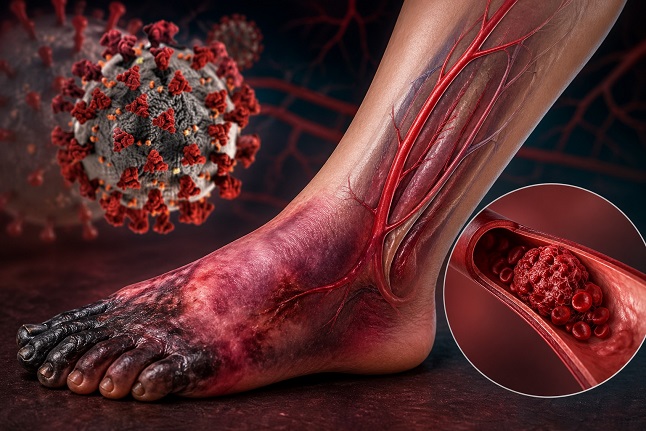 COVID-19 can trigger severe blood flow loss in limbs, leading to amputation or death if not treated promptly
A Serious Condition Emerging After Infection
Acute limb ischemia is not new in medicine, but its increasing association with COVID-19 has raised concern among clinicians. In this study, researchers analyzed patients who developed severe ALI following COVID-19 infection and found that many progressed rapidly to severe tissue damage.
Patients often presented with swelling, discoloration, blistering, and painful ulcers, especially in the lower limbs. In more severe cases, these symptoms escalated into gangrene. Notably, over half of the patients experienced damage in both legs, highlighting how widespread the impact can be.
COVID-19’s Impact Goes Beyond the Lungs
The findings reinforce the understanding that COVID-19 is not just a respiratory illness but a systemic disease. It can disrupt blood flow by triggering excessive clot formation and widespread inflammation.
Laboratory results from the patients revealed striking abnormalities. Extremely high D-dimer levels indicated intense clotting activity, while inflammatory markers such as high-sensitivity C-reactive protein were significantly elevated. At the same time, immune imbalances, including reduced lymphocyte levels, pointed to a weakened defense system.
These changes create a dangerous environment in which blood vessels—especially smaller ones—become blocked, starving tissues of oxygen and nutrients.
A Diagnostic Challenge for Doctors
One of the most troubling aspects of this condition is how difficult it can be to detect. Standard imaging techniques, including Doppler ultrasound and CT angiography, often failed to show major blockages in these patients.
This suggests that the damage may occur in microscopic blood vessels rather than large arteries, making diagnosis more complex. As a result, doctors may underestimate the severity of the condition until significant damage has already occurred.
Standard Treatments Often Fall Short
Anticoagulants like heparin are commonly used to prevent or treat blood clots, but the study found they were not always effective in these cases. Despite aggressive use of such medications, many patients showed little improvement in blood flow to affected limbs.
Complications were further worsened by infections. Open wounds caused by poor circulation frequently became infected with bacteria or fungi, increasing the risk of sepsis and multi-organ failure. In one severe case, a patient died despite intensive treatment.
&
nbsp;
Surgical Intervention Shows Promising Results
The study highlighted that surgical treatment may offer better outcomes for severe cases. Procedures such as debridement, which removes dead tissue, combined with pedicled flap transplantation helped restore blood supply and promote healing.
Patients who underwent surgery generally experienced faster recovery and were discharged sooner. In contrast, those treated with medication alone often faced prolonged illness, disability, or partial limb loss.
Key Warning Signs Not to Ignore
This
Medical News report highlights that symptoms such as persistent limb pain, swelling, skin discoloration, or unusual wounds after COVID-19 infection require urgent medical attention. Early recognition can make the difference between recovery and permanent damage.
Even individuals with mild respiratory symptoms may still develop severe vascular complications, making vigilance essential for both patients and healthcare providers.
Conclusions
Severe acute limb ischemia linked to COVID-19 represents a serious and potentially fatal complication that demands urgent attention. The study clearly shows that the condition is driven by a combination of excessive blood clotting, inflammation, and possible microvascular damage that is not easily detected through standard imaging. Conventional treatments alone may not be sufficient, and delayed intervention can result in irreversible tissue loss or death. Early diagnosis, close monitoring of laboratory markers, and timely surgical management are crucial steps in improving survival rates and preserving limb function. Increasing awareness of this complication is essential to ensure that patients receive prompt and effective care before the condition progresses beyond recovery.
The study findings were published in the peer reviewed International Journal of Infectious Diseases.
https://www.sciencedirect.com/science/article/pii/S1201971226003759
For the latest COVID-19 news, keep on logging to Thailand
Medical News.
Read Also:
https://www.thailandmedical.news/articles/coronavirus
https://www.thailandmedical.news/articles/long-covid




 Share
Share
 Tweet
Tweet
 Share
Share

































