Thailand Medical Researchers Reveal Photobiomodulation Therapy Breakthrough for Aging Oral Health
Nikhil Prasad Fact checked by:Thailand Medical News Team Apr 14, 2026 5 months, 4 weeks, 1 day, 20 hours, 16 minutes ago
Thailand Medical: A new systematic review by Thailand Medical researchers is drawing attention to a promising, non-invasive treatment that could transform how oral health issues are managed in older adults. The therapy, known as photobiomodulation therapy (PBMT), uses low-level light to reduce pain, speed healing, and control inflammation - offering new hope for millions suffering from age-related oral conditions.
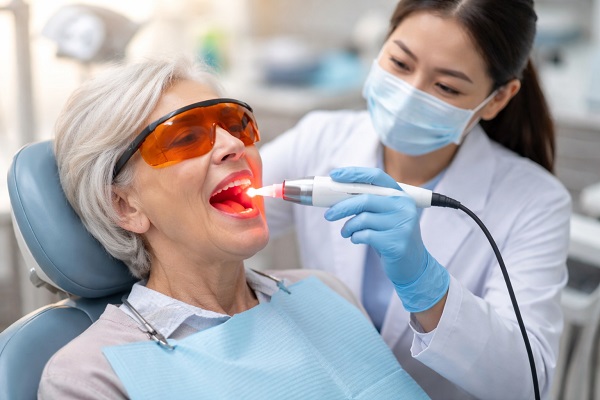 New laser therapy shows powerful benefits in reducing pain and improving oral health in older adults
Understanding the Growing Oral Health Challenge in Older Adults
New laser therapy shows powerful benefits in reducing pain and improving oral health in older adults
Understanding the Growing Oral Health Challenge in Older Adults
As people age, the mouth undergoes significant changes. The oral lining becomes thinner, healing slows down, and saliva production often drops. These changes increase the risk of painful conditions such as oral ulcers, burning mouth syndrome, dry mouth, and complications from cancer treatments. For many older individuals, these issues severely affect eating, speaking, and overall quality of life.
Recognizing this growing problem,
Thailand Medical researchers from the Faculty of Dentistry, Chiang Mai University, Thailand, and the School of Dentistry, University of Phayao, Thailand, conducted a comprehensive review of clinical trials to evaluate whether PBMT could offer real benefits.
What the Study Analyzed
The research team reviewed 23 randomized controlled trials conducted between 2000 and 2025, focusing on patients aged 60 and above. These studies examined PBMT across a wide range of oral conditions, including cancer therapy-related mouth damage, burning sensations, dry mouth, post-surgical pain, and dental implant healing.
The findings were compelling. According to the data analyzed in the study, PBMT consistently demonstrated strong clinical benefits, particularly in managing oral mucositis - a painful condition commonly seen in cancer patients undergoing radiation or chemotherapy.
Strong Evidence for Cancer-Related Oral Damage
Among all conditions studied, the most convincing results were seen in patients with cancer therapy-induced oral mucositis. PBMT significantly reduced pain, delayed the onset of mouth sores, and decreased their severity. Patients also reported better quality of life and required fewer pain medications.
In some trials, up to 83 percent of patients receiving PBMT showed no oral soreness after treatment, compared to much lower recovery rates in control groups. This highlights the therapy’s potential as a supportive treatment during cancer care.
Mixed but Promising Results for Other Conditions
For burning mouth syndrome - a condition causing chronic burning sensations - PBMT showed noticeable improvements in pain levels. However, some studies also found similar improvements in placebo groups, suggesting a psychological component may influence results.
In cases of dry mouth, PBMT helped increase saliva production, which is crucial for digestion, speech, and preventing i
nfections. Meanwhile, patients undergoing dental implant procedures showed modest improvements in healing and tissue stability when PBMT was used.
For postoperative pain, results were more limited but still encouraging, particularly in reducing pain during the first 24 hours after surgery.
Safety Profile Stands Out
One of the most striking findings of the review is the safety of PBMT. Across all 23 trials, no serious side effects were reported. Some patients experienced mild warmth during treatment, but this did not require any medical intervention. This makes PBMT especially appealing for older adults who may already be managing multiple medications and health conditions.
This
Medical News report highlights that while PBMT is not yet a universal solution, it is rapidly gaining recognition as a valuable adjunct therapy in dentistry, especially for aging populations.
Need for Standardization and Further Research
Despite the positive outcomes, researchers emphasized that treatment protocols varied widely across studies. Differences in light wavelength, dosage, and treatment duration make it difficult to establish a single standardized approach. More high-quality clinical trials are needed to determine optimal treatment settings and long-term benefits.
Conclusion
Photobiomodulation therapy is emerging as a safe, effective, and patient-friendly option for managing a wide range of oral health problems in older adults. Its strongest impact is seen in reducing the severity and pain of cancer-related oral complications, while also showing promise in improving dry mouth and burning sensations. Although more research is needed to refine treatment protocols, the current evidence strongly supports integrating PBMT into geriatric dental care.
With no significant side effects and meaningful clinical benefits, this therapy could soon become a standard part of oral healthcare for aging populations worldwide.
The study findings were published in the peer reviewed Dentistry Journal.
https://www.mdpi.com/2304-6767/14/4/231
For the latest Thai Medical research, keep on logging to
Thailand Medical News.
Read Also:
https://www.thailandmedical.news/articles/thailand-medical




 Share
Share
 Tweet
Tweet
 Share
Share