Bacteria of the Human Gut Microbiome Are Mutating and Spawning New Strains Due to COVID-19, Processed Foods and Drugs
Nikhil Prasad Fact checked by:Thailand Medical News Team Apr 25, 2026 6 months, 1 day, 18 hours, 32 minutes ago
Thailand Medical News Exclusive: No One Is Conducting Genomic Surveillance and Studying the mutations of these bacteria that constitutes the human gut microbiome and the new strains emerging
I spend the last week working on a new hypothesis in which I believe that the bacteria that constitutes the human gut microbiome is rapid mutating and spawning new strains that possess newer properties and no longer producing healthy metabolites. The original healthy bacteria that were seeded via mothers to their offspring generations ago have now totally evolved into something else and worse..processed foods, pesticides, pharmaceutical drugs and even supplements have all pressured these important bacteria to mutate and evolve, and COVID-19 has been one of the biggest catalysts to trigger the mutation of these bacteria..not just causing dysbiosis but causing the faster emergence of new gut bacteria strains with properties and effects we know nothing about! Most studies so far only focus on assessing the percentage compositions of the various “good” and “bad bacteria” classes but no one is really studying in detail how even the good bacteria are mutating and producing newer strains and the properties of these new strains.
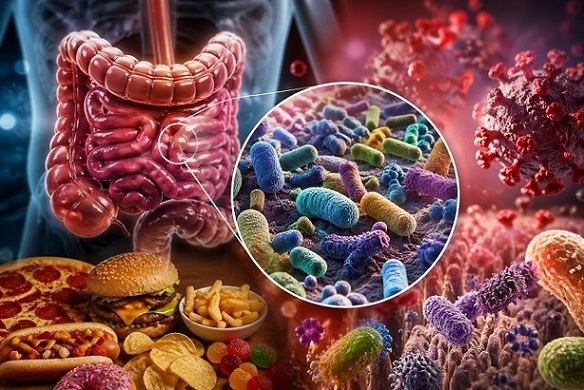 Rapidly evolving gut bacteria driven by modern diets and COVID-19 may be reshaping human health in unseen ways
A Hidden Evolution Taking Place Inside the Human Body
Rapidly evolving gut bacteria driven by modern diets and COVID-19 may be reshaping human health in unseen ways
A Hidden Evolution Taking Place Inside the Human Body
In the vast and intricate ecosystem of the human gut, trillions of microorganisms are constantly interacting, competing, and evolving. These microbes—collectively known as the gut microbiome—play essential roles in digestion, immune defense, metabolic regulation, and even neurological signaling. However, my own suspicions and a growing body of research now suggests that this ecosystem is undergoing rapid genetic transformation.
Driven largely by modern dietary habits dominated by ultra-processed foods, pharmaceutical drugs and other chemical contaminants and compounded by the biological stress of COVID-19 infections, gut bacteria are not merely shifting in numbers—they are mutating and giving rise to entirely new strains. These changes are occurring at a genetic level, altering how bacteria function and how they influence human health. Alarmingly, despite the scale and potential consequences of this transformation, there is no coordinated global effort to monitor these mutations through genomic surveillance.
The Gut Microbiome: A Dynamic and Powerful Biological System
Far from being passive inhabitants, gut bacteria actively shape human physiology. They produce critical compounds such as short-chain fatty acids (SCFAs), including butyrate, which helps maintain the intestinal barrier and regulate immune responses. They also synthesize essential vitamins, metabolize bile acids, and influence neurotransmitters that affect mood and cognition.
With more than 6,400 identified bacterial species—and many more yet to be discovered—the gut microbiome operates like a complex biochemical factory. Every species contributes to maintaining balance within the body. However, this balance is highly sensitive to environmental pressures. When condi
tions change, bacteria adapt rapidly due to their short replication cycles, often mutating within minutes to survive new challenges.
Processed Foods Are Rewriting Microbial Genetics
One of the most significant drivers of microbial evolution is the modern diet. Ultra-processed foods, rich in refined sugars, unhealthy fats, emulsifiers, and synthetic additives, exert intense selective pressure on gut bacteria.
Recent scientific findings indicate that certain bacterial genes associated with the breakdown of industrial food compounds—such as maltodextrin—have rapidly increased in prevalence. These changes are not isolated but spread across bacterial populations through horizontal gene transfer, a process where microbes exchange genetic material directly.
As a result, entirely new bacterial strains are emerging with enhanced abilities to metabolize artificial and refined food components. Unfortunately, this adaptation often comes at a cost. Beneficial bacteria that produce anti-inflammatory compounds are declining, while strains linked to inflammation and metabolic disorders are becoming more dominant.
This shift does not just alter digestion—it fundamentally changes the biochemical outputs of the microbiome, potentially increasing disease risk.
COVID-19: Accelerating Microbial Mutation Under Stress
The global COVID-19 pandemic has added a powerful new layer of pressure on the gut microbiome. Infection with SARS-CoV-2 has been shown to disrupt microbial balance significantly, a condition known as dysbiosis.
Clinical studies involving COVID-19 patients revealed a sharp decline in beneficial bacteria such as Faecalibacterium prausnitzii and Bifidobacterium, alongside a rise in opportunistic pathogens like Ruminococcus gnavus and Klebsiella pneumoniae. These changes were strongly associated with disease severity and inflammatory markers.
More importantly, emerging metagenomic data suggests that COVID-19 does not just alter microbial composition—it may drive genetic evolution within bacterial populations. Under the stress of infection and inflammation, bacteria face survival pressures that favor mutated variants capable of thriving in hostile environments.
Even after recovery, these altered microbial communities can persist for weeks or months, raising concerns about long-term health effects and their potential role in conditions such as long COVID.
New Strains and Dangerous Metabolites
One of the most concerning aspects of this microbial evolution is the shift in metabolic outputs. Newly emerged bacterial strains may produce compounds that are significantly different—and potentially more harmful—than those generated by their predecessors.
Among the most notable metabolites are:
Trimethylamine (TMA): Converted by the liver into TMAO, a compound strongly linked to cardiovascular disease
Secondary bile acids: Such as deoxycholic acid, associated with increased cancer risk
Branched-chain fatty acids (BCFAs): Often elevated in metabolic disorders
Lipopolysaccharides (LPS): Known to trigger systemic inflammation and endotoxemia
Ammonia, phenols, and hydrogen sulfide: Byproducts of protein fermentation that can damage gut lining and promote disease
These compounds can interfere with cellular pathways, weaken the intestinal barrier, and drive chronic inflammation. Over time, such changes may contribute to a wide range of conditions, including cardiovascular disease, diabetes, neurological disorders, and cancer.
The Critical Blind Spot: Lack of Genomic Surveillance
Despite mounting evidence of rapid microbial evolution, most current research remains limited to identifying which bacteria are present rather than how they are changing genetically. Techniques like 16S rRNA sequencing provide only a surface-level view, failing to capture mutations and strain-level diversity.
As this
Medical News report highlights, there is a glaring absence of systematic genomic surveillance programs focused on the gut microbiome. Without continuous monitoring, scientists are effectively blind to the emergence of new bacterial strains and their long-term health implications.
This gap represents a major risk. Just as viral variants are tracked globally, similar efforts are urgently needed to monitor microbial evolution within the human body.
A New Frontier in Human Health Risk
The convergence of processed food consumption and widespread viral exposure has created an unprecedented environment for microbial evolution. The gut microbiome, once relatively stable, is now undergoing rapid and poorly understood transformation.
These changes are not temporary fluctuations but may represent a permanent shift in the microbial landscape of modern humans. As mutated strains become established, their altered metabolic activities could redefine baseline health risks across populations.
The urgency for action cannot be overstated. Longitudinal metagenomic studies, global microbial monitoring systems, and targeted therapeutic interventions must be prioritized. Without these efforts, humanity may face a silent but profound health crisis driven not by external pathogens, but by the evolving ecosystem within.
Current Ways to Seed the Gut with Healthy Bacteria Might No Longer Be Effective
While many advocate probiotics and even fecal transplants to help generate a more health gut microbiome, without studying what new strains have emerged in the gut and how they work…some of these mechanisms involving probiotics might not work as the microenvironment with the newer strains might not be conducive for the survival of the new probiotics being introduced. Even in the case of fecal transplants…there is no proper detailed mechanisms in place to assess if the correct strains of the so-called good bacteria are being introduced to the new hosts.
Final Analysis
The evidence now emerging suggests that humanity is entering a critical and potentially dangerous phase in microbiome evolution, one that is largely unrecognized and insufficiently studied. The combined pressures of ultra-processed diets and COVID-19 are not only reshaping microbial populations but actively driving genetic mutations and the emergence of entirely new bacterial strains with unknown and possibly harmful metabolic outputs. Without urgent investment in genomic surveillance and deeper functional studies, the long-term consequences could include widespread increases in chronic inflammatory diseases, metabolic disorders, neurological conditions, and cancer. Understanding and monitoring these microbial changes is no longer optional but essential for safeguarding future public health in an increasingly complex biological landscape.
This is an introductory article to this topic and with more research and communications with various other experts in this field…I hope to generate a weekly article to share some of the details of my findings and also possible ways to rectify these issues.
Readers who can help contribute any interesting data or links to other specialist or experts and researchers in this field..please feel free to email us directly.
For more on this topic, keep on logging to Thailand
Medical News




 Share
Share
 Tweet
Tweet
 Share
Share