Nikhil Prasad Fact checked by:Thailand Medical News Team Apr 27, 2026 4 months, 3 weeks, 2 days, 12 minutes ago
Medical News: Selenium Strategies Emerge Against Resistant Breast Cancer
A growing body of scientific research is shedding light on an unexpected but promising tool in the fight against one of the most challenging forms of cancer - drug-resistant breast cancer. Scientists are now turning their attention to selenium, an essential micronutrient, for its potential to improve treatment outcomes where conventional therapies often fail.
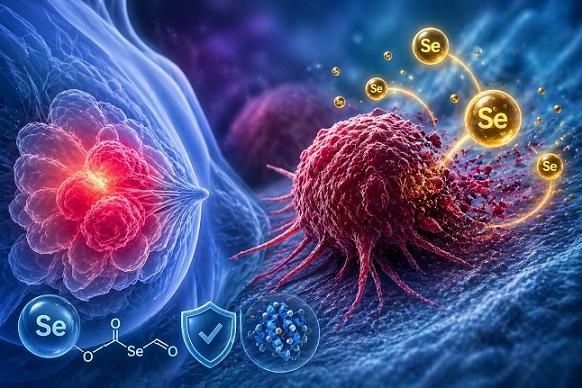 Selenium-based compounds may help overcome drug resistance in breast cancer by targeting multiple
survival pathways and enhancing treatment effectiveness
The Ongoing Challenge of Treatment Resistance
Breast cancer remains one of the most common and deadly cancers worldwide. While advances in chemotherapy, targeted therapy, and hormone treatments have improved survival rates, many patients eventually face a serious obstacle - drug resistance. Over time, cancer cells adapt in ways that allow them to survive treatment, continue growing, and even spread.
These adaptations include pumping drugs out of cells, repairing damage caused by therapy, and activating internal survival mechanisms. As a result, treatments such as doxorubicin, trastuzumab, tamoxifen, and paclitaxel gradually lose their effectiveness, leaving patients with limited options.
Researchers from the Medical University of Lodz, Poland, including Hubert Bajer, Klementyna Kupisz, Szymon Jóźwiak, and Angelika Długosz-Pokorska, conducted an extensive review of studies spanning more than two decades to better understand how selenium-based compounds could help overcome this growing problem.
Understanding Selenium’s Dual Role
Selenium is vital for human health, playing a key role in antioxidant defense, immune function, and cellular balance. Under normal conditions, it helps protect cells from damage caused by oxidative stress. However, what makes selenium particularly unique is its ability to switch roles depending on its concentration.
At higher levels, selenium can act as a pro-oxidant, increasing stress within cancer cells. This added stress can push already vulnerable cancer cells toward self-destruction while leaving healthy cells largely unaffected.
Multi-Targeted Action Against Cancer Cells
This
Medical News report highlights that selenium does not rely on a single mechanism to fight cancer. Instead, it works through multiple pathways simultaneously, making it especially effective against resistant cancer cells.
One of its primary actions is triggering apoptosis, a natural process where damaged or abnormal cells are programmed to die. Selenium compounds influence key proteins such as Bcl-2 and Bax, tipping the balance toward cell death. They also activate enzymes known as caspases, which break down cancer cells from within.
In addition, selenium disrupts the balance of reactive oxygen species inside cancer cells. By increasing oxidative stress beyond surv
ivable levels, it creates an environment that cancer cells cannot tolerate, ultimately leading to their destruction.
Enhancing the Effectiveness of Existing Therapies
Another major advantage of selenium lies in its ability to boost the effectiveness of existing cancer treatments. Studies show that selenium compounds can re-sensitize resistant cancer cells to commonly used drugs.
For instance, selenium has been found to block critical survival pathways such as PI3K/Akt and NF-κB. These pathways normally help cancer cells grow and avoid death. By shutting them down, selenium allows chemotherapy and targeted therapies to work more efficiently.
Newer forms such as selenium nanoparticles are also showing promise. These microscopic particles can deliver selenium more precisely into cancer cells, improving effectiveness while reducing harm to normal tissues.
Broad Effectiveness Across Cancer Subtypes
The findings suggest that selenium-based approaches may be effective across multiple types of drug-resistant breast cancer. In HER2-positive cancers that no longer respond to trastuzumab, selenium helps suppress tumor growth and disrupt survival signaling.
In cases resistant to doxorubicin, selenium compounds interfere with drug efflux mechanisms, allowing chemotherapy to remain inside cancer cells longer. For hormone-resistant cancers, selenium can alter estrogen receptor activity, slowing tumor progression.
Even in aggressive triple-negative breast cancer, which lacks targeted treatment options, selenium has shown the ability to induce oxidative stress, halt cell division, and promote cancer cell death.
Safety and the Need for Caution
Despite its promising potential, selenium must be used carefully. The difference between beneficial and harmful doses is relatively small. Excessive intake can lead to toxicity, known as selenosis, which may cause symptoms such as fatigue, hair loss, and neurological issues.
It is also important to note that most current findings come from laboratory and preclinical studies. Human clinical trials remain limited, and more research is needed to confirm safety, determine proper dosing, and evaluate long-term effects.
Conclusion
Selenium-based strategies represent a compelling and scientifically grounded approach to addressing one of the most difficult challenges in modern oncology - drug-resistant breast cancer. By targeting multiple cellular mechanisms simultaneously, including oxidative stress, apoptosis, and survival signaling pathways, selenium compounds offer a powerful advantage over conventional single-target therapies. However, their transition from laboratory research to clinical application remains uncertain due to limited human studies and concerns about dose-related toxicity. Future research must focus on large-scale clinical trials, precise dosing strategies, and advanced delivery systems such as nanoparticles. With continued investigation, selenium could become an important complementary tool in improving treatment outcomes for patients facing resistant forms of breast cancer.
The study findings were published in the peer reviewed International Journal of Molecular Sciences.
https://www.mdpi.com/1422-0067/27/9/3848
For the latest on breast cancer research, keep on logging to Thailand
Medical News.
Read Also:
https://www.thailandmedical.news/articles/cancer




 Share
Share
 Tweet
Tweet
 Share
Share