Nikhil Prasad Fact checked by:Thailand Medical News Team Feb 23, 2026 7 months, 2 weeks, 9 hours, 56 minutes ago
Medical News: Colorectal cancer is one of the most common cancers worldwide, yet scientists still struggle to explain exactly why it develops in some people and not in others. Age, diet, lifestyle, and genetics all play a role, but researchers increasingly believe the answer may also lie deep inside the gut microbiome—the vast world of bacteria and viruses living in our digestive system. A new study has now uncovered a surprising clue: a previously unknown virus hiding inside a common gut bacterium that appears much more often in people with colorectal cancer.
 Scientists discover a hidden virus inside common gut bacteria that may help explain colorectal cancer risk
A Common Cancer with Many Unknowns
Scientists discover a hidden virus inside common gut bacteria that may help explain colorectal cancer risk
A Common Cancer with Many Unknowns
Colorectal cancer ranks among the leading causes of cancer-related deaths globally. Scientists estimate that up to 80% of the risk may be influenced by environmental factors, including the microorganisms living in the intestines. For years, researchers have observed that patients with colorectal cancer often show an imbalance in gut microbes, a condition known as dysbiosis. However, pinpointing exactly which microbes are responsible has proven extremely difficult because the gut ecosystem is incredibly complex.
One bacterium, Bacteroides fragilis, has repeatedly attracted attention. It is frequently linked to colorectal cancer, yet it is also found in many healthy people with no signs of disease. This contradiction has puzzled scientists for years and raised an important question: if the bacterium is common in healthy individuals, what makes it dangerous in cancer patients?
Looking Beyond the Bacterium
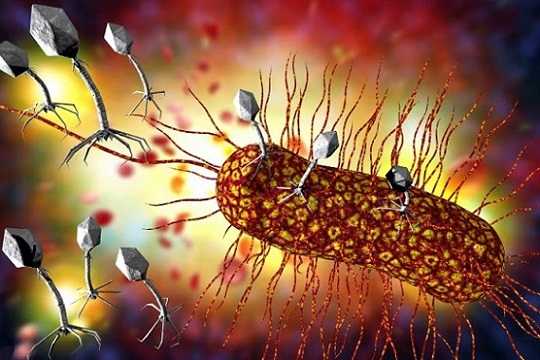
Researchers from the University of Southern Denmark and Odense University Hospital, Denmark, decided to look deeper. Instead of focusing only on the bacterium itself, they examined genetic differences within different strains of Bacteroides fragilis. Their investigation led to a striking discovery: many bacteria from colorectal cancer patients were infected with previously unknown viruses called bacteriophages, or simply phages.
Phages are viruses that infect bacteria rather than humans. They can quietly insert themselves into bacterial DNA and change how the bacteria behave. According to the research team, this hidden viral partnership may help explain why the same bacterium can be harmless in one person but linked to disease in another.
How the Discovery Began
The investigation started with data from a large Danish population study involving nearly two million citizens. Researchers identified patients who developed bloodstream infections caused by Bacteroides fragilis. A small but notable group of these patients was diagnosed with colorectal cancer shortly afterward.
By comparing bacterial samples from patients with and without cancer, the scientists noticed a clear pattern: bacteria from cancer patients were far more likely to carry specific viral sequences. This finding gave the team a strong hypothesis that the virus-bacteria combination, rather than the bacterium alone, might be associated with cancer risk.
Testing the Findings Worldwide
To conf
irm whether this pattern existed beyond Denmark, the researchers analyzed stool samples from 877 individuals across Europe, the United States, and Asia. The results were consistent and striking. People with colorectal cancer were about twice as likely to carry traces of these phages in their gut compared with healthy individuals.
This
Medical News report highlights that the association was statistically strong across multiple populations, suggesting the discovery is not limited to one country or ethnic group. However, researchers stress that the findings show correlation rather than proof of cause. In other words, the viruses may contribute to cancer development, or they may simply appear when the gut environment changes during disease.
Why Viruses Inside Bacteria Matter
The newly discovered phages belong to a group known as Caudoviricetes, which have previously been found in higher numbers in colorectal cancer patients. Scientists believe these viruses may alter bacterial behavior through a process called lysogenic conversion, where viral genes become part of the bacterial genome.
This process can potentially change how bacteria grow, how they interact with the immune system, or how they process substances in the gut. In some cases, phages can activate or suppress bacterial genes, creating new traits that might influence disease development. The study found two specific prophages, named Bacteroides phage FU and ODE, that were strongly associated with cancer-related bacterial strains.
A New Angle on an Old Puzzle
One of the most intriguing aspects of the research is how it may resolve the long-standing paradox surrounding Bacteroides fragilis. Instead of asking whether the bacterium itself is harmful, scientists may need to ask whether certain virus-infected versions of the bacterium are the real problem.
The researchers suggest that this bacteria-virus partnership could help explain why previous microbiome studies often produced inconsistent results. By focusing only on bacterial species and ignoring hidden viruses, earlier research may have missed key differences between healthy and disease-associated strains.
Could This Lead to Earlier Detection?
Today, colorectal cancer screening commonly relies on stool tests that look for hidden blood. The research team believes their discovery could eventually add a new layer to screening by detecting viral DNA in stool samples. Early testing showed that selected viral genetic sequences could identify about 40% of cancer cases while maintaining high specificity, meaning most healthy individuals tested negative.
Although promising, the scientists caution that the method remains experimental. Larger clinical studies are needed before such testing could become part of routine medical practice. Still, the possibility of a non-invasive test that detects cancer-related microbes before symptoms appear is an exciting prospect.
Study Limitations and Future Questions
Like all scientific studies, this research has limitations. Some samples came from bloodstream infections while others came from stool samples, and not all control participants were followed long-term to confirm they remained cancer-free. In addition, genetic sequencing data can sometimes be fragmented, which may reduce detection accuracy.
Despite these challenges, the consistent association across multiple international datasets strengthens confidence in the findings. Researchers now plan to investigate whether these phages actively influence cancer development or simply act as warning signals of deeper microbial changes.
Conclusion
This research opens a new chapter in understanding colorectal cancer by showing that viruses living inside bacteria may play a crucial role in shaping disease risk. Instead of focusing only on individual microbes, scientists are now beginning to explore the complex partnerships between bacteria and their viruses. While the study does not prove that these phages cause cancer, the strong and repeated associations across diverse populations suggest they could become valuable biomarkers for earlier detection and possibly future prevention strategies. If confirmed in larger studies, this discovery may fundamentally change how doctors view the gut microbiome and its role in cancer development, offering hope for better screening and more personalized approaches to colorectal cancer care.
The study findings were published in the peer reviewed journal: Communications Medicine.
https://www.nature.com/articles/s43856-026-01403-1
For the latest on Colon Cancer, keep on logging to Thailand
Medical News.
Read Also:
https://www.thailandmedical.news/articles/cancer




 Share
Share
 Tweet
Tweet
 Share
Share