Nikhil Prasad Fact checked by:Thailand Medical News Team Apr 07, 2026 6 months, 5 days, 23 hours, 27 minutes ago
Thailand Medical: A new scientific breakthrough from Thailand is offering fresh hope for millions struggling with acne, as researchers uncover a powerful plant-based compound capable of targeting acne-causing bacteria, including strains that are resistant to conventional treatments.
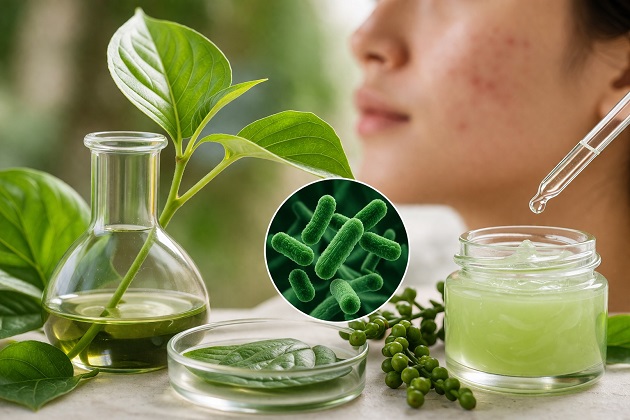 A plant derived compound discovered in Thailand shows strong antibacterial activity against acne causing bacteria and may lead to safer treatments
Thai Researchers Explore Natural Solutions
Thailand Medical
A plant derived compound discovered in Thailand shows strong antibacterial activity against acne causing bacteria and may lead to safer treatments
Thai Researchers Explore Natural Solutions
Thailand Medical scientists have identified a bioactive compound called zeylenone from the plant Piper griffithii, a species native to Thailand. The research was conducted by experts from the Department of Microbiology, Department of Chemistry, and Department of Botany at Kasetsart University, Bangkok, Thailand. Their aim was to find safer and more effective alternatives to antibiotics, which are becoming less reliable due to rising resistance.
Acne is primarily driven by bacterial overgrowth, particularly Cutibacterium acnes, along with Staphylococcus aureus and Staphylococcus epidermidis. These microbes contribute to inflammation, infection, and the formation of acne lesions. Alarmingly, many of these bacteria are now resistant to commonly used drugs such as clindamycin.
Extensive Screening Reveals a Standout Plant
To identify potential solutions, researchers tested extracts from 27 different Piper plant species collected across Thailand. A total of 162 extracts were evaluated using various solvents and plant parts.
Among all samples, the ethyl acetate extract from the leaves of Piper griffithii showed the strongest antibacterial activity. It produced significant inhibition of acne-causing bacteria, even outperforming certain conventional antibiotics in laboratory conditions. This made it a prime candidate for further investigation.
Zeylenone Emerges as the Key Compound
Further laboratory analysis led to the isolation of zeylenone as the primary active compound responsible for the antibacterial effects. The compound demonstrated potent bactericidal activity, meaning it was capable of killing bacteria rather than merely inhibiting their growth.
Zeylenone was especially effective against Cutibacterium acnes, requiring very low concentrations to stop bacterial activity. It also showed strong effects against Staphylococcus aureus and Staphylococcus epidermidis, both of which contribute to more severe acne conditions and skin infections.
How the Compound Destroys Bacteria
This Medical News report highlights that zeylenone works by damaging the structural integrity of bacterial cells. Evidence from microscopic imaging on pages 10 and 11 showed that treated bacteria developed visible deformities, including holes, ruptures, and collapsed surfaces.
These structural disruptions caused leakage of essential cellular contents, ultimately leading to bacterial death. The mechanism suggests that zeylenone
targets the bacterial cell wall and membrane, a strategy that may reduce the likelihood of resistance developing.
Proven Safety for Skin Cells
In addition to its antibacterial strength, zeylenone was tested for safety on human skin cells known as HaCaT keratinocytes. The results showed that the compound was non-toxic at effective concentrations, with high levels of cell survival even at elevated doses.
This finding is critical, as many existing acne treatments can cause irritation or damage to healthy skin. The safety profile of zeylenone supports its potential for use in topical skincare products.
Development of an Effective Anti-Acne Gel
The researchers successfully incorporated zeylenone into a gel formulation designed for skin application. The gel retained strong antibacterial activity against all tested acne-causing bacteria.
It also demonstrated suitable physical properties, including a skin-friendly pH level and stable composition. Control formulations without zeylenone showed no antibacterial effect, confirming the compound’s central role in the formulation’s effectiveness.
Growing Importance of Plant Based Therapies
With antibiotic resistance becoming a global concern, plant-derived compounds are gaining attention as alternative treatments. They often offer multiple mechanisms of action, reduced side effects, and lower risk of resistance.
The findings from this study highlight the untapped potential of medicinal plants in Thailand and reinforce the importance of continued research in this area.
Conclusion
The study clearly demonstrates that zeylenone derived from Piper griffithii is a highly effective natural antibacterial compound with strong activity against multiple acne causing bacteria including drug resistant strains. Its ability to directly damage bacterial cells combined with its low toxicity to human skin and successful incorporation into a topical gel formulation makes it a highly promising candidate for future acne treatments. These findings support the growing role of plant-based therapies in modern dermatology and suggest that natural compounds like zeylenone could provide safer and more sustainable alternatives to traditional antibiotics while maintaining strong clinical effectiveness.
The study findings were published in the peer reviewed journal: Cosmetics.
https://www.mdpi.com/2079-9284/13/2/87
For the latest Thai medical research, keep on logging to
Thailand Medical News.
Read Also:
https://www.thailandmedical.news/articles/herbs-and-phytochemicals




 Share
Share
 Tweet
Tweet
 Share
Share