Nikhil Prasad Fact checked by:Thailand Medical News Team Apr 04, 2026 6 months, 1 week, 1 day, 20 hours, 55 minutes ago
Thailand Medical: A new scientific study from Thailand is offering a deeper and more revealing look into Parkinson’s disease, uncovering how changes in brain fats - known as phospholipids - may play a critical role in the progression of the condition. While Parkinson’s has long been associated with the loss of dopamine-producing brain cells, this research highlights an additional and potentially crucial factor that could reshape future treatment approaches.
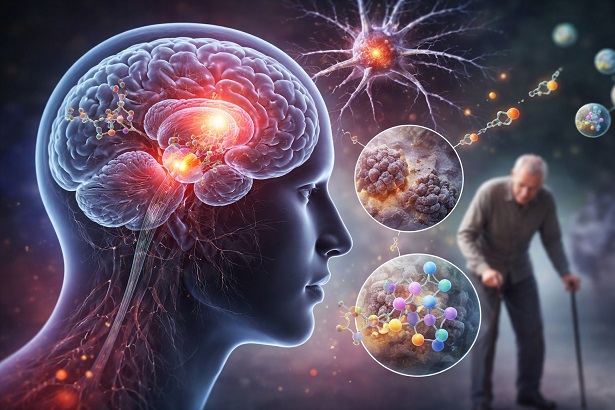 Brain lipid loss may be a hidden driver behind Parkinson’s disease progression and symptoms
Looking Beyond Dopamine Loss
Brain lipid loss may be a hidden driver behind Parkinson’s disease progression and symptoms
Looking Beyond Dopamine Loss
Parkinson’s disease is best known for causing tremors, stiffness, and slowed movements due to the death of dopamine-producing neurons in a region of the brain called the substantia nigra. However, scientists are increasingly discovering that other biological processes may be involved.
In this study,
Thailand Medical researchers explored how lipid metabolism - the way the body processes fats - changes during the disease. Their findings suggest that disruptions in brain lipids may not just accompany Parkinson’s but actively contribute to its progression.
The research team included scientists from several leading institutions: Mahidol University (Department of Anatomy, Faculty of Science and Faculty of Medicine Ramathibodi Hospital), Walailak University (School of Allied Health Sciences and the Research Excellence Center for Innovation and Health Product), Burapha University (Faculty of Allied Health Sciences), Navamindradhiraj University (Faculty of Medicine Vajira Hospital), and the Thailand Institute of Scientific and Technological Research.
How the Study Was Performed
To investigate these changes, researchers used a laboratory model that mimics Parkinson’s disease by exposing mice to a toxin known as MPTP. Over a 21-day period, the animals were monitored for both behavioral and biological changes.
Motor function tests revealed that affected mice developed clear coordination and balance issues. While some basic movement abilities showed partial recovery over time, fine motor skills - such as balance and precise stepping - remained impaired, indicating lasting neurological damage.
Progressive Brain Cell Loss Confirmed
Further analysis showed that dopamine-producing neurons declined steadily after exposure to the toxin. The damage was more severe in models that received prolonged exposure, suggesting that disease severity increases with continued stress on the brain.
Interestingly, while general movement speed improved slightly after the initial damage, coordination problems persisted. This finding suggests that Parkinson’s affects different motor functions in distinct ways, with fine control being more difficult to recover.
Hidden Changes in Brain Lipids
The most important breakthrough came from advanced imaging techniques that allowed researchers to ex
amine lipids directly within brain tissue. They discovered that certain phospholipids - especially those containing polyunsaturated fatty acids - declined significantly over time.
Key polyunsaturated phosphatidylcholine (PC) molecules such as PC 36:4, PC 38:6, and PC 40:8 were found to decrease in a time-dependent manner, particularly in areas of the brain responsible for movement. These lipids are essential for maintaining healthy cell membranes and supporting communication between neurons.
This Medical News report highlights that these lipid changes closely matched both the regions of neuron loss and the severity of motor symptoms. This strong correlation suggests that lipid disruption could be a driving force behind the disease rather than just a consequence.
Why Lipid Damage Matters
Polyunsaturated lipids play a vital role in brain function, helping to maintain flexibility in cell membranes and enabling efficient signaling between neurons. However, their structure makes them especially vulnerable to oxidative stress.
When these lipids are damaged, they can trigger a cascade of harmful effects, including inflammation and membrane instability. Over time, this can worsen neuron damage and accelerate disease progression.
The study also suggests that inflammation and oxidative stress may further amplify this damage, creating a cycle that continuously harms brain cells.
A New Path for Future Treatments
These findings point toward a broader understanding of Parkinson’s disease. Instead of focusing solely on dopamine, scientists may need to consider lipid metabolism and membrane health as key targets for treatment.
Future therapies could aim to protect these vulnerable lipids or restore balance within brain cells. There is also potential for developing early diagnostic tools based on lipid changes before major symptoms appear.
Conclusion
This study provides strong evidence that Parkinson’s disease involves complex biological changes beyond dopamine loss, with lipid disruption emerging as a significant factor. The consistent decline of key phospholipids, particularly those containing polyunsaturated fatty acids, appears to mirror both brain cell degeneration and worsening motor symptoms. These findings suggest that maintaining lipid stability in the brain could be crucial in slowing disease progression. As research continues, targeting lipid metabolism may become an important strategy in developing more effective treatments and improving the quality of life for those affected by Parkinson’s disease.
The study findings were published in the peer reviewed journal: Molecules
https://www.mdpi.com/1420-3049/31/7/1175
For the latest research on Parkinson’s disease, keep on logging to
Thailand Medical News.
Read Also:
https://www.thailandmedical.news/articles/alzheimer,-dementia-




 Share
Share
 Tweet
Tweet
 Share
Share