Japan’s COVID-19 Cases Surge Nearly Thirty Percent as Hokkaido Emerges as a Hotspot
Nikhil Prasad Fact checked by:Thailand Medical News Team Feb 03, 2026 8 months, 1 week, 2 days, 16 hours, 50 minutes ago
Medical News: Japan is once again seeing a notable rise in COVID-19 activity, with new data showing a sharp week-on-week increase that has caught the attention of health authorities and the public alike. During the reporting week of January 19 to January 25, national surveillance figures revealed a rise close to 30 percent compared to the previous week, signaling that the SARS-CoV-2 virus continues to circulate actively even in 2026.
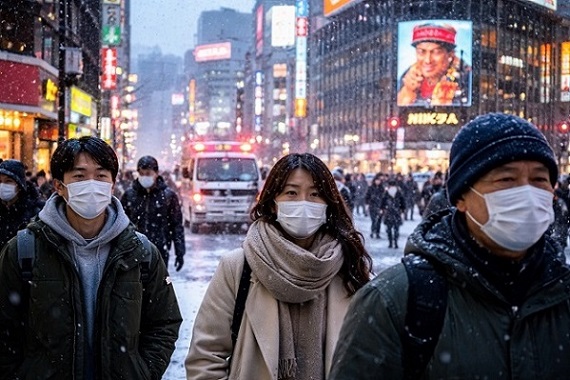 A sharp winter uptick in Japan’s COVID-19 cases sees Hokkaido leading national infection trends
Sharp Weekly Increase Raises Attention
A sharp winter uptick in Japan’s COVID-19 cases sees Hokkaido leading national infection trends
Sharp Weekly Increase Raises Attention
According to Japan’s Ministry of Health, Labour and Welfare, the nationwide average number of COVID-19 patients per designated medical facility climbed to 1.99 for the January 19–25 period. This represented an increase of 0.45 patients per facility from the prior week, translating to an approximate 29 to 30 percent jump. This
Medical News report highlights that the rise is based on Japan’s sentinel surveillance system, which tracks trends through fixed medical institutions rather than the mass testing approach used earlier in the pandemic.
In absolute terms, around 7,573 new infections were reported through sentinel clinics and hospitals for the week, reinforcing the view that transmission has accelerated across several regions.
Hokkaido Stands Out Among Prefectures
Regional data shows that Hokkaido emerged as the most affected prefecture during this period. The northern island recorded an average of 6.02 COVID-19 patients per medical facility, more than three times the national average. This places Hokkaido clearly at the top of the list, indicating a concentrated regional surge rather than a uniform nationwide spread.
Other northern and eastern prefectures also reported elevated figures. Yamagata posted an average of 5.10 patients per facility, while Tochigi followed closely at 5.89. In contrast, major urban centers such as Tokyo and Osaka reported significantly lower averages of 1.04 and 0.76 respectively, suggesting that the current wave is more pronounced in colder regions.
What The Surveillance Data Really Means
Health experts emphasize that sentinel surveillance is designed to detect trends rather than exact population-wide case numbers. A sustained rise in per-facility averages usually reflects increased community transmission, greater demand for outpatient care, and potential strain on local healthcare services, particularly if the trend persists for several weeks.
Seasonal factors are also believed to be playing a role. Colder weather, reduced ventilation indoors, and post-holiday social interactions can all contribute to increased viral spread during January and February.
Variant Responsible for the Surge Not Yet identified
According to local experts, the SARS-CoV-2 strains responsible for the surge have yet to be identified due to lack of genomic sequencing at many hospitals these days.
&n
bsp;
However, many infected are exhibiting serious symptoms requiring them to be hospitalized.
Implications And Forward Outlook
The latest figures underscore that COVID-19 remains an active public health concern in Japan, even as it is managed alongside other respiratory infections. While authorities are not signaling broad restrictions, localized advisories and heightened vigilance in high-burden areas like Hokkaido are likely.
The key takeaway from the January 19–25 data is that the situation warrants close monitoring. A nearly 30 percent weekly rise, combined with strong regional clustering, suggests that healthcare systems and the public should remain cautious. Continued surveillance over the coming weeks will be critical to determine whether this surge stabilizes or evolves into a more sustained seasonal wave.
Reference
https://mainichi.jp/english/covid19
For the latest COVID-19 News, keep on logging to Thailand
Medical News.
Read Also:
https://www.thailandmedical.news/articles/coronavirus




 Share
Share
 Tweet
Tweet
 Share
Share