Thailand Medical and Biotech Researchers Develop Multifunctional Nanoparticles for Bone Repair
Nikhil Prasad Fact checked by:Thailand Medical News Team Mar 14, 2026 6 months, 1 week, 19 hours, 43 minutes ago
Thailand Medical: Researchers from the Biological Engineering Program, Faculty of Engineering at King Mongkut’s University of Technology Thonburi in Bangkok, Thailand; the Department of Chemical Engineering and Biotechnology at National Taipei University of Technology in Taipei, Taiwan; and the Biorefinery and Bioproduct Technology Research Group at the National Center for Genetic Engineering and Biotechnology in Pathum Thani, Thailand have developed a new class of multifunctional nanoparticles designed to significantly improve bone regeneration while simultaneously fighting infection and reducing oxidative stress. The discovery introduces an innovative biomaterial platform that could transform how bone injuries, surgical implants, and tissue defects are treated.
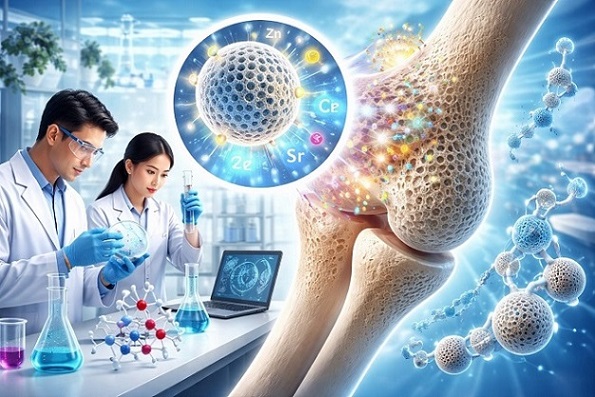 Thailand Medical and Biotech researchers develop multifunctional nanoparticles that promote bone regeneration
while fighting infection and oxidative stress
The Challenge of Bone Healing
Bone fractures and skeletal defects affect hundreds of millions of people globally each year. Although bone tissue has a natural ability to repair itself, healing can often be disrupted by infections, inflammation, and oxidative stress at the injury site. These factors damage bone-forming cells and slow down the regeneration process.
Traditional bone grafts and implant materials also have limitations. Some carry risks such as donor-site complications, infection, or poor integration with surrounding tissue. Because of these challenges,
Thailand Medical scientists have been searching for advanced biomaterials that can actively support bone regeneration while protecting tissues from harmful biological stresses.
Engineering a New Generation of Healing Nanoparticles
To address these issues, researchers engineered tiny materials known as mesoporous bioactive glass nanoparticles, extremely small particles measuring approximately 150 to 200 nanometers in diameter. These particles contain microscopic pores and a very large surface area, allowing them to interact efficiently with biological tissues and release beneficial ions in a controlled manner.
The research team enhanced the particles by incorporating three therapeutic elements—cerium (Ce), zinc (Zn), and strontium (Sr)—into the glass structure. This combination was carefully designed to deliver multiple healing functions simultaneously.
Strontium helps stimulate bone-forming cells known as osteoblasts while also reducing the activity of cells that break down bone tissue. Zinc supports bone growth, enhances cellular activity, and contributes antibacterial properties. Cerium plays a unique role by acting as a powerful antioxidant that neutralizes harmful molecules produced during injury and inflammation.
The nanoparticles were produced through a specialized chemical process that created uniform spherical particles with a highly porous structure and a large surface area ranging between approximately 340 and 425 square meters per gram. This structure allows the particles
to gradually release therapeutic ions over time, creating an environment that promotes bone repair.
Strong Effects on Bone Cell Growth and Mineral Formation
Laboratory experiments using pre-osteoblast bone cells demonstrated impressive biological effects. One optimized nanoparticle formulation significantly increased osteogenic activity, triggering nearly a two-fold increase in the expression of key bone-forming genes.
The particles also enhanced mineralization, a crucial step in building new bone tissue. Calcium mineral deposition increased by about 45 percent within two weeks compared with standard bioactive glass materials. This mineral formation helps create the hard structural matrix required for strong bone regeneration.
This
Medical News report highlights that the nanoparticles also improved the ability of bone precursor cells to migrate and close damaged tissue gaps. In wound-healing laboratory models, treated cells were able to cover roughly 70 percent of the damaged area within 24 hours, demonstrating strong regenerative stimulation.
Powerful Antioxidant Protection
Another important benefit of the nanoparticles is their ability to combat oxidative stress, a major factor that interferes with bone healing. During injury or surgery, the body produces reactive oxygen species that can damage cells and delay tissue repair.
Cerium embedded within the nanoparticles behaves like natural antioxidant enzymes. By switching between different oxidation states, cerium can neutralize harmful reactive molecules and protect surrounding bone cells. This antioxidant shield helps maintain a healthier environment for cellular growth and tissue regeneration.
Built-In Defense Against Dangerous Bacteria
Post-surgical infections remain a major complication in orthopedic procedures and implant surgeries. The newly developed nanoparticles demonstrated strong antibacterial activity against Staphylococcus aureus and Pseudomonas aeruginosa, two common bacteria associated with surgical site infections.
The antibacterial effect is believed to result from the combined action of released metal ions and oxidative mechanisms generated by the nanoparticles. These processes damage bacterial membranes and disrupt their metabolic functions, reducing bacterial survival and lowering the risk of infection.
Conclusion
The development of cerium, zinc, and strontium-doped mesoporous bioactive glass nanoparticles represents a major step forward in regenerative biomaterials. By combining antibacterial activity, antioxidant protection, and stimulation of bone-forming cells, the material addresses several of the key obstacles that often hinder successful bone healing. The ability to release therapeutic ions in a controlled and sustained manner further enhances its potential for use in advanced bone grafts, implant coatings, and tissue engineering applications.
While further studies are needed to confirm effectiveness in living organisms, the findings strongly suggest that this multifunctional nanotechnology platform could play an important role in future orthopedic treatments and regenerative medicine.
The study findings were published in the peer reviewed International Journal of Molecular Sciences.
https://www.mdpi.com/1422-0067/27/6/2640
For the latest on Thai Medical Innovations, keep on logging to
Thailand Medical News.
Read Also:
https://www.thailandmedical.news/articles/thailand-medical




 Share
Share
 Tweet
Tweet
 Share
Share