Nikhil Prasad Fact checked by:Thailand Medical News Team Feb 28, 2026 6 months, 3 weeks, 41 minutes ago
Thailand Medical News: A natural compound derived from a medicinal mushroom may hold powerful promise in the fight against life-threatening blood clots, according to new research from scientists in South Korea.
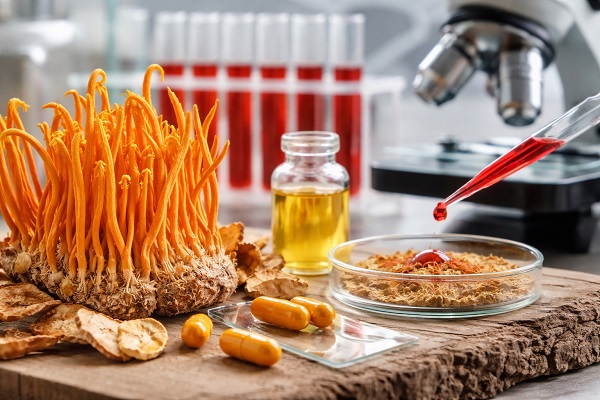 Natural mushroom extract shows powerful potential to prevent dangerous blood clot formation without increasing
bleeding risk.
A Mushroom Compound with Powerful Effects
Researchers from the Department of Applied Biosciences and KNU NGS Core Facility at Kyungpook National University in Daegu, Microbalance Inc. in Daegu, the Cardiovascular Laboratory at the Medical Center of Dong-A University in Busan, the College of Pharmacology at Kyungpook National University, and the Department of Biomedical Laboratory Science at Inje University in Gimhae have discovered that a cordycepin-enriched extract known as WIB-801CE can significantly reduce abnormal blood clot formation.
The extract comes from Cordyceps militaris, a medicinal mushroom long used in traditional medicine. WIB-801CE contains about 7 percent cordycepin, a natural compound structurally similar to adenosine.
Blood clots are essential to stop bleeding after injury. However, when platelets become overactive, clots can form inside blood vessels, leading to heart attacks or strokes. One key driver of this dangerous process is thromboxane A2, a chemical that amplifies platelet activation in a self-reinforcing cycle.
How the Extract Stops Platelets from Clumping
The research team tested WIB-801CE using a laboratory compound called U46619, which mimics thromboxane A2. When platelets were exposed to U46619, more than half rapidly clumped together. But when treated with WIB-801CE, platelet aggregation dropped dramatically in a dose-dependent manner. At certain concentrations, the extract cut platelet clumping by nearly half.
Importantly, the extract did not damage platelets or cause them to activate on its own. Tests measuring cell membrane integrity confirmed that WIB-801CE was not toxic, even at higher doses.
The study also showed that WIB-801CE blocked fibrinogen from binding to integrin αIIbβ3, a receptor that plays a crucial role in stabilizing blood clots. In untreated samples, fibrinogen binding rose to nearly 66 percent after stimulation. With the extract, this binding was progressively reduced, indicating weaker clot formation.
Targeting Key Clotting Signals
On a molecular level, the extract suppressed several proteins that normally promote platelet activation, including PI3K, Akt, ERK1, p38 MAPK, and JNK1. These signaling proteins are central to the cascade that leads to clot growth.
At the same time, WIB-801CE increased phosphorylation of VASP and IP3RI, proteins that help calm platelet activity and reduce calcium release inside cells. Lower calcium levels translate to reduced platelet activation.
This dual action—blocking pro-clotting signals while boosting anti-clotting pathways—suggests a balanced mechanism rather than a blunt shutdown of clotting.
Preventing Clot Retraction Without Increasing Bleeding Risk
The extract also significantly reduced thrombin-induced fibrin clot retraction, a process that tightens and stabilizes clots. In laboratory testing, clot retraction was reduced from nearly 47 percent in controls to about 17 percent with treatment.
When pure cordycepin was added alongside WIB-801CE, the clot-inhibiting effect became even stronger, suggesting a synergistic interaction.
Crucially, tests measuring prothrombin time and activated partial thromboplastin time showed that the extract did not interfere with normal blood coagulation pathways. This indicates a lower risk of excessive bleeding, a major concern with many current antithrombotic drugs.
The extract also demonstrated antioxidant activity, scavenging free radicals that are known to promote platelet activation.
Conclusion
This
Thailand Medical News report highlights compelling evidence that WIB-801CE works through multiple complementary mechanisms to reduce dangerous platelet hyperactivity without impairing normal blood coagulation. By selectively blocking thromboxane-driven signaling, suppressing key activation proteins, enhancing inhibitory pathways, and reducing clot stabilization, the extract demonstrates a sophisticated and potentially safer antithrombotic profile. While further clinical studies are needed, these findings suggest that cordycepin-enriched extracts may offer a promising new therapeutic strategy for preventing thrombosis in high-risk individuals without substantially increasing bleeding risk.
The study findings were published in the peer reviewed International Journal of Molecular Sciences.
https://www.mdpi.com/1422-0067/27/5/2254
For the latest on herbs and phytochemicals, keep on logging to
Thailand Medical News.
Read Also:
https://www.thailandmedical.news/articles/herbs-and-phytochemicals
Medical Disclaimer: All content published by Thailand Medical News is based on scientific research and is intended for informational and educational purposes only. It is not medical advice, diagnosis, or treatment. Readers must not attempt to use, apply, or experiment with any protocols, compounds, or therapies mentioned without first consulting a qualified and licensed medical doctor. Many findings discussed are experimental or preliminary, and only a licensed healthcare professional can determine what is safe and appropriate for an individual’s specific medical condition




 Share
Share
 Tweet
Tweet
 Share
Share