Nikhil Prasad Fact checked by:Thailand Medical News Team Feb 26, 2026 7 months, 2 weeks, 22 hours, 45 minutes ago
Medical News: The COVID-19 pandemic may feel like a chapter the world is trying to close, but for millions of survivors, the story is not over. A new updated systematic review is raising fresh concerns about the long-term effects of COVID-19 on the heart and blood vessels, even in people who had only mild infections.
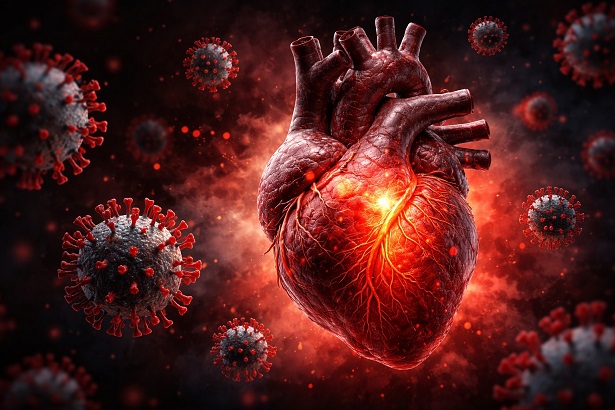 Lingering heart and blood vessel damage after COVID-19 may silently raise long-term cardiovascular risks even in mild cases
Researchers from the Pulmonology II Department, Faculty of Medicine, “Carol Davila” University of Medicine and Pharmacy, Bucharest; the Department of Pneumology and the Research Department at the “Marius Nasta” Institute of Pulmonology, Bucharest; the Thoracic Surgery Department at the same institute; the Faculty of Medicine, University of Medicine and Pharmacy, Craiova; the Anatomy Department, Faculty of Medicine, “Carol Davila” University of Medicine and Pharmacy; and the Cardiology Department at the “Professor Doctor Theodor Burghele” Clinical Hospital, Bucharest, conducted the review. Their findings paint a worrying picture of how the virus may quietly damage the cardiovascular system long after recovery.
What The Researchers Examined
The team carefully analyzed ten high-quality international studies published between 2022 and 2024. These studies followed adults for at least three months after confirmed COVID-19 infection and focused specifically on measurable heart and blood vessel problems.
Out of 412 initial scientific records, only ten met strict criteria. The researchers looked at heart scans, blood tests, electrocardiograms, blood pressure readings, and measures of artery stiffness. Unlike many earlier reports that focused mainly on symptoms, this review emphasized objective medical findings.
Hidden Heart Weakness in Survivors
One of the most striking findings was subtle but measurable heart muscle dysfunction. In one large European study involving over 4,000 patients who mostly had mild or moderate infections, 8 percent showed reduced heart pumping ability. Even more concerning, 15 percent had reduced “global longitudinal strain,” an early marker of heart weakness that may not cause symptoms at first.
Abnormal heart rhythms were also common. About 6 percent developed arrhythmias, and fragmented electrical patterns were detected in nearly 9 percent. Many of these patients had no previous heart disease.
Elevated cardiac biomarkers such as troponin, a protein released during heart injury, were found in about 7 percent of patients months after infection. Around 15 percent showed abnormal ECG changes, suggesting lingering electrical instability in the heart.
Blood Pressure and Vascular Changes
The review also revealed significant blood vessel problems. In one study, 32 percent of participants developed new-onset hypertension within a year after infection. Older age, severe lung involvement during acute illness, and steroid treatment were linked to higher risk.
Other research showed increased arterial stiff
ness, even in younger adults without prior health conditions. Stiffer arteries are known predictors of future heart attacks and strokes. These changes suggest the virus may injure the inner lining of blood vessels, leading to chronic inflammation and a pro-thrombotic, or clot-prone, state.
Why This Matters
This
Medical News report highlights that long COVID is not simply about fatigue or breathlessness. It may involve silent, long-term cardiovascular damage that increases future health risks. The researchers stress that even people who were never hospitalized can develop measurable heart abnormalities.
Conclusion
The review clearly shows that long COVID has a distinct cardiovascular profile that includes weakened heart muscle performance, rhythm disturbances, elevated cardiac biomarkers, arterial stiffness, and new-onset hypertension. These changes occur across all levels of initial disease severity and may affect previously healthy individuals. Early detection through structured heart monitoring, standardized diagnostic protocols, and risk-based follow-up care is essential. Without systematic screening and long-term research, many patients could face preventable heart complications years after infection.
The study findings were published in the peer reviewed Journal of Respiration.
https://www.mdpi.com/2673-527X/6/1/4
For the latest COVID-19 news, keep on logging to Thailand
Medical News.
Read Also:
https://www.thailandmedical.news/articles/coronavirus
https://www.thailandmedical.news/articles/long-covid




 Share
Share
 Tweet
Tweet
 Share
Share