Thailand Medical Study Finds Common Blood Marker Cannot Reliably Predict Stroke Brain Damage
Nikhil Prasad Fact checked by:Thailand Medical News Team Feb 19, 2026 7 months, 2 weeks, 4 days, 10 hours, 54 minutes ago
Thailand Medical: Chiang Mai University Researchers Investigate Stroke Inflammation Marker
Researchers from the Faculty of Medicine Chiang Mai University and its Northern Neuroscience Center have found that a widely used blood inflammation marker known as the neutrophil-to-lymphocyte ratio (NLR) cannot reliably predict the severity of brain damage or recovery outcomes in stroke patients. The study involved neurologists, neuroradiologists, and stroke specialists from the Division of Neurology, Department of Internal Medicine, and Division of Diagnostic and Interventional Neuroradiology at Chiang Mai University, Thailand.
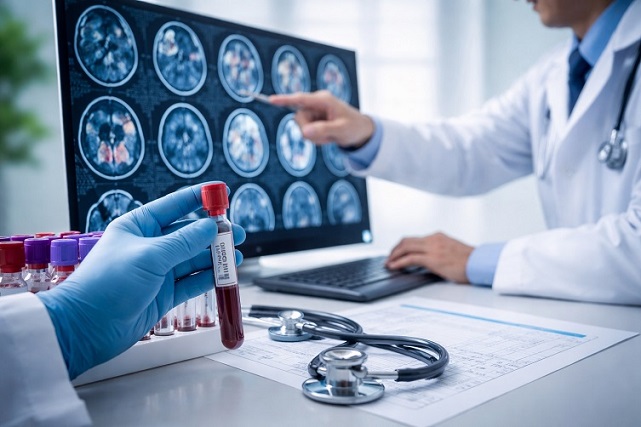 New Thailand study shows common inflammation blood marker fails to reliably predict stroke-related brain damage or recovery outcomes
The neutrophil-to-lymphocyte ratio is derived from routine blood tests and reflects the balance between two types of white blood cells. Neutrophils increase when inflammation rises, while lymphocytes often decrease during physical stress. Because inflammation plays a major role in stroke progression, many doctors have hoped that NLR could serve as a simple and inexpensive tool to predict brain injury and recovery.
Study Examined Nearly 300 Stroke Patients with Detailed Brain Imaging
The researchers analyzed medical records and brain scans of 299 patients who suffered acute ischemic stroke between 2019 and 2023. All patients underwent MRI brain imaging within 72 hours of stroke onset. The average age of participants was approximately 66 years, and more than half were male.
Patients were divided into three groups based on their NLR levels. Researchers then examined brain imaging to identify signs of cerebral small vessel disease, which refers to damage affecting tiny blood vessels deep inside the brain. This type of damage is strongly linked to stroke severity, cognitive decline, disability, and poor recovery.
They also assessed patient recovery using the modified Rankin Scale, which measures disability and functional independence after stroke.
Blood Marker Showed Weak and Inconsistent Links to Brain Damage
The results showed that patients with higher NLR levels appeared to have slightly more severe stroke symptoms at hospital admission. However, when researchers adjusted for other important factors such as age, medical history, and stroke severity, the association between NLR and brain vessel damage was no longer statistically significant.
Although one subgroup showed a possible link between elevated NLR and certain brain microbleeds, this relationship disappeared after adjusting for confounding factors. Importantly, NLR levels did not consistently predict most forms of small vessel brain damage visible on MRI scans.
This
Medical News report highlights that while inflammation clearly plays a role in stroke injury, NLR alone cannot serve as a dependable indicator of brain damage severity or stroke prognosis.
Recovery Outcomes Were Also Not Reliably Predicted by NLR
Interestingly, patients with moderate NLR
levels showed slightly better recovery at 90 days compared to those with lower levels. However, researchers cautioned that this finding was inconsistent and may be due to statistical variation rather than a true biological effect.
There was no clear pattern showing that higher or lower NLR levels could reliably predict whether patients would recover fully or remain disabled. This means doctors cannot depend on this blood marker alone to make clinical decisions about patient prognosis.
Conclusions Highlight Limitations of Inflammation Marker
The researchers concluded that although NLR reflects inflammation in the body, it cannot be used as a reliable independent marker to predict brain vessel damage or recovery outcomes in stroke patients. Stroke severity and recovery depend on many complex factors including blood flow disruption, timing of treatment, patient health status, and extent of brain injury. The findings emphasize that MRI imaging, neurological evaluation, and comprehensive medical assessment remain the most reliable methods for predicting stroke outcomes. While NLR may still provide supportive information, it should never replace proper diagnostic imaging or clinical judgment when managing stroke patients.
The study findings were published in the peer reviewed journal: Life
https://www.mdpi.com/2075-1729/16/2/337
For the latest on diagnostics for stroke care, keep on logging to
Thailand Medical News.
Read Also:
https://www.thailandmedical.news/articles/thailand-medical




 Share
Share
 Tweet
Tweet
 Share
Share