Nikhil Prasad Fact checked by:Thailand Medical News Team Feb 14, 2026 7 months, 3 weeks, 4 days, 12 hours, 6 minutes ago
Medical News: A new scientific opinion paper is drawing attention to a bright red compound found in saffron that could one day help repair the damaged brain. Researchers from the Department of Chemistry and the Department of Animal and Food Sciences at Oklahoma State University are proposing that crocin, a natural carotenoid derived from the saffron plant, may support the conversion of human mesenchymal stem cells into neuron-like cells. Their work, while still in early stages and preclinical, lays out a detailed roadmap for future regenerative therapies targeting devastating conditions such as Alzheimer’s and Parkinson’s disease.
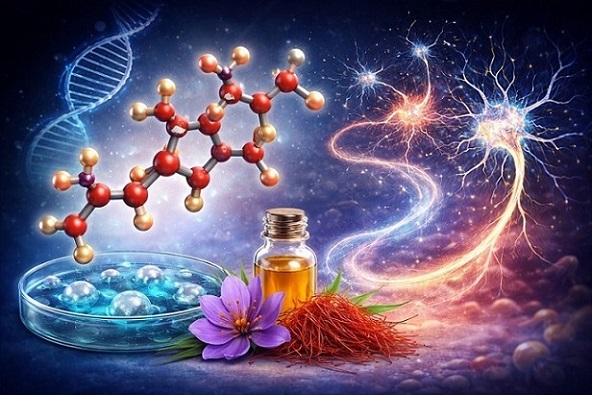 A saffron-derived compound shows early promise in helping stem cells transform into brain-repairing neurons
Why Brain Diseases Remain So Difficult to Treat
A saffron-derived compound shows early promise in helping stem cells transform into brain-repairing neurons
Why Brain Diseases Remain So Difficult to Treat
Neurodegenerative disorders slowly destroy nerve cells in the brain. Over time, patients lose memory, thinking ability, movement control, and independence. Current medicines can temporarily ease symptoms, but they do not rebuild damaged neural circuits. Once neurons die, they are rarely replaced. Because of this, scientists have increasingly turned to stem cells. Mesenchymal stem cells, often obtained from bone marrow or fat tissue, can release protective growth factors and reduce inflammation. However, getting these stem cells to reliably become fully functional, electrically active neurons remains a major scientific challenge.
Crocin A Natural Compound with Big Potential
Crocin is a water-soluble carotenoid responsible for saffron’s deep color. Beyond its culinary use, crocin has shown antioxidant and anti-inflammatory properties in laboratory studies. According to this
Medical News report, crocin may influence several critical signaling pathways in the brain, including Wnt/β-catenin, Notch1, CREB/BDNF, and GSK-3β — all of which play key roles in neuron survival and development.
In animal models, crocin has been shown to increase the production of new neurons in the hippocampus, a brain region essential for memory. It also appears to reduce oxidative stress and limit inflammation, two major drivers of neurodegeneration.
The GSK-3β Connection
One of the most intriguing findings discussed in the paper involves glycogen synthase kinase-3 beta (GSK-3β), an enzyme heavily implicated in Alzheimer’s disease. Overactive GSK-3β contributes to tau protein abnormalities and amyloid buildup.
Using computer-based molecular docking analysis, the researchers found that crocin binds strongly to GSK-3β, even more tightly than retinoic acid in some simulations. Crocin formed 14 hydrogen bonds with the enzyme, suggesting stable interaction within its binding pocket. By inhibiting GSK-3β, crocin may allow β-catenin to accumulate, potentially activating genes that promote neuronal differentiation.
However, the authors emphasize that these findings are predictive and require laborator
y validation. There is currently no direct proof that crocin alone can fully convert human mesenchymal stem cells into mature, electrically active neurons.
How This Could Change Regenerative Medicine
The researchers propose that crocin could serve as a safer, plant-derived adjunct to stem cell therapies. Because crocin has demonstrated low toxicity and the ability to cross the blood–brain barrier in previous studies, it may enhance differentiation protocols without relying on aggressive chemical inducers.
Human trials using saffron extracts typically employ doses around 30 mg per day, which appear well tolerated. Still, optimal dosing for regenerative purposes remains unknown. Future experiments must carefully test dose-response relationships and verify whether laboratory effects occur at clinically achievable levels.
A Roadmap for Future Research
The authors outline clear next steps. Future studies must confirm whether crocin-treated stem cells can generate action potentials, form synapses, and maintain stable neuronal identity after differentiation. Researchers must also distinguish the effects of crocin alone from combination treatments involving scaffolds or additional growth factors.
Conclusion
While crocin’s neuroprotective properties are well supported in preclinical models, its ability to directly drive stem cell-to-neuron conversion remains hypothetical. Nevertheless, the molecular docking results, pathway analyses, and accumulated biological evidence position crocin as a promising candidate for further exploration. If future experiments confirm its ability to guide safe and stable neuronal differentiation, crocin-based formulations could become part of a new generation of regenerative therapies aimed at restoring brain function rather than merely slowing decline.
The study findings were published in the peer reviewed journal: Sci. Pharm.
https://www.mdpi.com/2218-0532/94/1/6
For the latest on treating neurodegenerative diseases, keep on logging to Thailand
Medical News.
Read Also:
https://www.thailandmedical.news/articles/herbs-and-phytochemicals
https://www.thailandmedical.news/articles/stem-cell-therapies




 Share
Share
 Tweet
Tweet
 Share
Share