Study Finds That Lemon Juice and Strawberries May Offer Natural Protection Against Alzheimer’s Disease
Nikhil Prasad Fact checked by:Thailand Medical News Team Dec 16, 2025 9 months, 3 weeks, 2 days, 11 hours, 50 minutes ago
Medical News: A new breakthrough study by researchers from Cairo University, Alexandria University, October 6 University, the Egyptian Russian University, and the University of Tabuk in Saudi Arabia has shown that combining strawberry extract with lemon juice significantly improves brain health and may offer a natural solution to protect against Alzheimer’s disease. The findings are based on a rat model mimicking Alzheimer’s and suggest that the mixture not only enhances cognitive performance but also fights key disease mechanisms like brain inflammation, memory loss, and oxidative stress.
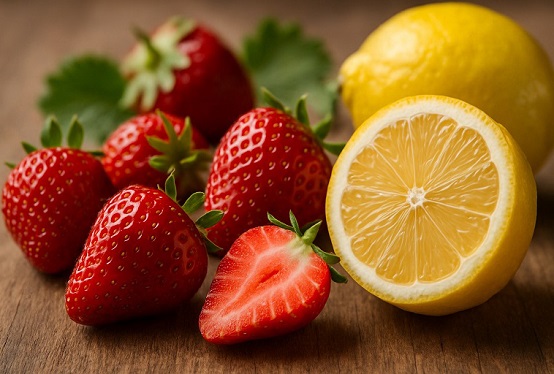
Combining lemon juice with strawberry extract may help prevent Alzheimer’s by protecting brain cells and boosting memory
In this
Medical News report, scientists used a method called green extraction, where lemon juice was used to extract more potent compounds from strawberries. This process yielded an enriched mix of nutrients and powerful antioxidants. Rats given this strawberry and lemon mixture showed better memory, less brain damage, and improved brain signaling compared to those given either fruit alone or even the standard Alzheimer’s treatment.
What Makes This Strawberry Lemon Blend So Powerful
The research team found that the combined extract (referred to as S/L) had the highest levels of essential brain-protecting nutrients, including carbohydrates, proteins, and fats. More importantly, it had a significantly higher content of protective plant chemicals known as phenolics, especially gallic acid, ellagic acid, and chlorogenic acid. These phytochemical compounds have been linked to improved memory, better antioxidant defense, and reduced brain inflammation.
Using advanced laboratory tools, researchers found that the S/L extract contained over 24 beneficial natural substances, including flavonoids, triterpenes, and anthocyanins—some of which were not present in the individual extracts. These unique phytochemical compounds, like daphnetin, chrysin, and tormentic acid, have previously been shown to protect brain cells and enhance learning and memory in other studies.
Memory Tests Show Promising Results
To test how well the extracts protected brain function, researchers used three common behavioral tests: the Morris water maze (for spatial learning), the Y-maze (for short-term memory), and the conditioned avoidance test (for learning and memory). Rats that were exposed to a chemical that mimics Alzheimer’s showed severe memory and learning problems. However, those treated with the S/L extract had the best recovery of brain function, outperforming those given strawberry, lemon, or selenium alone.
For example, rats treated with the S/L extract spent more time in the correct section of the water maze and escaped faster, suggesting improved memory. They also performed better in learning to avoid electric shocks and showed improved brain chemistry, including higher levels of dopamine, serotonin, norepinephrine, and brain-derived neurotrophic factor (BDNF), all of which are vital for healthy brain activity.
Fighting Brain Inflammation and Damage at th
e Cellular Level
The study found that Alzheimer’s-like rats had higher levels of brain inflammation markers like TNF-α and IL-1β and showed increased cell damage and oxidative stress. The S/L treatment dramatically reduced these harmful markers and restored antioxidant defenses like Nrf2 and HO-1. It also helped lower harmful brain proteins like beta-amyloid (Aβ), BACE1, APP, and phosphorylated tau, which are key culprits in Alzheimer’s disease.
One of the most exciting findings was that the S/L mixture strongly activated the Wnt3/β-catenin signaling pathway—a pathway known to help protect neurons and support memory. It also helped block the NLRP3 inflammasome, a major contributor to brain inflammation.
A Natural Dietary Support Option for Brain Health
This study provides solid evidence that lemon juice-assisted extraction enhances the health benefits of strawberries. It shows that natural foods, when carefully combined and processed, can become potent tools in managing diseases like Alzheimer’s. While further human studies are needed, this research lays the groundwork for using food-based solutions as safe and accessible brain-protective therapies.
The study findings were published in the peer reviewed journal: Pharmaceuticals.
https://www.mdpi.com/1424-8247/18/12/1892
For the latest on Herbs and Phytochemicals, keep on logging to Thailand
Medical News.
Read Also:
https://www.thailandmedical.news/articles/alzheimer,-dementia-
https://www.thailandmedical.news/articles/herbs-and-phytochemicals




 Share
Share
 Tweet
Tweet
 Share
Share