Nikhil Prasad Fact checked by:Thailand Medical News Team Jan 30, 2026 8 months, 1 week, 2 days, 13 hours, 51 minutes ago
Medical News: A new scientific study has revealed that ordinary sweet potatoes may contain specific natural compounds capable of significantly reducing inflammation, offering promising implications for everyday health and future functional foods. Researchers from Calbee Inc Research and Development Division in Tochigi Japan closely examined sweet potato storage roots to identify which substances were responsible for previously observed anti-inflammatory effects.
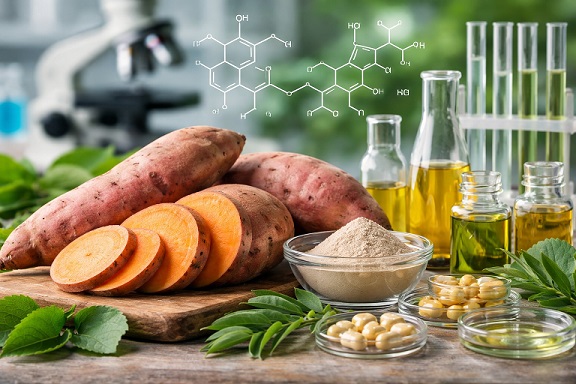 Scientists discover that natural compounds in sweet potatoes can significantly reduce inflammation at the cellular level.
Why Inflammation Matters
Scientists discover that natural compounds in sweet potatoes can significantly reduce inflammation at the cellular level.
Why Inflammation Matters
Inflammation is the body’s natural defense response, but when it becomes chronic, it is linked to many modern illnesses including heart disease diabetes arthritis, autoimmune conditions and cancer. Scientists often look for ways to reduce excessive inflammation using safe food-based approaches rather than relying only on medications.
How the Study Was Conducted
The research team extracted phytochemical compounds from sweet potato storage roots using ethanol and then applied advanced laboratory techniques to separate and identify individual molecules. They used high precision mass spectrometry tools to analyze thousands of chemical signals and narrow them down to key candidates. The experiments were carried out using immune cells known as macrophages which were deliberately stimulated to produce inflammation.
This
Medical News report highlights that the study focused on a specific inflammatory signal called interleukin six or IL-6 which plays a major role in driving harmful inflammation in the body.
Key Compounds Identified
Out of thousands of detected compounds three stood out as most relevant. These were beta-sitosterol, campesterol and lauroyl diethanolamide. Further testing revealed that beta-sitosterol and campesterol both naturally present in sweet potato roots were able to significantly suppress IL-6 production at concentrations similar to those found in the extracts. Lauroyl diethanolamide however did not show the same effect.
Why Beta Sitosterol and Campesterol Are Important
Beta sitosterol and campesterol belong to a group of plant-based compounds called phytosterols. These substances are already known to help lower bad cholesterol levels but this study adds strong evidence that they also play a direct role in calming inflammation at the cellular level. The findings suggest that these compounds interfere with inflammatory signaling pathways inside immune cells preventing them from overreacting.
What Makes This Study Different
Unlike earlier research that broadly linked sweet potatoes to health benefits, this study pinpointed exactly which compounds were responsible and confirmed their effects using controlled laboratory experiments. The researchers also quantified how much of each compound was present ensuring the results reflect realistic dietary exposure rather than exaggerated
doses.
Broader Health Implications
Because sweet potatoes are widely consumed affordable and safe this discovery could have real world relevance. The edible portion of sweet potatoes may serve as a practical dietary source of natural anti-inflammatory compounds without the side effects often associated with synthetic drugs.
Study Limitations and Next Steps
The researchers noted that different sweet potato varieties growing conditions and preparation methods may influence phytosterol levels. They also emphasized that human clinical studies are still needed to confirm whether these cellular effects translate into measurable health benefits in people.
Conclusion
Overall, this research provides compelling evidence that beta sitosterol and campesterol found naturally in sweet potato storage roots actively suppress key inflammatory signals. These findings strengthen the scientific basis for viewing sweet potatoes not just as a nutritious food but as a potential functional ingredient for reducing chronic inflammation and supporting long term health when included regularly in the diet.
The study findings were published in the peer reviewed journal: Molecules
https://www.mdpi.com/1420-3049/31/3/456
For the latest on Herbs and Phytochemicals, keep on logging to Thailand
Medical News.
Read Also:
https://www.thailandmedical.news/articles/herbs-and-phytochemicals




 Share
Share
 Tweet
Tweet
 Share
Share