Juniper Berry Extract Shows Strong Antimicrobial Properties Against Staph Bacteria
Nikhil Prasad Fact checked by:Thailand Medical News Team Feb 10, 2026 7 months, 3 weeks, 5 days, 12 hours, 29 minutes ago
Medical News: A new laboratory study has revealed that extracts from juniper berries may offer a promising natural weapon against Staphylococcus aureus, a bacterium responsible for many difficult-to-treat infections and food poisoning cases worldwide. The research focuses on Juniperus oxycedrus, a plant long used in traditional medicine across the Mediterranean region.
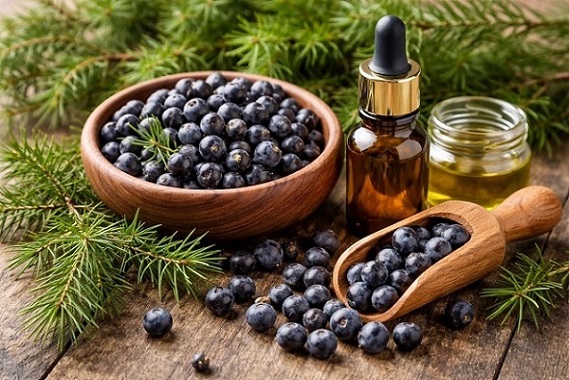 Juniper berry extract blocks dangerous bacteria growth while offering natural antioxidant benefits.
Why Staphylococcus aureus Is a Serious Threat
Juniper berry extract blocks dangerous bacteria growth while offering natural antioxidant benefits.
Why Staphylococcus aureus Is a Serious Threat
Staphylococcus aureus is commonly found on human skin and in the nose, but it can turn dangerous when it enters the body through wounds or contaminated food. It can cause skin infections, blood poisoning, pneumonia, and even life-threatening conditions such as sepsis. Even more worrying is the rise of antibiotic-resistant strains, which make treatment harder and increase health risks globally.
A Green Extraction Method with Big Potential
Researchers used an environmentally friendly technique known as supercritical carbon dioxide extraction to obtain bioactive compounds from Juniperus oxycedrus berries. This method avoids harsh chemicals and preserves delicate plant compounds. The resulting extract contained a rich mix of phenols and flavonoids, natural substances known for their antioxidant and antibacterial properties.
How the Extract Fights Harmful Bacteria
In laboratory tests, the juniper berry extract was able to slow down and eventually stop the growth of Staphylococcus aureus. At certain concentrations, it not only prevented the bacteria from multiplying but also killed them outright. The extract significantly delayed bacterial growth, giving clear evidence of its antibacterial strength. This
Medical News report highlights that such effects are remarkable for a plant-based extract rather than a purified drug.
More Than Just Antibacterial Action
The study also showed that the extract has strong antioxidant activity. Antioxidants help neutralize harmful molecules in the body that contribute to inflammation, aging, and chronic diseases. The presence of compounds such as protocatechuic acid, luteolin, and apigenin suggests that juniper berries may help protect cells while also fighting microbes.
Safety and Absorption Insights
Using advanced computer-based prediction tools, researchers assessed how the key compounds might behave in the human body. Results suggested good absorption through the digestive system and generally low toxicity at realistic doses. While some caution is advised for very high or long-term use, the findings support the potential for safe applications in food preservation, supplements, or future medical products.
Institutions Behind the Research
The research was conducted by scientists from the Faculty of Food Science and Engineering, “Dunărea de Jos” University of Galați, Romania, with co
llaboration from academic researchers specializing in food safety, microbiology, and bioactive compounds.
What This Means Going Forward
The findings suggest that juniper berry extracts could become a valuable natural aid in controlling harmful bacteria, especially as antibiotic resistance continues to rise. While more animal and human studies are needed, the results open the door to safer, plant-based solutions for both healthcare and food safety.
Conclusion
Overall, the study demonstrates that Juniperus oxycedrus berry extract combines antibacterial and antioxidant properties with encouraging safety profiles. These qualities make it a strong candidate for future use as a natural supplement or supportive therapy. Continued research could help transform this traditional plant into a modern tool against persistent bacterial threats.
The study findings were published in the peer reviewed journal: Pharmaceuticals.
https://www.mdpi.com/1424-8247/19/2/287
For the latest on antimicrobial or antibiotics, keep on logging to Thailand
Medical News.
Read Also:
https://www.thailandmedical.news/articles/herbs-and-phytochemicals




 Share
Share
 Tweet
Tweet
 Share
Share